A chimney should look and perform like a permanent part of your home. When it begins to shift, crack, or pull away from the house, the problem is more than cosmetic. Knowing the warning signs of chimney settlement can help you address structural movement before loose masonry, water damage, or unsafe flue conditions turn a repair into a much larger project.
Chimney settlement happens when the soil, footing, masonry, or surrounding structure no longer supports the chimney evenly. New Jersey’s freeze-thaw cycles, heavy rain, aging homes, poor drainage, and changing soil conditions can all contribute. Some movement is minor and repairable. Other cases call for prompt structural evaluation and, sometimes, partial or complete chimney rebuilding.
What Chimney Settlement Really Means
A masonry chimney is extremely heavy. Its foundation or footing must carry that weight without shifting. If the ground beneath the chimney settles, washes away, expands, or contracts unevenly, one side can drop or move more than the other. The chimney may then lean, crack, or separate from the home.
Settlement is not the same as ordinary surface wear. A few small mortar joints may deteriorate with age and need repointing. Settlement involves movement. The key question is whether cracks and gaps are simply aging masonry or evidence that the chimney itself is no longer stable.
That distinction matters because cosmetic patching will not correct an active structural problem. Caulking over a widening gap or applying mortar to a moving crack may hide the symptom for a short time while water and movement continue behind it.
Warning Signs of Chimney Settlement to Watch For
1. The chimney is leaning or looks out of plumb
A chimney that visibly tilts is the clearest warning sign. Stand back from the house and look at the chimney from more than one angle. It should rise straight from the roofline. A lean can be subtle, especially when you see the chimney every day, so compare its vertical lines with nearby siding, windows, or corners of the house.
Do not climb onto the roof to get a closer look. A leaning chimney can have weakened masonry or unstable flashing, and a roof inspection is safer when handled by a qualified professional.
2. A gap is forming between the chimney and the house
Chimneys attached to an exterior wall can begin to pull away when their footing settles independently from the home’s foundation. You may notice a vertical gap where the chimney meets brick, siding, stucco, or trim. Inside the home, there may also be cracks near the fireplace wall, ceiling, or chimney breast.
A small joint at a roof intersection is normal because flashing needs room to protect against water. A gap that is widening, uneven, or visible along the masonry wall is not something to ignore.
3. Stair-step cracks are spreading through brickwork
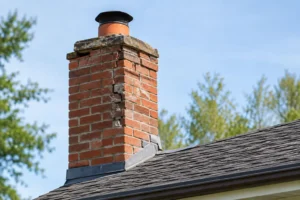
Cracks that follow the mortar joints in a stair-step pattern often point to movement within brick masonry. They may appear on the chimney stack, near the base, or where the chimney meets the house. Vertical cracks and diagonal cracks can also signal stress.
Not every crack means the chimney is in immediate danger. Hairline cracking can come from weather exposure and normal material expansion. But cracks wider at one end, cracks that continue to grow, or cracks paired with a lean deserve a professional inspection soon.
4. Mortar is crumbling in concentrated areas
Weathered mortar is common on older chimneys, but settlement often creates damage in specific stressed sections. You might see mortar breaking apart along one side of the chimney, near a crack, or at the lower courses where movement is concentrated.
Loose mortar allows more water into the masonry. Once water enters, freezing temperatures can force bricks and joints farther apart. What starts as settlement damage can quickly become a cycle of cracking, spalling, and water intrusion.
5. Bricks are cracked, loose, or bulging outward
A sound chimney face should be relatively flat and firmly bonded. Bricks that protrude, shift, or appear to bulge can mean the masonry is under pressure or separating from within. Cracked brick faces and pieces that flake away are also warning signs, particularly if they are located near structural cracks.
Avoid removing loose brick yourself. A single loose brick can be part of a larger unstable area. A chimney professional can determine whether localized rebuilding is enough or whether the damaged section needs to be dismantled and rebuilt safely.
6. Roof flashing keeps opening up or leaking
Flashing is the metal system that seals the point where the chimney meets the roof. If the chimney moves, that connection moves too. Repeated leaks around the chimney, lifted flashing, split sealant, or a growing gap at the roofline may be a roofing issue, a chimney issue, or both.
This is where an inspection matters. Replacing flashing without checking for movement may stop a leak temporarily, but it will not solve a chimney that is shifting on its base. The repair should address the cause before new flashing and waterproofing are installed.
7. Fireplace doors, dampers, or flue components no longer line up properly
Settlement can affect more than the exterior masonry. Inside, you may notice a damper that sticks, fireplace doors that no longer sit squarely, cracked firebox joints, or gaps around the hearth. These conditions do not prove settlement on their own, but they can support what you are seeing outside.
If you smell smoke indoors, see staining above the fireplace, or have trouble with draft, stop using the fireplace until the chimney has been inspected. Structural movement can affect the flue liner and create a fire or carbon monoxide concern.
8. Water pools near the chimney base
Poor drainage is often part of the story. Downspouts that discharge beside the chimney, clogged gutters, low grading, or standing water can soften soil and erode support around the footing. Over time, the base may settle unevenly.
Look for damp soil, washout, or areas where mulch and dirt have pulled away from the chimney foundation. Correcting drainage may be part of the repair plan, especially if water is still feeding the problem.
9. Cracks return shortly after they are repaired
A repaired crack that reopens is one of the strongest signs that movement is continuing. Mortar repair is valuable when the masonry is otherwise stable. When cracks repeatedly return, however, the chimney needs a deeper assessment of its footing, structural support, and connection to the home.
Taking dated photos every few months can be useful. Measure the width of a visible gap or crack without disturbing the masonry. That record helps a contractor tell whether the issue is active or longstanding.
When to Treat Chimney Settlement as Urgent
Call for an inspection promptly if the chimney has a noticeable lean, bricks are falling, a gap between the chimney and house is expanding, or the fireplace produces smoke inside. Also act quickly after a major storm, ground washout, or impact from a falling tree limb.
Keep people away from the area below any loose or damaged masonry. Do not use the chimney, build a fire, or attempt to brace it with boards. The safest next step depends on the condition. Some chimneys can be stabilized and repaired in sections, while others may need to be rebuilt from the roofline up or reconstructed from the base.
What a Professional Chimney Inspection Should Check
A proper evaluation looks beyond the visible crack. The inspector should assess the chimney’s plumb, brick and mortar condition, crown, flashing, roof connection, flue system, and signs of moisture at the base. They should also consider drainage and whether the chimney footing appears to be moving separately from the home.
The right repair may include masonry repointing, brick replacement, crown repair, flashing work, waterproofing, liner repair, structural rebuilding, or drainage improvements. It depends on the cause and extent of the settlement. Be cautious of any estimate that recommends a surface repair without explaining why the chimney moved in the first place.
For New Jersey homeowners, timely service is especially valuable before winter weather gets into existing cracks. Adore Construction can inspect the chimney, explain what is causing the damage, and provide a clear repair recommendation based on the condition of your home.
A chimney rarely becomes unsafe overnight, but it can deteriorate quickly once water and movement take hold. If something looks crooked, separated, or newly cracked, trust that observation and have it checked while the repair options are still on your side.