A roof leak rarely starts as a dramatic ceiling collapse. More often, it begins with a small water stain near a vent, a damp attic corner after heavy rain, or shingles that looked fine from the driveway but were not holding up the way they should. Knowing the top causes of roof leaks helps homeowners act early, limit interior damage, and avoid turning a repair into a much bigger project.
Some leaks are tied to age. Others come from storm damage, poor installation, neglected flashing, or problem areas around chimneys and roof penetrations. The hard part is that water does not always enter directly above the stain you can see inside. It can travel along decking, rafters, and insulation before it shows itself.
Why roof leaks happen in the first place
Roofs take constant abuse from sun, wind, rain, snow, and temperature swings. In New Jersey especially, freeze-thaw cycles and coastal weather patterns can speed up wear on roofing materials and expose weak points faster than many homeowners expect. Even a well-built roof needs maintenance over time.
The top causes of roof leaks usually come down to one of three issues: materials breaking down, components separating at vulnerable joints, or water being pushed into places it should never reach. Once the roofing system loses its seal, moisture starts working its way in.
1. Damaged or missing shingles
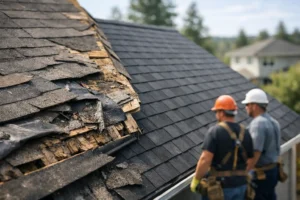
This is one of the most common leak sources on asphalt roofs. Shingles can crack, curl, loosen, or blow off during high winds. Once that protective top layer is compromised, the underlayment and roof deck are more exposed to water.
Sometimes the damage is obvious after a storm. Other times it is gradual. A roof with aging shingles may still look acceptable from the ground, but individual tabs can become brittle and stop shedding water properly. That is when a small problem starts to spread.
Repair may be enough if the damage is limited to a section. If shingle loss is widespread or the roof is near the end of its life, replacement is often the more practical investment.
2. Failed flashing around roof transitions
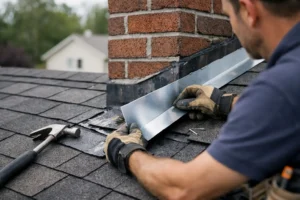
Flashing is one of the most overlooked parts of a roofing system, and one of the biggest reasons leaks develop. These metal pieces are installed where the roof changes direction or meets another structure, such as around chimneys, skylights, walls, and valleys.
If flashing was installed poorly, corroded over time, or pulled loose by weather movement, water can slip into the opening. This type of leak can be stubborn because the roofing field may still be in decent shape while the joints are failing.
Chimney flashing is a major trouble spot. A chimney is a roof penetration, and every penetration creates a risk if the flashing and seal details are not done right. In many cases, homeowners think they need a full roof replacement when the actual issue is localized flashing failure.
3. Cracked chimney crowns or masonry deterioration
Not every roof leak starts in the shingles. Chimneys are frequent sources of water intrusion, especially on older homes. If the chimney crown is cracked, the masonry joints are deteriorating, or the brick is absorbing moisture, water can move into the chimney structure and then show up inside the house near the roofline.
This is where leak diagnosis matters. A stain near the chimney does not always mean the roof covering itself has failed. It could be a masonry issue, a flashing issue, or both. Treating only one part of the problem usually means the leak comes back.
For homeowners, this is a good reminder that roofing and chimney systems work together. If one starts failing, the other is often affected.
4. Clogged gutters and poor drainage
Gutters are supposed to move water away from the roof edge, not trap it there. When leaves, granules, and debris clog the gutter system, rainwater backs up. That standing water can work under shingles at the eaves or overflow into fascia and soffit areas.
This tends to get worse during heavy rain and during winter conditions when backed-up water freezes. Ice can force water beneath roofing materials and into the home. The roof itself may not be the original problem. The drainage system may be.
Cleaning gutters sounds simple, but it protects more than appearance. It helps preserve the roof edge, prevents rot, and reduces the chance of hidden moisture damage.
5. Worn pipe boots and vent seals
Any vent pipe coming through the roof needs a watertight seal. That seal is often created with a pipe boot, which can crack, dry out, or split from age and sun exposure. Once that happens, water follows the pipe opening down into the home.
These leaks are common because the surrounding shingles may still be fine, so the source is easy to miss. A homeowner may notice a leak during steady rain and assume the whole roof is failing, when the real issue is one aging vent penetration.
This is usually a repairable problem if caught early. Left alone, though, it can damage decking and insulation around the opening.
6. Skylight leaks
Skylights bring in natural light, but they also add complexity to the roof. Leaks around skylights often come from bad flashing, failed seals, or installation shortcuts. In some cases, the skylight unit itself has aged and no longer performs the way it should.
This is one of those areas where patchwork can become expensive if the root cause is not identified. Re-caulking around a skylight may stop water briefly, but it will not fix improper flashing or a unit that has already broken down.
A properly installed skylight should not leak. If it does, it needs a real inspection, not just surface sealant.
7. Roof valleys taking on too much water
Valleys handle a heavy volume of runoff because they collect water from two roof slopes at once. That makes them one of the most vulnerable areas on any roof. If shingles are worn, flashing is damaged, or debris builds up in the valley, water can slip below the roofing surface.
Valley leaks often show up during prolonged rain rather than quick showers. They can also become worse when branches and leaves hold moisture in place. If a roof has multiple intersecting slopes, valleys deserve extra attention during inspections.
8. Aging underlayment and roof deck damage
Sometimes the visible roofing material is only part of the story. Underlayment acts as a secondary moisture barrier beneath shingles or other roof coverings. As it ages, tears, dries out, or loses integrity, leak risk increases.
If moisture has been getting through for a while, the roof deck may also begin to rot or soften. At that point, replacing a few surface materials may not be enough. The underlying structure has to be addressed too.
This is why older roofs often reach a point where repeated repairs stop making financial sense. You are not just paying for the same patch again. You are trying to hold together a system that is wearing out in several layers.
9. Poor workmanship from a past repair or installation
A lot of leak calls trace back to work that looked finished but was not done correctly. Nails placed wrong, flashing skipped, shingles misaligned, or seal details rushed can all create future leak points. The roof may pass a casual glance and still fail where it matters.
This is especially frustrating for homeowners because the problem may show up months or years after the work was done. By then, the original issue has expanded and the true cost is higher.
Quality workmanship matters because roofs are system-based. One weak detail can undermine a much larger section.
10. Storm damage and hidden impact points
Wind, hail, falling branches, and driving rain can create leaks fast or leave damage that takes time to show itself. A branch may scrape shingles loose. Hail can bruise roofing material. Strong wind can lift edges just enough to break the seal and let water in later.
The challenge is that not all storm damage is visible from the ground. A roof can look mostly intact while vulnerable spots have already opened up. If a leak appears after severe weather, prompt inspection is the smart move.
How to tell if a leak is getting worse
A small stain that grows, peeling paint near the ceiling, musty attic smells, wet insulation, and dark spots around a chimney or vent are all signs that moisture is active, not old. If the leak only appears during certain weather, that does not mean it is minor. It usually means water is entering under very specific conditions, which can make the source harder to trace.
One leak can also signal more than one failure point. For example, an older roof may have worn shingles and failed flashing at the same time. That is why a proper exterior inspection matters more than guessing from the interior stain alone.
When repair makes sense and when replacement is smarter
A focused repair is usually the right call when the roof is otherwise in solid condition and the leak is tied to one area, such as a pipe boot, flashing section, or a handful of storm-damaged shingles. That is the cost-effective path when the rest of the system still has years of life left.
Replacement becomes more reasonable when leaks are recurring, materials are aging across the whole roof, or the deck and underlayment are starting to fail. At that stage, another patch may solve the symptom for now but not the larger problem.
A dependable contractor should be honest about that difference. Homeowners do not need to be sold a roof they do not need. They do need clear answers before water damage spreads.
If you are seeing signs of moisture, the best next step is not to wait for a bigger stain or the next storm. The right inspection can pinpoint the cause, protect the structure, and give you a repair plan that makes sense for your home and budget.