A chimney leak usually shows up after the damage has already started. You notice a water stain on the ceiling, a musty smell near the fireplace, or damp brick in the attic, and suddenly a small weatherproofing problem turns into a repair bill. If you want to know how to prevent chimney leaks, the goal is simple: stop water from getting into weak points before freeze-thaw weather, wind, and age make them worse.
Chimneys take a beating year-round. They sit above the roofline, catch direct rain, and expand and contract with temperature swings. In New Jersey, that combination is especially hard on masonry and flashing. The good news is that most chimney leaks are preventable when the right parts are maintained on schedule.
How to prevent chimney leaks before they start
The first thing to understand is that a chimney rarely leaks from just one cause. Water can enter through cracked mortar, a damaged crown, missing flashing, porous brick, or an uncapped flue. Sometimes homeowners assume the roof is the problem when the chimney is actually the source. Other times, a roof issue and a chimney issue are happening at once.
That is why prevention works best when you look at the chimney as a system, not a single part. The cap, crown, masonry, flashing, and liner area all play a role in keeping moisture out.
Start with the chimney cap
If your chimney does not have a cap, or the cap is bent, rusted, or loose, rain can fall straight into the flue. That moisture can damage the liner, create odors, and contribute to interior staining around the fireplace or chimney walls. A good cap also helps keep out animals and debris, which can trap moisture and create additional problems.
This is one of the simplest and most cost-effective ways to reduce leak risk. Stainless steel and properly fitted caps tend to hold up better over time than cheap, thin materials. If the cap is undersized or poorly secured, it may not do much when heavy wind-driven rain hits.
Keep the chimney crown solid and sealed
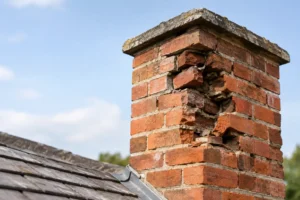
The crown is the cement top around the flue opening. Its job is to shed water away from the chimney structure. When the crown cracks, even hairline damage can let water seep in. Once that water freezes and expands, the crack grows, and the damage spreads faster than most homeowners expect.
A crown should not be confused with mortar wash or patchwork smeared over the top. A properly built or repaired crown is shaped to direct water away and has enough strength to handle weather exposure. Minor damage can sometimes be sealed with the right product, but widespread cracking or separation usually calls for a more substantial repair. Waiting too long here often leads to damage below the surface.
Protect the flashing where the chimney meets the roof
Flashing is one of the most common leak points. It sits at the joint where the chimney and roof connect, and when it pulls loose, rusts, or was installed poorly to begin with, water finds an easy path inside.
This is where leak diagnosis can get tricky. Ceiling spots near the chimney often make people think the brick is failing, but the real issue may be step flashing, counter flashing, or surrounding roofing materials. In some cases, roof cement or caulk was used as a quick fix, and that only buys a little time. Properly installed metal flashing, integrated correctly with the roofing system, lasts longer and performs better.
If your roof is older, chimney flashing deserves extra attention. Even if the chimney masonry looks fine from the ground, flashing failure can still cause interior leaks.
Waterproofing masonry the right way
Brick and mortar are not naturally waterproof. They are designed to handle some moisture and then release it. Over time, though, masonry becomes more porous, especially when age, weather exposure, and missing maintenance catch up with it. That is why professional waterproofing is such an important part of how to prevent chimney leaks.
The key is using a breathable waterproofing treatment made for masonry. This helps reduce water penetration while still allowing trapped vapor to escape. That matters because sealing brick with the wrong coating can trap moisture inside, which can make deterioration worse.
A proper waterproofing treatment is not a substitute for repair. If the mortar joints are open or the bricks are already spalling, those issues need to be addressed first. Waterproofing works best as protection for sound masonry or as the next step after repairs are completed.
Watch for mortar joint wear
Mortar joints often fail before the brick itself does. When joints crack, crumble, or wash out, water gets deeper into the chimney structure. Repointing, when done correctly, restores those joints and helps keep the chimney stable and weather-resistant.
This is not a cosmetic detail. Once moisture enters weakened joints, it can spread damage through large sections of the stack. You may also start seeing white staining, loose bricks, or bits of mortar near the base of the chimney. Those signs usually mean the leak has been active for a while.
Why inspections matter more than guesswork
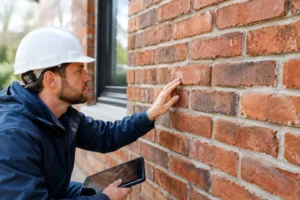
A lot of leak prevention comes down to catching small issues early. From the ground, a chimney may look perfectly fine. Up close, the cap may be loose, the crown may be split, or the flashing may have a gap hidden under shingles.
A professional inspection gives you a clear picture of where your chimney is vulnerable and whether the problem is active leakage, past moisture damage, or normal wear that should be addressed before the next season. This is especially useful before winter and after major storms.
For homeowners, the value is not just finding damage. It is avoiding the common cycle of patching one visible symptom while the real entry point stays open. A leak stain indoors does not always line up with the place where water first got in.
Small warning signs that should not wait
Chimney leaks do not always announce themselves with dripping water. Sometimes the early signs are subtle. A musty smell after rain, peeling paint near the chimney, rust on the firebox or damper, damp walls around the fireplace, and chalky white residue on brick can all point to moisture intrusion.
If you notice any of those signs, it makes sense to act sooner rather than later. Water damage tends to spread. What starts as a simple crown repair or flashing fix can turn into interior drywall damage, mold concerns, masonry repair, or liner issues if it is ignored.
When prevention becomes repair
There is a point where prevention alone is no longer enough. If the chimney has major masonry deterioration, severe flashing failure, missing bricks, or long-term water entry, repairs should come first. After that, preventive steps help protect the work and extend the life of the chimney.
That is where an experienced contractor matters. Chimney leaks are often misdiagnosed, and the wrong fix wastes money. A cap will not solve failed flashing. Waterproofing will not fix a broken crown. Surface sealant will not repair deteriorated mortar. The right solution depends on where the water is getting in and how far the damage has gone.
For homeowners in New Jersey, it is smart to have chimney issues checked before heavy winter weather and after storm season. Adore Construction handles the kind of chimney and roof-related leak problems that often overlap, which can save time when the source is not obvious at first glance.
A practical maintenance rhythm that works
Most homeowners do not need constant chimney work, but they do need consistency. A yearly inspection, prompt repair of visible cracks or flashing issues, a secure chimney cap, and periodic masonry waterproofing go a long way. If your chimney is older, has had past leak problems, or sits on a roof with aging materials, you may need more frequent checks.
There is also a trade-off to keep in mind. Preventive maintenance costs less than major repairs, but only if it is done before water causes structural damage. Waiting until there is interior staining or active dripping usually means the problem has moved beyond basic prevention.
A dry chimney is not just about appearance. It protects the masonry, the roof connection, the interior of the home, and the safe performance of the fireplace system. If something looks off, sounds loose, or smells damp after a storm, trust that signal and get it looked at. A little attention at the right time can save a lot of trouble later.