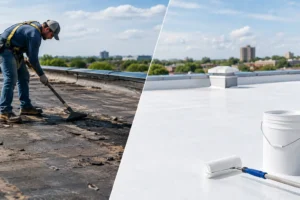
A brown ceiling ring after a hard rain is not just a cosmetic problem. It is a warning that water has already traveled through part of your roofing system. Effective roof leak repair starts by limiting interior damage, then finding the real entry point – not simply patching the spot where water finally appeared.
For New Jersey homeowners, leaks can follow wind-driven rain, ice buildup, failing flashing, or years of wear around a chimney, vent, skylight, or roof transition. A prompt, professional repair can often protect the roof deck, insulation, framing, drywall, and masonry before a smaller issue turns into a much larger project.
What to Do When You Notice a Roof Leak
Start inside the home. Move furniture, electronics, and valuables away from the wet area. Place a bucket beneath an active drip and use towels to keep water from spreading across flooring. If the ceiling is bulging, keep people clear of the area. Water can collect above drywall and cause it to sag or collapse.
If it is safe to do so, take clear photos of the stain, drip, or damaged ceiling before cleanup begins. This gives your roofing contractor useful information and may help with insurance documentation if storm damage is involved.
Do not climb onto a wet, icy, steep, or damaged roof. Many homeowners get hurt trying to place a tarp during a storm or inspect shingles from above. If water is entering quickly, a qualified roofing professional can assess the situation and provide a safe temporary measure while planning the permanent repair.
Why the Visible Stain Is Rarely the Leak Location
Water does not always fall straight down. It can run along roof decking, rafters, insulation, pipes, or chimney framing before it reaches the ceiling. That means a stain in the living room may originate several feet away on the roof.
This is why applying sealant around the stain, replacing one nearby shingle, or coating a random area of the roof can fail. The repair has to address the route water took into the home. A proper inspection considers the roof slope, shingle condition, flashing details, penetrations, drainage, attic moisture, and nearby chimney components.
A dependable contractor should explain what failed, why it failed, and what work is needed to correct it. Clear answers matter, especially when deciding between a targeted repair and a larger roofing project.
Common Causes of Roof Leaks
Damaged or Missing Shingles
Wind can lift shingles, break their seals, or pull them loose completely. Aging shingles can also crack, curl, lose protective granules, and allow water beneath the roof covering. Replacing the affected materials may be enough when the surrounding roof is in sound condition.
The trade-off is age. On a roof near the end of its service life, repeated spot repairs may only postpone replacement. A professional assessment can help determine whether the damage is isolated or part of a broader roofing failure.
Failed Flashing Around Chimneys and Penetrations
Flashing is the metal system that directs water away from vulnerable areas where the roof meets a chimney, wall, vent pipe, or skylight. When flashing rusts, separates, is installed incorrectly, or loses its seal, water can enter beneath roofing materials.
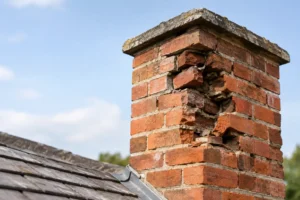
Chimney flashing deserves close attention because chimneys interrupt the roof surface and are exposed to constant weather. Loose counterflashing, deteriorated mortar, a cracked chimney crown, or damaged masonry can create water problems that look like a roof leak. The solution may require coordinated roofing and chimney repair rather than a shingle-only fix.
Clogged Gutters and Poor Drainage
Gutters are not the roof itself, but they protect roof edges, fascia boards, and foundations by moving water away from the home. When gutters overflow, water can back up under shingles, saturate wood trim, and contribute to ice dams during freezing weather.
Cleaning gutters is worthwhile preventive maintenance, but it will not solve a leak caused by damaged flashing or deteriorated roofing. Think of drainage as one part of a complete water-management system.
Worn Seals Around Vents and Skylights
Pipe boots, vent flashings, and skylight seals are common leak points because their materials expand, contract, and weather over time. Rubber boots can crack. Sealants can dry out. Fasteners can loosen. These components are small compared with the entire roof, but their failure can cause major interior damage.
Roof Decking or Underlayment Problems
A roof can look acceptable from the ground while the layers beneath the shingles have deteriorated. Rotting decking, compromised underlayment, or long-term moisture in the attic can make a roof more vulnerable during storms. In these cases, a lasting repair may require removing roofing materials to inspect and replace damaged sections below the surface.
How Professional Roof Leak Repair Finds the Source
Good diagnosis is the difference between a repair that lasts and one that merely hides the problem. A roofing professional begins with exterior observations, looking for damaged shingles, open seams, deteriorated flashing, clogged drainage paths, exposed fasteners, and weaknesses around roof penetrations.
The inspection should also include the attic or interior area when accessible. Water staining on rafters, wet insulation, mold-like growth, daylight at roof penetrations, and rusted nails can reveal where moisture has traveled. In some situations, testing with controlled water may be appropriate, but it should be done carefully to avoid adding unnecessary moisture to the home.
The goal is not to sell work that is not needed. It is to identify the failed component and recommend a repair that makes sense for the roof’s age, material, and overall condition. A small flashing repair can be the right answer. Other times, widespread wear makes replacement the more responsible long-term choice.
Temporary Fixes Have Limits
A tarp, roof cement, or sealant can help reduce water intrusion in an emergency, but these are generally temporary measures. They are especially limited on roofs with missing shingles, deteriorated flashing, punctures, or water entering around a chimney.
Be cautious with heavy applications of caulk or roofing cement. They can trap water, conceal the original defect, and make later repairs more difficult. They also do not restore worn shingles, damaged decking, or failed flashing details.
If a contractor recommends only a quick patch without inspecting the surrounding area, ask what caused the failure and whether nearby materials show the same wear. A reasonable repair plan should account for both the active leak and the conditions likely to cause another one.
Signs You Should Schedule an Inspection Soon
Some leaks are obvious, but others start quietly. Schedule a roofing inspection if you notice any of the following:
- Water stains, peeling paint, or soft drywall on ceilings or upper walls
- Musty attic odors, damp insulation, or visible mold-like growth
- Missing, cracked, curled, or loose shingles after wind or storms
- Rusted flashing, loose chimney mortar, or staining around the chimney
- Granules collecting in gutters or at downspout exits
- Drips or moisture around skylights, vent pipes, or bathroom exhaust vents
These signs do not automatically mean you need a full roof replacement. They do mean the home needs a closer look before moisture reaches framing, electrical areas, or finished rooms.
Preventing the Next Leak
The best time to address roof problems is before water reaches the ceiling. Check the roof from the ground after major storms, keep gutters clear, trim branches that scrape the roof, and watch for changes around the chimney and roofline. Have older roofs inspected periodically, particularly before seasons known for heavy rain, snow, and freezing temperatures.
For homes with a chimney, routine maintenance matters just as much as roofing care. Sound flashing, a properly built crown, intact mortar joints, and appropriate waterproofing help keep moisture out of the masonry and away from the roof connection.
Adore Construction helps homeowners address roofing and chimney-related water entry with straightforward inspections, clear estimates, and repair work built for long-term protection. If a leak has appeared, acting early gives you more repair options and a better chance of keeping the damage contained.