A chimney can look solid from the street while the mortar holding its bricks together is already failing. Knowing the early brick repointing signs helps you address weak joints before water, freezing temperatures, and loose masonry turn a manageable repair into a larger safety concern.
Brick itself can last for generations. Mortar does not always have the same lifespan. It gradually wears down from rain, snow, heat, movement, and repeated freeze-thaw cycles. For New Jersey homeowners, that weather exposure makes regular visual checks especially worthwhile.
What Is Brick Repointing?
Repointing is the process of removing damaged or deteriorated mortar from between bricks and installing new mortar in its place. The goal is not to cover up a problem with a surface patch. Proper repointing restores the joints that help masonry resist water and stay structurally sound.
This work is common on chimneys, exterior brick walls, steps, parapets, and other masonry features. Because a chimney sits above the roofline and takes the full force of the weather, it is often one of the first places where failing mortar becomes visible.
Repointing is different from rebuilding. If the bricks are sound and the damage is limited to the mortar joints, repointing may be the right repair. If bricks are badly cracked, displaced, or unstable, some rebuilding may be necessary. A professional inspection determines where the line falls.
7 Brick Repointing Signs to Watch For
1. Mortar Is Crumbling, Cracked, or Missing
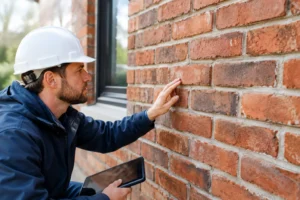
The clearest warning sign is mortar that looks sandy, broken, recessed, or missing from between the bricks. You may find small pieces of mortar on the roof, ground, driveway, or near the chimney base. Sometimes the joints can be scraped out easily with a key or fingertip, which means they have lost much of their strength.
Do not assume a small gap is cosmetic. Open mortar joints give water a direct path into the masonry system. Once water gets behind the brick face, it can worsen the damage from the inside out.
2. Bricks Are Loose or Beginning to Shift
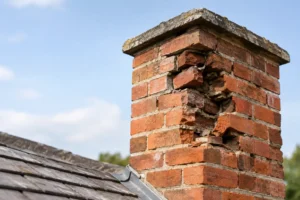
Bricks should feel secure and sit evenly within the wall or chimney. A brick that rocks, protrudes, or has shifted out of line may indicate the surrounding mortar has failed. On a chimney, loose bricks can become a falling hazard, particularly after a hard winter storm or strong winds.
This is not a repair to put off. Repointing may stabilize the area if caught early, but widespread movement can require partial chimney rebuilding. The sooner the issue is evaluated, the more options you are likely to have.
3. White Stains Appear on the Brick
A chalky white coating on brick is called efflorescence. It forms when moisture moves through masonry and leaves behind mineral salts as it evaporates. The staining itself is usually not the main problem. It is evidence that water is getting into the brick or mortar.
A small amount of efflorescence can occur after wet weather, but recurring or spreading white stains deserve attention. The source may be deteriorated mortar, a damaged chimney crown, faulty flashing, or missing waterproofing. Cleaning the brick without correcting the moisture source only treats the symptom.
4. Interior Walls Show Water Damage Near the Chimney
Peeling paint, damp spots, bubbling drywall, or musty odors near a fireplace or chimney wall can point to water intrusion. Homeowners often suspect a roof leak first, and roofing may be involved. But failing mortar joints, cracked crowns, and damaged flashing can also allow water into the home.
Water stains should be checked promptly, even if they disappear during dry weather. Moisture can damage framing, insulation, drywall, and masonry long before a leak becomes obvious indoors.
5. Bricks Are Spalling or Flaking Apart
Spalling occurs when the surface of a brick flakes, chips, or breaks away. It often happens after moisture enters the brick and freezes. As water expands during freezing temperatures, it puts pressure on the masonry and can force the brick face apart.
Spalled bricks should not be ignored or simply painted over. The damaged brick may need replacement, while the surrounding joints may need repointing to stop more water from entering. The right repair depends on how many bricks are affected and whether the underlying masonry remains stable.
6. The Chimney Has Leaning, Bulging, or Uneven Areas
A chimney should appear straight, stable, and consistent from bottom to top. Bulging sections, a noticeable lean, or uneven brick courses can signal more serious deterioration behind the visible surface. Failed mortar is often part of the problem, but structural movement, water damage, or a failing foundation may also be involved.
This is a safety issue, not a weekend project. Avoid climbing on the roof or trying to push loose masonry back into place. A qualified masonry contractor should inspect the chimney and recommend whether targeted repointing, rebuilding, or additional structural work is needed.
7. Mortar Deterioration Is Visible Around the Crown or Roofline
The upper portion of a chimney takes heavy abuse from rain, snow, wind, and temperature changes. Check the mortar joints near the chimney crown, along the roofline, and around areas where flashing meets the brick. Damage in these locations can allow water to travel behind the masonry and into the roof system.
Because these areas are difficult to inspect safely from the ground, homeowners may not notice a problem until they see a ceiling stain or loose brick. A routine chimney inspection can identify failing joints and water-entry points before they cause interior damage.
Why Waiting Can Make Masonry Repairs More Expensive
Mortar damage rarely improves on its own. A small crack lets in moisture. Moisture freezes, expands, and opens the crack further. Over time, the weakened joints can loosen bricks, damage the chimney liner area, compromise flashing, and contribute to roof leaks.
There is also a cost difference between restoring mortar joints and rebuilding a deteriorated chimney section. Repointing is often a focused repair when the bricks and structure are still in good condition. Once extensive brick replacement or reconstruction is needed, the scope and cost increase.
That does not mean every aging chimney needs immediate major work. Some surface wear is normal, and a few isolated joints may only need localized repair. The key is getting an honest assessment based on the condition of the mortar, brick, crown, flashing, and overall structure.
What Proper Repointing Should Include
Quality repointing starts with identifying the cause of deterioration. If water is entering through a cracked crown or damaged flashing, replacing mortar alone will not provide a lasting result. The repair should address both the weakened joints and the source of moisture.
The damaged mortar is carefully removed to an appropriate depth without harming the surrounding brick. New mortar is then installed, compacted, and finished to match the joint profile. Using a compatible mortar matters, especially on older homes. Mortar that is too hard can place unnecessary stress on softer historic brick and may lead to cracking or spalling.
After the masonry repair, waterproofing may be recommended when the chimney or wall is in suitable condition. Breathable masonry waterproofing can help limit water absorption while allowing trapped moisture vapor to escape. It is not a substitute for repointing, crown repair, or flashing work, but it can help protect a properly repaired chimney from future weather exposure.
When to Schedule an Inspection
Schedule an inspection if you see loose mortar, missing joints, water stains, flaking brick, or any sign that the chimney is shifting. It is also smart to have masonry checked after severe storms, before selling a home, or when planning roof work that may reveal issues around flashing and the chimney base.
Take clear photos from the ground if you notice a concern, but do not climb onto a roof or chimney to inspect it yourself. Masonry can be less stable than it looks, and roof access adds another risk.
Your home does not need a dramatic collapse to justify attention. A few failing mortar joints are often the first chance to protect the chimney, roof, and interior of the house with a straightforward repair. If something looks worn, loose, or water-damaged, having it checked now can save your home from a much bigger problem later.