A chimney leak rarely starts as a dramatic problem. More often, it shows up as a damp ceiling stain, musty smell, crumbling mortar, or white staining on the brick that keeps getting worse after every storm. The best chimney waterproofing methods address the source of water intrusion, not just the symptom inside the house.
That matters because chimneys take a beating year-round. Rain gets into porous masonry, freeze-thaw cycles widen small cracks, and worn metal parts let water slip into places it should never reach. If the wrong fix gets used, or if only one weak spot is treated, the leak usually comes back.
What the best chimney waterproofing methods actually do
Good waterproofing does two jobs at once. It keeps outside water from entering the chimney system, and it still allows the masonry to breathe. That second part is where many homeowners get tripped up.
A chimney is not the same as a basement wall or a concrete slab. Brick and mortar naturally absorb some moisture and release vapor back out. If a contractor uses a non-breathable coating, moisture can get trapped inside the masonry. Once that happens, the brick face can start to flake, mortar joints can break down faster, and winter weather can do even more damage.
That is why the best approach usually combines repair work with the right protective materials. Waterproofing is not one product. It is a system.
1. Vapor-permeable masonry water repellent
For most brick chimneys, this is one of the best chimney waterproofing methods when the masonry is still structurally sound. A professional-grade water repellent penetrates the brick and mortar, reducing water absorption without sealing the chimney shut.
This is very different from paint or a rubberized coating. A breathable water repellent helps water stay out while letting trapped vapor escape. That reduces the chance of spalling brick, interior moisture buildup, and accelerated freeze-thaw damage.
The trade-off is simple. Water repellent works best as a preventive measure or after repairs are already made. It will not solve major cracking, loose bricks, failed crowns, or damaged flashing by itself. If those problems exist, they need to be fixed first.
2. Crown repair or crown sealing
The chimney crown is the top surface that sheds water away from the flue and the outer edges of the chimney. When it cracks, water starts working its way down into the structure. That can damage the liner, masonry, firebox area, and nearby ceilings or walls.
If the crown has minor surface cracks, an elastomeric crown sealant can be a strong solution. It stretches with temperature changes and helps keep water out of hairline openings. If the crown is badly deteriorated, though, sealing alone is not enough. In that case, rebuilding or resurfacing the crown is the better investment.
This is one of those areas where it depends on condition, not just age. A newer chimney with a few small crown cracks may only need sealing. An older chimney with wide fractures or poor slope usually needs more than a patch.
3. Chimney flashing repair or replacement
If water is showing up where the chimney meets the roof, flashing is often the real issue. Flashing is the metal barrier that seals the joint between roofing materials and the chimney base. When it rusts, pulls loose, or was installed poorly to begin with, water follows that gap straight into the home.
Homeowners sometimes assume the brick is leaking when the actual failure is at the roofline. That is why chimney leak diagnosis should never start with guesswork. The visible stain indoors does not always point to the true entry point.
Proper flashing repair may involve resealing small areas, but many cases call for full replacement. Counter flashing, step flashing, and the surrounding roofing materials all need to work together. If one part fails, the whole assembly becomes vulnerable.
4. Tuckpointing damaged mortar joints
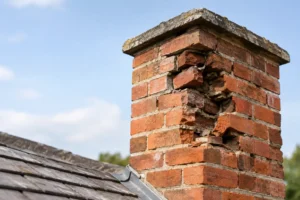
Mortar joints are often the first place water gets in. As mortar ages, it can crack, recede, or crumble away, leaving open pathways for moisture. Once water enters those joints, the surrounding brickwork starts to weaken too.
Tuckpointing removes deteriorated mortar and replaces it with new mortar matched to the chimney. This restores both strength and water resistance. It is one of the most effective waterproofing steps for aging masonry because it deals with the problem at the joint level, where so many leaks begin.
The important thing is timing. If mortar damage is still limited, tuckpointing can extend the life of the chimney significantly. If the damage has been ignored for too long, sections of brickwork may need to be rebuilt instead.
5. Chimney cap installation
A chimney cap is a simple component, but it does a lot of work. It helps keep direct rain out of the flue, and it also blocks animals, debris, and downdrafts from causing other problems.
Without a cap, water can enter straight down the chimney opening. Over time, that can damage flue liners, dampers, and interior masonry. It can also contribute to odor issues and faster deterioration inside the system.
This is one of the most cost-effective chimney protection upgrades available. It is not a substitute for masonry waterproofing or flashing repair, but it is a key part of a complete system. If a chimney has no cap, that should be corrected early.
6. Cricket installation for wider chimneys
When a chimney is wide enough to interrupt roof drainage, water can pool behind it. That pooling increases the chance of leaks and speeds up wear around flashing and shingles. A chimney cricket solves that by creating a peaked diversion that sends water around the chimney instead of into it.
Not every chimney needs one, but on larger structures, it can make a major difference. In areas like New Jersey, where heavy rain, snow, and freeze-thaw conditions all come into play, proper roof drainage around the chimney matters more than many homeowners realize.
This method is especially valuable when leaks keep returning despite prior patchwork. If water is collecting behind the chimney, no surface sealant will fix the design issue.
7. Brick replacement and structural masonry repair
Sometimes the best chimney waterproofing methods are not coatings or sealants at all. If bricks are already spalling, cracking, or breaking apart, damaged masonry has to be removed and rebuilt before waterproofing can do its job.
This is the point where many homeowners waste money on short-term fixes. Applying repellent over failing brick does not restore the structure. Caulking over major cracks does not stop long-term deterioration. If the chimney is physically breaking down, repair comes first.
Once the damaged areas are rebuilt properly, the chimney can then be protected with a breathable water repellent and other waterproofing components. That sequence matters.
What does not count as good waterproofing
A few common fixes sound appealing because they seem fast and inexpensive. Paint on exterior brick is one example. General-purpose roof tar is another. These products may hide the problem for a short time, but they rarely hold up well on chimneys.
Paint can trap moisture. Tar becomes brittle and messy, and it usually fails under sun exposure and seasonal movement. Generic caulk also has limited value unless it is used in the right place and as part of a broader repair strategy.
If a chimney leak has already appeared more than once, patch-only work is usually not enough. Repeated leaking means the system needs a more complete evaluation.
How to choose the right method for your chimney
The right fix depends on where the water is getting in and how far the damage has gone. A chimney with sound brick but open mortar joints may need tuckpointing and a water repellent. A chimney leaking at the roofline may need flashing work more than anything else. A chimney with crown cracks, no cap, and spalling brick may need several repairs done together.
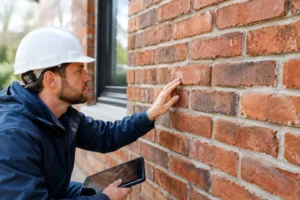
That is why inspections matter. Waterproofing should be based on actual conditions, not a one-size-fits-all package. A dependable contractor will explain what is preventive, what is corrective, and what needs to be handled now before weather makes it worse.
For homeowners, the goal is not just to stop the current leak. It is to protect the chimney so it lasts longer, performs safely, and does not create hidden damage inside the house. That is the standard a company like Adore Construction works toward on every exterior repair.
If your chimney is showing signs of water damage, the best next step is to deal with it while the repair is still straightforward. Water rarely stays in one place, and the sooner the weak point is found, the more options you usually have.