A brick chimney can look solid for decades, then begin shedding thin flakes, cracking at the face, or losing chunks around the corners. Homeowners often ask, what causes brick spalling when they first notice these signs. The short answer is water. The more complete answer is that water gets into brick or mortar, then freezing temperatures, heat, poor drainage, or the wrong repair materials turn a small moisture issue into visible masonry damage.
Spalling is not just a cosmetic problem. When the hard outer surface of a brick breaks away, the softer interior is exposed to more moisture. That can speed up deterioration, weaken chimney sections, and eventually create loose masonry above your roofline. Addressing the source early is usually far more affordable than waiting until rebuilding is needed.
What Causes Brick Spalling?
Brick spalling happens when pressure builds inside the brick or when the brick face loses its ability to protect the material beneath it. In New Jersey, repeated wet and freezing weather is a major contributor. Chimneys are especially vulnerable because they stand above the roof, receive weather from every direction, and have several areas where water can enter.
Freeze-thaw cycles
Brick is porous, even when it appears dense and smooth. Rain, snow, melting ice, and humid air can all introduce moisture into its pores. When that trapped water freezes, it expands. As it thaws, the brick may seem unchanged, but small internal cracks can remain.
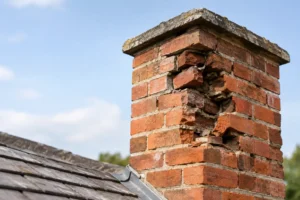
After enough freeze-thaw cycles, the brick face begins to separate. You may see shallow peeling, a rough sandy texture, or pieces breaking off completely. This is common on chimney shoulders, top courses, and the side of a home that gets the most wind-driven rain.
Not every wet brick will spall. Well-made brick with sound mortar and proper water protection can handle normal exposure. The problem grows when water is entering faster than the masonry can dry.
A cracked chimney crown or missing cap
The chimney crown is the sloped concrete top surrounding the flue. Its job is to direct rainwater away from the brick stack. When it cracks, is too flat, or extends poorly beyond the chimney, water can run directly into the brick below.
A missing or damaged chimney cap creates another direct path for water. Rain entering the flue can affect the liner, damper, firebox, and surrounding masonry. It may also contribute to moisture problems around the upper chimney, particularly if the crown is already failing.
These issues are often easy to overlook from the ground. Yet a crown repair or properly fitted cap can stop a great deal of unnecessary water exposure before spalling spreads.
Failed flashing and roof leaks
Flashing is the metal barrier where the chimney meets the roof. If flashing pulls away, rusts through, or was installed incorrectly, water can work behind it. That moisture may damage roof decking and framing, but it can also saturate the lower chimney bricks.
Signs of a flashing-related issue can include ceiling stains near the chimney, damp attic insulation, loose shingles, or spalling concentrated near the roofline. The visible brick damage may be only one part of the repair. A reliable inspection should identify whether the problem begins at the crown, flashing, roof, mortar joints, or a combination of these areas.
Deteriorated mortar joints
Mortar is meant to wear over time, but open, cracked, or crumbling joints allow water deeper into the wall or chimney. Once moisture gets behind the brick face, it can cause spalling from the inside out.
Repointing replaces damaged mortar in a controlled way. It is not simply filling cracks with any available cement. The new mortar needs to be compatible with the existing brick, especially on older homes. Mortar that is too hard can force moisture through the brick instead of allowing it to escape through the joint. That can make spalling worse rather than better.
Wrong materials or poor previous repairs
Some masonry repairs fail because the materials do not match the structure. Dense modern mortar, non-breathable coatings, or poorly applied patch products can trap moisture inside older brickwork. Brick needs to shed water while still allowing vapor to move out.
Painting exterior brick can also create problems if moisture is already present or if the coating is not designed for masonry. A fresh coat may hide stains and cracking for a while, but it does not correct a leaking crown, open mortar joint, or failed flashing detail.
This does not mean every sealant or coating is harmful. The right breathable masonry water repellent can be useful after the underlying repairs are complete. The key is fixing the water entry point first, then using a suitable product to reduce future absorption.
Poor drainage and constant water exposure
Brick walls can spall away from the chimney too. Overflowing gutters, leaking downspouts, soil piled against the foundation, and sprinklers that repeatedly soak one area can all leave masonry wet for long periods.
Look at where the damage is concentrated. Spalling beneath a gutter joint, beside a downspout, or close to grade often points to a drainage problem. Correcting runoff may be just as necessary as repairing the damaged brick.
Heat, salts, and aging brick
Chimney brick experiences temperature changes that ordinary walls do not. Heat from fireplace use and cold outdoor air can place stress on masonry, particularly when the chimney already has moisture intrusion or deteriorated mortar.
Salt can also contribute to surface damage. De-icing products, ocean air in coastal areas, and natural salts carried through masonry moisture may leave deposits that crystallize as the wall dries. Those crystals create pressure near the surface. You may notice white, powdery residue called efflorescence before more serious deterioration appears.
Finally, some brick simply reaches the end of its service life. Older, softer brick may be more vulnerable after many decades of weather exposure. A professional can determine whether selected bricks can be replaced or whether a larger rebuild is the safer long-term option.
How to Tell Spalling From Normal Brick Wear
A few minor chips do not always mean your chimney is failing. Brick near walkways can be damaged by impact, and isolated surface flaws may remain stable. Spalling deserves attention when it is spreading, exposing rough inner brick, or appearing alongside cracked mortar and water stains.
Pay close attention if you find brick pieces on the roof, in gutters, on a deck, or at the base of the chimney. Also watch for vertical cracks, leaning sections, loose bricks, rust stains, white deposits, or damp spots inside the home near the chimney breast. These signs suggest that water has moved beyond the outer surface.
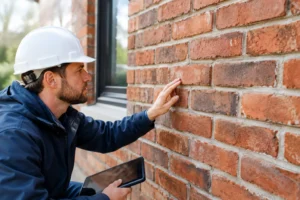
For a chimney, avoid climbing onto the roof or pulling at loose masonry. Damaged brick can be unstable, and roof work adds another safety risk. A proper inspection can assess the chimney from top to bottom, including the crown, cap, flashing, mortar joints, brick condition, and flue components.
The Right Repair Depends on the Cause
There is no one-size-fits-all spalling repair. Replacing a few damaged bricks may be appropriate when the problem is localized and the surrounding masonry is sound. If mortar joints are failing, repointing may be needed at the same time. A cracked crown, damaged flashing, or open cap should be repaired before new brickwork is installed, or the same issue can return.
More advanced deterioration may require partial chimney rebuilding. This is sometimes the safest choice when bricks are loose, the upper courses are badly compromised, or the chimney has lost structural integrity. While rebuilding can feel like a larger expense, patching unstable masonry repeatedly often costs more and leaves the home exposed.
Waterproofing is best viewed as protection after repair, not a substitute for repair. A quality breathable treatment can help limit water absorption while allowing the masonry to dry. It cannot seal a major crack, restore missing mortar, or correct a roof leak.
Preventing Brick Spalling Before It Spreads
A yearly visual check from the ground can help you catch issues early. After heavy storms or winter weather, look for fallen brick fragments, damaged gutters, displaced flashing, and new cracks around the chimney. Keep gutters clear so water does not overflow onto brickwork, and make sure downspouts carry runoff away from the home.
For chimneys, regular inspections are one of the most practical preventive measures. A technician can find crown cracks, failing mortar, cap damage, and flashing concerns before seasonal weather causes larger failures. If your chimney is already showing spalling, scheduling an evaluation soon gives you the best chance to protect the masonry, roof, and interior of your home with a focused repair rather than an emergency project.