Water does not need a large opening to cause a serious problem. A hairline crack in a chimney crown, a missing piece of flashing, or worn mortar between bricks can let moisture work behind the surface for months. This guide to masonry water damage explains what homeowners should watch for, why the source is not always obvious, and when it is time to bring in a qualified contractor.
Brick, stone, and mortar are built to handle weather, but they are not maintenance-free. In New Jersey, repeated rain, snow, humidity, and freeze-thaw cycles put steady pressure on chimneys, exterior walls, steps, and other masonry features. Addressing small issues early protects the structure and helps avoid the cost and disruption of more extensive repairs later.
What Causes Masonry Water Damage?
Masonry is naturally porous. It can absorb a limited amount of moisture and release it as conditions dry. Trouble begins when water enters faster than it can escape, finds an open joint or crack, or becomes trapped behind an exterior surface.
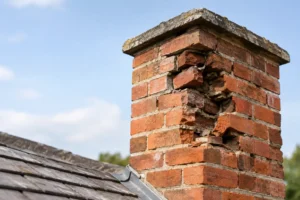
On a chimney, the most common entry points are often the crown, flashing, cap, mortar joints, and brick faces. A damaged crown can allow rainwater into the top of the chimney. Failed flashing can let water in where the chimney meets the roof. Open mortar joints and cracked bricks provide direct paths into the masonry itself.
The visible damp spot inside a home may not sit directly below the actual leak. Water can travel along framing, roof decking, chimney components, or the inside of a wall before it appears on a ceiling or painted surface. That is why a proper inspection matters. Sealing the stain or patching only the most visible crack may hide the symptom while the water continues moving through the structure.
Freeze-Thaw Damage Makes Small Problems Grow
When masonry absorbs water and temperatures fall below freezing, that water expands. The pressure can crack brick faces, loosen mortar, and widen existing gaps. Once the surface is damaged, it absorbs even more water during the next storm.
This cycle is especially hard on exposed chimney crowns, parapet walls, front steps, and older brickwork. What starts as minor surface wear can turn into spalling, where pieces of brick break or flake away, or into mortar loss that weakens the bond between masonry units.
Roof and Drainage Issues Can Be Part of the Problem
Not every masonry leak starts in the masonry. Overflowing gutters, poor roof drainage, damaged shingles, or improperly installed flashing can send concentrated water against brick and stone. A chimney may appear to be failing when the primary issue is actually a roof detail nearby.
That is one reason chimney, roofing, and masonry work should be evaluated together when water is present. The goal is to identify the full path of the water, not simply repair the first damaged area someone can see.
Signs of Masonry Water Damage Around Your Home
Some warning signs are easy to spot from the ground. Others show up inside the house, especially after heavy rain or snowmelt. A musty odor near a fireplace, damp drywall around a chimney breast, peeling paint, or a new ceiling stain can all point to moisture intrusion.
Outside, look for crumbling or recessed mortar joints, cracked bricks, white powdery residue, rust marks, loose chimney flashing, and dark areas that remain wet long after the rest of the surface has dried. The white residue, called efflorescence, is created when moisture carries salts through masonry and leaves them behind as the water evaporates. It does not always mean severe damage, but it does indicate that moisture is moving through the material.
A leaning chimney, bulging wall, loose bricks, or pieces of masonry falling to the ground require prompt professional attention. These conditions can signal structural movement or advanced deterioration. Do not climb onto the roof or pull at loose masonry to investigate. That can create a fall hazard and make an unstable area worse.
How Professionals Find the Real Source
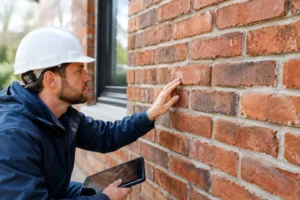
A dependable masonry inspection starts with the exterior. A contractor checks the brick or stone condition, mortar joints, crown, cap, flashing, roof intersections, and drainage around the structure. They also look for repairs that may have been done with incompatible materials or sealants.
Inside, the inspection may include the attic, fireplace area, nearby ceilings, and walls. The timing of the leak is useful information. A stain that appears only after wind-driven rain may point to flashing or exposed joints. Moisture that becomes worse during snowmelt can indicate water entering at the crown or top courses of masonry.
For chimney-related concerns, the flue and liner may also need attention. Water inside a chimney can damage metal components, deteriorate masonry, and contribute to odors. If the chimney is used for a fireplace or heating appliance, it should be evaluated with safety in mind before continued use.
Repair Options Depend on the Damage
The right repair depends on where water is entering and how far the damage has spread. There is no single coating or patch that solves every masonry leak.
Minor mortar deterioration may be addressed through tuckpointing or repointing, where failed mortar is carefully removed and replaced with compatible new mortar. The work needs to match the condition and strength of the existing masonry. Mortar that is too hard for older brick can contribute to future brick damage, so material selection matters.
Cracked or deteriorated chimney crowns may need sealing, resurfacing, or full reconstruction. A crown should be properly shaped to shed water away from the flue and chimney edges. Adding or replacing a chimney cap can also reduce the amount of rain, snow, and debris entering from above.
When flashing has failed, repairing the masonry alone will not stop the leak. Flashing may need to be resealed or replaced where the chimney connects to the roof. If shingles, underlayment, or roof decking have been affected, those areas should be addressed at the same time.
In more serious cases, damaged bricks may need replacement, a section of chimney may need rebuilding, or the chimney may require replacement above the roofline. That may sound like a larger job, but rebuilding unstable masonry is often the safer and more durable choice than repeatedly patching material that has already lost its integrity.
Waterproofing Is Protection, Not a Substitute for Repair
After cracks, failed mortar, crowns, and flashing are corrected, a breathable masonry water repellent can provide an added layer of protection. The key word is breathable. Masonry needs to release moisture vapor. A proper water repellent helps resist rain penetration while allowing trapped moisture to escape.
Paint, thick surface coatings, and improper sealers can create the opposite result. They may trap moisture in the wall, leading to peeling, blistering, and hidden damage behind the surface. Waterproofing should follow repairs, not replace them. Applying sealer over failing mortar or an active flashing leak is a short-term cover-up, not a lasting solution.
What Homeowners Can Do Between Inspections
A few routine habits can reduce water exposure. Keep gutters and downspouts clear, and make sure downspouts direct water away from the foundation and masonry. After major storms, take a ground-level look at the chimney, roofline, and exterior brickwork for new cracks, missing pieces, or stains.
Avoid pressure-washing masonry at aggressive settings, especially older brick and mortar. High pressure can force water into joints and remove weakened material. Also avoid using store-bought caulk as a broad fix for cracked masonry. Caulk may be appropriate in a limited detail, but it is not a replacement for mortar repair, flashing work, or crown restoration.
A yearly chimney inspection is a practical way to catch issues before the next winter season. If your home has an older chimney, prior leak history, or visible mortar wear, scheduling service before heavy rain and freezing weather is particularly worthwhile.
When to Schedule Masonry Repair
Call for an inspection when you see a new interior water stain, active dripping near a fireplace, damaged chimney flashing, missing mortar, cracked brick, or water entering after storms. Waiting until a small leak becomes a major ceiling or structural repair usually costs more than addressing the exterior source early.
At Adore Construction, the focus is on finding the cause, explaining the repair clearly, and completing work that protects your home for the long term. A well-maintained chimney and masonry system should shed water where it belongs – away from your home, not into it.