A chimney with failing mortar rarely stays a small problem for long. Once joints start cracking, crumbling, or washing out, water gets in fast – and that is when you start seeing leaks, loose bricks, draft problems, and bigger repair bills. If you are looking up how to repair chimney mortar, the first thing to know is simple: the right fix depends on how deep the damage goes and how safely the work can be done.
For many homeowners, the visible issue is just the mortar joint. What is happening underneath can be more serious. Freeze-thaw weather, moisture intrusion, age, poor past repairs, and even roofline movement can all wear down chimney masonry over time. A surface patch might make it look better for a season, but if the wrong material is used or the damaged mortar is not removed properly, the repair will not last.
How to repair chimney mortar the right way
The most common repair is tuckpointing, also called repointing. That means removing damaged or loose mortar from the joints and replacing it with new mortar that matches the existing masonry as closely as possible. Done correctly, this restores strength, helps keep water out, and extends the life of the chimney.
The basic process sounds straightforward, but the details matter. The old mortar needs to be removed to the proper depth without damaging the surrounding brick. The joints need to be cleaned out well so the new mortar bonds properly. Then the new mix has to be appropriate for the chimney itself. Mortar that is too hard can create new problems by forcing older brick to absorb stress and moisture.
That is why chimney repairs are not the same as filling cracks in a sidewalk or patching a wall. Chimneys sit high, take direct weather exposure, and move through constant heating and cooling cycles. A repair has to do more than look neat. It has to hold up through rain, temperature swings, and regular use.
Signs your chimney mortar needs repair
Most homeowners notice mortar issues from the ground, but not all warning signs are obvious. Cracks between bricks, missing mortar, sandy debris on the roof or ground, and white staining on the masonry are all common clues. Sometimes the first sign is water inside the home near the fireplace or chimney chase.
If the chimney looks uneven, bricks are loosening, or sections appear to bulge outward, the problem has likely moved beyond a simple mortar touch-up. Those symptoms can point to structural deterioration, not just weathered joints. At that stage, a more involved masonry repair may be needed.
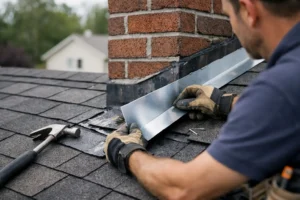
It also helps to look at surrounding parts of the system. A damaged crown, failed flashing, missing cap, or poor waterproofing can keep feeding moisture into the masonry. In those cases, repairing the mortar alone may not solve the root problem.
When a DIY chimney mortar repair may work
There are limited situations where a homeowner can handle a minor chimney mortar repair. If the damage is low, easy to reach, clearly cosmetic, and limited to a few small joints, a careful spot repair may be reasonable. Even then, the work should be done with the correct tools, proper safety setup, and a matching mortar type.
Height changes the equation quickly. If the chimney repair requires roof access, ladder work, or leaning over a roof slope, safety becomes the first concern. That is especially true after rain, during colder months, or on older roofing materials that can be damaged underfoot.
There is also the risk of misreading the problem. What looks like surface mortar loss may actually be a sign of moisture coming in through the crown or flashing. If that source is left unaddressed, the same section can fail again.
What the repair process usually involves
For a standard repointing job, the damaged mortar is removed by hand tools or specialized grinders to a consistent depth. Care is taken not to chip the brick edges. The joints are then brushed and cleaned so dust and loose material do not weaken the bond.
Next, the masonry is lightly dampened if conditions call for it. This helps prevent the existing brick from pulling too much moisture out of the fresh mortar too quickly. The new mortar is packed firmly into the joints in layers, then tooled to the proper shape. Once it begins curing, excess material is cleaned from the brick face.
A good repair also accounts for weather. Mortar should not be installed during freezing conditions or extreme heat without proper precautions. Temperature, humidity, and sun exposure all affect curing. Rushing the job can lead to weak joints, shrinkage cracks, or early failure.
Choosing the right mortar matters
One of the biggest mistakes in chimney work is using the wrong mortar mix. Older chimneys often need a softer mortar that allows the brick and joints to expand and contract naturally. A harder modern mix may seem stronger, but it can trap moisture or put stress on the brick itself.
Color matching matters too, but performance comes first. A close visual match keeps the repair from standing out, while the correct composition helps protect the chimney long term. This is one reason experienced masonry contractors inspect the age and condition of the structure before mixing anything.
If part of the chimney has already been repaired with mismatched mortar, the current damage may be tied to that earlier work. In those cases, simply adding more patch material on top does not fix the underlying issue.
When chimney mortar repair is not enough
Sometimes deteriorated mortar is only one part of a larger problem. If bricks are spalling, the crown is cracked, the flue liner is compromised, or the chimney is taking on heavy water from above, repointing alone will not be enough. You may need brick replacement, crown repair, flashing repair, waterproofing, or partial rebuilding.
This is where homeowners can lose money by treating symptoms instead of causes. A low-cost patch can feel like progress, but if water keeps entering the structure, damage keeps spreading behind the surface. That is why a proper inspection is worth it before repair work begins.
In New Jersey, changing seasons can be especially hard on masonry. Moisture gets into small openings, temperatures drop, and expansion creates larger cracks. By the time spring comes around, what started as minor mortar loss can become loose brickwork or interior leaking.
Why professional chimney mortar repair often pays off
A professional chimney repair is not just about labor. It is about diagnosis, safe access, material selection, and making sure the repair solves the actual problem. A qualified contractor can tell whether the chimney needs repointing, rebuilding, sealing, or a combination of repairs.
That matters for both safety and cost. A chimney that is actively deteriorating can become a fire risk, a water intrusion problem, or a falling masonry hazard. Fixing it correctly the first time is usually less expensive than repeating temporary repairs every year.
For homeowners who want straightforward answers, that is the value of working with a company that handles chimney systems every day. At Adore Construction, the focus is on practical repairs that protect the home, not cosmetic work that leaves bigger issues behind.
How to decide your next step
If your chimney mortar is cracked, missing, or crumbling, do not wait for visible brick movement or water damage inside the house. Small masonry failures tend to grow quietly, and by the time they become obvious, the repair is usually larger.
A good next step is to assess how extensive the damage appears and whether the chimney can be safely inspected up close. If the problem is minor and easily reached, a limited repair may be possible. If the chimney is high, weather-exposed, leaking, or showing signs of structural wear, it is smarter to have it evaluated before attempting a fix.
The goal is not just to make the chimney look better. It is to keep water out, maintain safe operation, and protect the rest of the home from avoidable damage. When chimney mortar starts failing, a timely repair gives you the best chance of keeping the whole system sound for years to come.