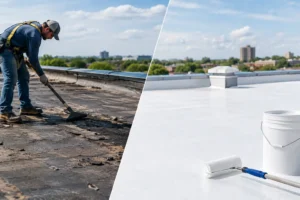
A few inches of standing water may not look urgent from the ground, but on a low-slope roof, it can turn a small drainage problem into an active leak. This flat roof ponding case study follows a common residential situation: repeated water buildup around a drain, staining on an interior ceiling, and a roof system that still had usable life if the right repairs were made quickly.
The lesson is straightforward. Ponding water is not always proof that a roof needs replacement, but it should never be ignored. The right solution depends on why the water is collecting, the condition of the membrane, and whether the deck and insulation below it are still sound.
The Call: Water Remained Days After Rain
The homeowner had a low-slope section over a rear addition. After steady rain, water remained in one area for several days. The roof had also begun leaking at the ceiling line near an exterior wall, particularly after storms with wind-driven rain.
At first, the owner assumed the drain was simply clogged. There was debris around the drain strainer, but clearing it did not solve the problem. Water still settled in the same broad depression, roughly six feet from the drain opening.
That distinction mattered. A blocked drain creates a maintenance issue. A roof that drains poorly after the drain is clear may have a slope, insulation, deck, or membrane issue that needs professional repair.
What the Inspection Found
A proper inspection started with the drainage path, not with a quick patch over the visible leak. The roof surface was checked for open seams, cracking, punctures, loose flashing, soft areas, and signs that water had traveled beneath the membrane.
The drain itself was functioning, but the surrounding roof area had settled. Water could not reach the drain efficiently because the roof plane had developed a shallow low spot. The membrane in that area showed wear from prolonged exposure and repeated wet-dry cycles. At one seam near the ponding area, the material had begun to separate enough for water to work underneath.
Inside the home, the ceiling stain was limited, and moisture readings helped confirm that the damage had not spread across the entire roof section. That made a targeted repair a reasonable option. If the decking had been extensively soft or saturated, a larger tear-off and rebuild would have been the safer recommendation.
Why Standing Water Creates Bigger Problems
Most roof membranes are designed to handle rain, but long-term ponding places extra stress on every weak point. Standing water keeps seams, penetrations, and flashing wet for longer. In freezing weather, water can expand and worsen small cracks. It also holds dirt and organic material, which can block drains and make future inspections harder.
The concern is not only the water on top. Once moisture reaches the layers below the membrane, insulation can lose performance and roof decking can deteriorate. A small leak may then become an expensive structural repair.
The Repair Plan: Fix the Cause, Then Restore the Surface
The goal was not to make the pond less visible. The goal was to move water toward the drain and restore a watertight roof surface.
First, the affected membrane area was opened so the condition of the materials below could be checked. Damaged wet material was removed rather than covered over. Leaving trapped moisture beneath a new patch can shorten the life of the repair and conceal ongoing deterioration.
Next, the low area was corrected using a properly designed tapered material system to improve drainage toward the existing drain. This was a targeted slope correction, not a full reconfiguration of the entire roof. It addressed the depression without adding unnecessary work where the roof was still performing properly.
The roof surface was then rebuilt with compatible membrane materials, including properly sealed seams and reinforced detailing where the repaired section met the existing roof. Flashing at the wall transition was inspected and sealed because water often finds its way into a roof system at edges, transitions, and penetrations rather than through the center of the field membrane.
Finally, the drain area was cleaned, the strainer was secured, and water flow was tested. A repair is not complete until water has a clear path off the roof.
Flat Roof Ponding Case Study: Why a Patch Alone Was Not Enough
A simple surface patch may have slowed the leak for a while, but it would not have corrected the depression that caused water to remain on the roof. Every storm would have continued to place the repaired seam under extended stress.
This is where homeowners can save money by avoiding the cheapest-looking option. A patch makes sense when damage is isolated and the roof drains correctly. When ponding is caused by settled materials or poor slope, the repair needs to address drainage as well as waterproofing.
That does not automatically mean a full roof replacement. In this case, the roof was repairable because the affected area was limited, the decking remained stable, and the surrounding membrane had not reached the end of its service life. A dependable contractor should explain that difference clearly instead of treating every leak as a replacement sale.
Results After the Repair
After the repair, water was directed toward the drain instead of sitting in the center of the roof. The homeowner was advised to monitor the area after the next heavy rain, particularly during the first few months, and to keep the drain clear of leaves and debris.
The interior ceiling area was allowed to dry fully before cosmetic repairs were considered. This order is important. Painting over a water stain before the roof issue is corrected only hides evidence of a continuing leak.
The project also gave the homeowner a more useful maintenance plan. Low-slope roofing does not need constant attention, but it does benefit from regular checks after severe weather and seasonal debris buildup.
What Homeowners Should Watch For
Ponding water is easiest to spot after rain, but there are other warning signs that deserve attention. A ceiling stain, peeling paint near an exterior wall, bubbling roof material, loose edge flashing, or a drain that frequently clogs can all point to trouble above.
If water remains on a flat or low-slope roof more than 48 hours after dry weather returns, it is wise to schedule an inspection. The exact timing can vary with weather, roof design, and drainage layout, but water that repeatedly lingers should be evaluated.
Do not walk on a suspect roof to investigate it yourself. Low-slope roofs can hide soft spots, slippery areas, and damaged membrane sections. A professional inspection can identify whether the problem is a clogged drain, minor seam failure, localized settling, failing flashing, or a larger roof-system issue.
Maintenance That Helps Prevent Ponding
The most useful habit is keeping drains, scuppers, and gutters free of leaves, dirt, and roof debris. Homeowners should also look from the ground for sagging gutters, damaged fascia, or obvious water overflow during rain.
For older low-slope roofs, an annual inspection is a practical way to catch open seams and drainage concerns before interior damage appears. This is especially worthwhile after major storms, heavy snow, or repeated freeze-thaw weather common in New Jersey.
The Right Repair Depends on the Roof Below the Water
Standing water is a symptom, not a diagnosis. Some roofs need drain cleaning and seam repair. Others need localized slope correction, new flashing, or replacement of wet materials below the membrane. When moisture has spread widely or the roof structure is compromised, replacement may be the responsible choice.
The key is a thorough inspection and a repair plan built around the actual cause of the ponding. A dry roof after one storm is good. A roof that sheds water properly and protects the home through the next season is the result that matters.