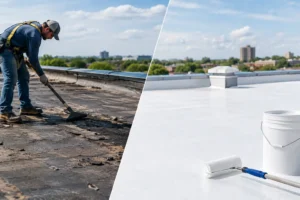
A low-slope roof can look simple from the ground, but it has very little room for error. Water does not shed as quickly as it does on a steep shingle roof, so weak seams, failing flashing, clogged drains, and small ponding areas can turn into interior leaks. Choosing among the best low slope roofing options means looking beyond the surface material and considering drainage, roof condition, nearby chimneys, and how long you need the system to last.
For New Jersey homeowners, that decision also has to account for freeze-thaw weather, wind-driven rain, summer heat, and falling leaves. The right roof should form a dependable waterproof barrier, work with the shape of your home, and allow repairs to be handled before water damages framing, insulation, ceilings, or masonry.
What Makes Low-Slope Roofing Different?
A low-slope roof is not always completely flat. It is typically built with a slight pitch that directs water toward drains, scuppers, gutters, or roof edges. Even with that slope, water can move slowly and remain on the roof longer than it would on asphalt shingles.
That is why low-slope roofing depends on continuous membranes, secure seams, properly detailed edges, and careful flashing around penetrations. Chimney bases, vent pipes, skylights, HVAC equipment, parapet walls, and transitions to shingle roofing are frequent leak points. A quality material is only part of the solution. Installation details and drainage determine whether the roof performs as intended.
Before selecting a system, a contractor should inspect the deck, insulation, existing roof layers, flashing, and drainage path. If the deck has soft spots or the roof holds standing water for days, applying a new surface alone may not solve the problem.
The Best Low Slope Roofing Options for Most Homes
The best choice depends on your roof design, budget, existing materials, and whether you need a full replacement or a restoration. These are the systems homeowners most often consider.
EPDM Roofing: Proven, Flexible Protection
EPDM is a synthetic rubber membrane commonly used on residential low-slope roofs. It is usually black, although lighter options are available, and it can be installed in large sheets with seams sealed using specialized tape or adhesive.
Its biggest advantage is flexibility. EPDM handles temperature changes well, which matters in a climate where winter cold and summer heat can put stress on roofing materials. It is also a practical choice for roofs with a straightforward layout and limited foot traffic.
EPDM is often among the more budget-conscious full replacement options, but it is not maintenance-free. Seams, edge details, and flashing still need periodic inspection. A puncture from a branch, tools, or repeated traffic can lead to a leak if it is not repaired promptly. Black EPDM can also absorb more heat than white reflective membranes.
PVC Roofing: Strong Seams and Reflective Performance
PVC is a single-ply white membrane with heat-welded seams. Those welded seams are a major reason PVC is often selected for low-slope roofs where long-term waterproofing is the priority. Properly installed, the seams become highly resistant to water entry.
The white surface reflects sunlight, helping reduce heat absorption during hot weather. PVC also stands up well to moisture and many common rooftop contaminants. For homeowners with a low-slope roof near a chimney or equipment that requires occasional service access, PVC can offer dependable performance when the membrane thickness and detailing are matched to the application.
PVC usually costs more upfront than EPDM. The installation also requires trained installers and the right equipment. It is not a material to treat as a shortcut job, especially around roof edges, walls, and chimney flashing. When installed correctly, however, PVC can be an excellent long-term investment.
Modified Bitumen: Durable Multi-Layer Coverage
Modified bitumen is an asphalt-based membrane system designed for low-slope applications. It can be installed using self-adhered sheets, cold-applied methods, or torch-applied methods, depending on the system and job conditions. Many modified bitumen roofs use multiple layers, adding redundancy against water intrusion.
This option works well for homeowners who want a tough roof surface with strong puncture resistance. It can be especially useful on roofs that receive service traffic or have a more complex shape. Granulated cap sheets are available in reflective colors, which can help manage heat exposure.
The trade-off is that modified bitumen installation can be more labor-intensive, and torch-applied work requires serious fire safety controls. Open-flame roofing should only be handled by experienced professionals who understand the structure, surrounding materials, and safe installation procedures. Self-adhered and cold-applied systems may be better choices in certain residential settings.
Silicone Roof Coatings: A Smart Restoration Option
A silicone coating is not a replacement roof system. It is a liquid-applied restoration solution that can extend the service life of an existing low-slope roof when the underlying roof is still structurally sound.
Silicone is particularly useful because it resists standing water better than many other coating types. Once applied at the proper thickness, it creates a continuous protective surface over eligible existing materials. It can be a practical way to address weathering, minor surface deterioration, and aging seams without the cost and disruption of a complete tear-off.
A coating is only as good as the roof beneath it. If there is trapped moisture, wet insulation, widespread membrane failure, damaged decking, or active leaks caused by failed flashing, those issues must be corrected first. Coating over serious problems can hide damage temporarily while allowing it to worsen underneath.
How to Choose the Right System for Your Roof
Start with the condition of the existing roof. If the membrane has isolated damage but the insulation and deck are dry, a targeted repair or coating may make financial sense. If leaks are widespread, seams are failing throughout the roof, or the deck is compromised, replacement is usually the safer long-term decision.
Next, consider drainage. No material performs at its best when water has nowhere to go. A low spot may need to be corrected with tapered insulation, deck repairs, or drainage improvements before a new membrane is installed. Keeping gutters, scuppers, and drains clear is equally important after the job is complete.
Roof use matters too. A roof that only needs occasional access has different needs than one with HVAC equipment, solar components, or regular maintenance traffic. In higher-traffic areas, added walkway pads or a more puncture-resistant system can prevent avoidable damage.
Finally, look closely at transitions and penetrations. Low-slope leaks often begin at the chimney, wall flashing, vents, and roof edges rather than in the center of the field membrane. A contractor should explain how these areas will be tied into the new system, not simply quote a square-foot price for roofing material.
Warning Signs You Should Not Ignore
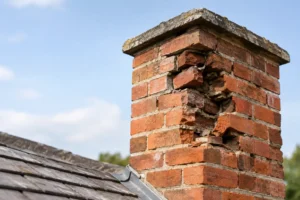
Water stains on the ceiling, peeling paint near exterior walls, a musty odor in the upper level, or visible bubbling on a roof surface should be inspected quickly. So should cracked flashing at the chimney, loose membrane edges, open seams, and standing water that remains after dry weather.
Do not assume a small leak is minor because the ceiling stain is small. Water can travel along framing or insulation before it becomes visible inside. Early repairs are generally less disruptive and less expensive than replacing damaged decking, insulation, drywall, and masonry components later.
For homeowners dealing with both a roof concern and chimney flashing issues, it makes sense to have the entire transition evaluated at one time. Adore Construction helps homeowners identify the source of water entry and recommend repairs or replacement work based on the actual condition of the roof, not a one-size-fits-all answer.
A dependable low-slope roof should give you confidence every time heavy rain moves through. Choose a system that fits the structure, address drainage and flashing before they fail, and work with an insured contractor who will stand behind the workmanship.