A hailstorm can leave a roof looking mostly normal from the ground while causing damage that shortens its life. Missing granules, bruised shingle mats, cracked corners, and damaged flashing can all create a path for future leaks. For New Jersey homeowners, the best roof shingles for hail are not simply the thickest-looking option. They are shingles with a verified impact-resistance rating, installed correctly as part of a complete roofing system.
The strongest choice for many homes is a Class 4 impact-resistant architectural shingle, especially one made with SBS-modified asphalt. That does not mean every home needs the highest-priced product on the shelf. Your roof pitch, existing condition, exposure to wind, nearby trees, insurance requirements, and budget all matter. The key is knowing what you are paying for and where hail resistance makes a real difference.
Best Roof Shingles for Hail Start With a Class 4 Rating
When comparing shingles, look for an impact-resistance classification based on UL 2218 testing. This test measures how well a roofing product withstands impacts that simulate hail. Ratings run from Class 1 through Class 4, with Class 4 representing the highest level of impact resistance.
A Class 4 shingle is tested using steel balls dropped from a set height. The shingle must resist cracking after impact to earn that rating. It is a meaningful standard, but homeowners should understand what it does and does not promise. A Class 4 rating does not make a roof hail-proof. It means the shingle is less likely to crack under the test conditions than a lower-rated product.
For a roof that has already experienced storm damage, a Class 4 replacement can be a practical upgrade. It may better resist future impact damage and, in some cases, qualify for an insurance premium discount. Always confirm that discount directly with your insurer before choosing a material based on potential savings. Carriers have different rules, and some require proof of the exact shingle product and installation.
The Top Shingle Options for Hail Resistance
Class 4 architectural asphalt shingles
Architectural shingles are the most common choice for residential roof replacements. They are thicker and more layered than basic three-tab shingles, giving them a more dimensional appearance and generally better durability. When an architectural shingle carries a Class 4 rating, it offers a strong balance of hail protection, appearance, availability, and cost.
This is often the right answer for homeowners who want dependable protection without moving to a specialty roofing material. Choose a product with a clear Class 4 UL 2218 designation, rather than assuming that a heavier shingle is automatically impact resistant. A shingle can look substantial and still lack the tested rating you need.
SBS-modified asphalt shingles
SBS-modified shingles are often the best upgrade for homeowners concerned about hail. SBS is a rubber-like polymer added to asphalt to improve flexibility. In cold weather, standard asphalt can become less flexible and more prone to cracking after an impact. Modified asphalt is designed to better absorb that impact instead of breaking.
This matters in New Jersey, where roofs face freezing temperatures, snow, wind-driven rain, and sudden spring or summer storms. An SBS-modified Class 4 architectural shingle can cost more than a standard architectural shingle, but the added flexibility and impact resistance can be worthwhile for a long-term roof replacement.
Not every SBS-modified shingle has the same warranty, color selection, or wind rating. The product should be compared as part of the entire system, not selected by one label alone.
Standard architectural shingles
A quality standard architectural shingle may still be a sensible choice when hail is only one part of the decision. If your roof is sheltered, your budget is tight, or the existing roof has other urgent repair needs, a well-installed standard shingle system can provide reliable service.
The trade-off is straightforward: standard shingles usually cost less up front, but they may be more vulnerable to cracking and granule loss during a severe hail event. If the area has seen repeated hail claims or your home is exposed on an open lot, the savings may not be worth giving up a higher impact rating.
Designer and specialty asphalt shingles
Some premium designer shingles offer Class 4 performance along with a heavier, more detailed appearance. They can be a good fit for homeowners who want a roof that complements a historic or higher-end exterior. However, higher cost does not automatically mean better hail protection. Confirm the tested impact rating for the specific product line and color you select.
Dark colors can also make some types of surface damage more visible, while textured, blended colors can help conceal minor cosmetic wear. That should not replace a proper inspection after a storm, but appearance can matter when choosing a roof that will be on your home for decades.
Hail Resistance Depends on More Than the Shingle
A good shingle cannot overcome poor installation. Roof protection comes from the full system: proper decking repairs, ice and water protection where needed, underlayment, starter shingles, ventilation, flashing, ridge components, and correctly placed fasteners.
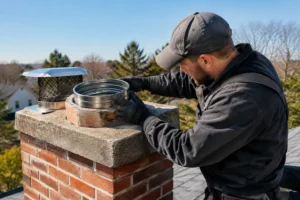
Flashing deserves special attention around chimneys, skylights, walls, and roof penetrations. Hail can damage exposed metal, but leaks often occur because old or poorly installed flashing has already weakened. If a roof replacement includes chimney work, the transition between the chimney and roof should be inspected and rebuilt as needed, not covered over and ignored.
Nail placement also matters. Nails driven too high, too low, or too deeply can weaken shingle attachment and affect wind performance. A Class 4 shingle installed incorrectly will not perform like the tested product. This is why the contractor’s workmanship and the materials used underneath the shingles are just as important as the brand on the bundle.
What Hail Damage Actually Looks Like
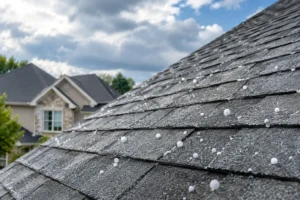
Hail damage is not always obvious. On asphalt shingles, it can appear as small circular areas where granules are missing, dark spots where the shingle mat has been bruised, or cracks along edges and tabs. On metal components, look for dents in gutters, vents, flashing, and soft aluminum surfaces.
Not every mark is hail damage. Blistering from heat, normal weathering, manufacturing defects, foot traffic, and falling branches can leave similar signs. A professional inspection is the safest way to separate normal wear from storm-related damage. Avoid walking on the roof yourself after a storm, particularly if the shingles are wet, steep, brittle, or already damaged.
If you suspect damage, take ground-level photos of hail accumulation, damaged siding, dented gutters, and fallen debris when it is safe to do so. Then arrange an inspection promptly. Waiting too long can make it harder to identify storm-related damage and allows minor roof issues to turn into interior water damage.
How to Choose the Right Hail-Resistant Roof
Start with the roof’s current condition. If only a small area has been damaged and matching materials are available, a targeted repair may be enough. If the roof is aging, has widespread granule loss, or has recurring leaks, replacement may offer better value than repeated repairs.
Next, compare products using the same criteria: UL 2218 impact class, wind rating, warranty terms, manufacturer system requirements, and installed price. Ask whether the quoted shingle is Class 4 for the exact style and color, because ratings can vary within a product family. Request that the material name and impact rating appear clearly on the estimate.
Also ask what is included beyond the shingles. A complete proposal should address removal of old roofing, deck inspection, underlayment, ice and water protection, ventilation, flashing, cleanup, and disposal. A low quote that skips these details can become expensive when hidden problems are found later.
For most homeowners, the practical choice is a Class 4 architectural shingle with SBS-modified asphalt, installed by an insured contractor who can explain every part of the system. It provides meaningful impact resistance without requiring a major change to the home’s appearance or maintenance routine.
A roof has one job when the weather turns: keep water outside and your home protected. If hail has hit your neighborhood or your roof is nearing the end of its service life, a clear inspection and a straightforward estimate will help you choose protection that fits your home, not just the storm forecast.