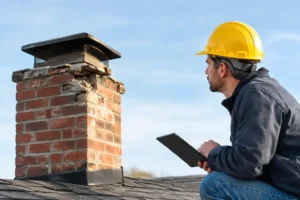
A chimney can look solid from the ground while quietly taking on water through its brick, mortar joints, crown, or flashing. The best masonry sealers for chimneys help stop that moisture from soaking into the surface, but the right product is only part of the job. If the chimney has open joints, failed flashing, loose brick, or a cracked crown, sealer alone will not solve the problem.
For New Jersey homeowners, that distinction matters. Freeze-thaw cycles can turn a small moisture issue into spalling brick, crumbling mortar, interior leaks, and expensive structural repairs. A quality breathable masonry water repellent can extend the life of a sound chimney. It cannot replace the repair work needed to make an unsound chimney watertight.
What Makes a Chimney Sealer Worth Using?
The best chimney sealers are not paint and they are not thick coatings that trap moisture inside the masonry. For most brick, stone, and mortar chimneys, the preferred choice is a penetrating, breathable water repellent made with silane, siloxane, or a silane-siloxane blend.
These products absorb below the surface and line the pores of the masonry. Rainwater beads up and runs off, while water vapor from inside the chimney can still escape. That breathability is critical. Masonry naturally holds and releases a small amount of moisture. A film-forming coating can block vapor, leaving moisture trapped behind the surface where it may freeze, expand, and damage the brick or mortar.
A good chimney sealer should be vapor permeable, suitable for vertical masonry, resistant to UV exposure, and clear when dry. It should also be rated for the specific material on your chimney. Brick, natural stone, manufactured stone, concrete block, and mortar can absorb sealer differently.
Best Masonry Sealers for Chimneys by Type
There is no single best product for every chimney. The right formula depends on the masonry condition, the amount of absorption, and whether the surface has been coated or repaired before.
Silane-Siloxane Penetrating Sealers
For most residential brick chimneys, a professional-grade silane-siloxane water repellent is the strongest all-around choice. This category is designed to penetrate porous masonry, reduce water absorption, and allow vapor to move out. It is especially useful for exposed chimneys that face wind-driven rain, snow, and seasonal temperature swings.
Products such as ChimneySaver Water-Base Water Repellent, PROSOCO Siloxane PD, and Sure Klean Weather Seal Siloxane PD are widely recognized examples of breathable penetrating masonry repellents. The better fit depends on the surface and application requirements, so always confirm the manufacturer’s compatibility guidance before buying.
The trade-off is preparation. Penetrating sealers need clean, dry, absorbent masonry to work properly. Applying one over dirt, algae, efflorescence, loose mortar, or an old non-breathable coating can lead to uneven results or poor penetration.
Water-Based Penetrating Sealers
Water-based formulas are often a practical option for homeowners because they have lower odor, are easier to work with, and can provide strong water resistance when applied correctly. They are well suited to many brick and mortar chimneys, particularly when the masonry is in generally good condition and has not been painted or heavily coated.
Do not assume water-based means weaker. Quality water-based silane-siloxane products can deliver professional results. The key is using enough material to fully saturate the masonry without allowing puddles, drips, or glossy residue to dry on the face of the brick.
Solvent-Based Penetrating Sealers
Solvent-based repellents can penetrate dense or highly weathered masonry effectively in certain conditions. They may be recommended when a particular chimney material needs deeper absorption or when temperature and moisture conditions make a water-based product less suitable.
They also require greater care during application. Odor, ventilation, fire safety, nearby landscaping, and cleanup all need attention. For a roof-level project around a chimney, professional application is often the safer route.
Products to Avoid on Most Brick Chimneys
Avoid using standard masonry paint, acrylic waterproofing paint, roof coating, or a thick elastomeric wall coating as a quick fix for a brick chimney. These products can change the appearance, peel over time, and potentially trap moisture in the masonry. They may have a place on certain concrete or stucco surfaces, but they are not the first choice for traditional exposed brick chimneys.
Also be cautious with inexpensive general-purpose sealers that do not clearly state vapor permeability or masonry compatibility. A low upfront price is not a value if the product fails after one winter or contributes to surface damage.
Repair the Chimney Before Applying Sealer
Waterproofing works best after the chimney has been inspected and repaired. A sealer is a protective layer, not a patching compound. Before any product goes on, look for missing mortar, cracked brick, deteriorated crown edges, loose flashing, rusted metal, and gaps around the flue.
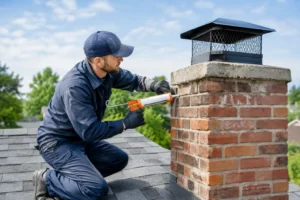
Repointing damaged mortar joints should come first. Old, soft, or missing mortar allows water to enter deep into the chimney system, where surface sealer has limited ability to help. Cracked brick may need replacement, and a damaged crown may need repair or replacement with a properly sloped, reinforced crown that sheds water away from the flue.
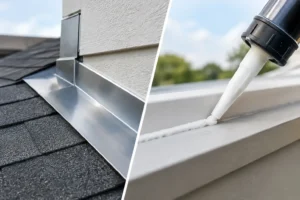
Flashing deserves the same attention. Homeowners often assume a chimney leak comes through the brick, but failed flashing at the roofline is a common source of water intrusion. If water is getting behind the flashing, sealing the chimney face will not stop the leak.
How Proper Chimney Waterproofing Is Applied
A long-lasting result starts with surface preparation. The chimney should be cleaned of loose debris, moss, dirt, and surface staining. If efflorescence is present, it should be addressed rather than sealed over. The masonry then needs enough dry time for the sealer to penetrate as intended.
The product is typically applied from the bottom upward using a low-pressure sprayer, roller, or brush, depending on the product and chimney condition. The goal is even saturation. On very porous brick or mortar, a second wet-on-wet coat may be needed before the first coat dries.
Weather matters. Do not apply masonry sealer if rain is expected before the product has time to cure, if the chimney is visibly wet, or if temperatures fall outside the manufacturer’s stated range. Roof work also introduces real fall hazards. A tall chimney, steep roof, or hard-to-reach rear roofline is not a good place to learn by trial and error.
Signs Your Chimney Needs More Than Sealer
Call for an inspection if you see brick faces flaking off, deep vertical cracks, a leaning chimney, white staining that keeps returning, interior water marks near the fireplace, or pieces of mortar collecting on the roof. These are warning signs that water may already be affecting the structure.
You should also schedule service if smoke enters the home, the flue liner is damaged, or the chimney crown has major cracks. Waterproofing protects the exterior, but it does not address fire safety, venting problems, or internal liner damage.
At Adore Construction, we look at the full chimney system before recommending waterproofing. That means identifying whether the water is entering through masonry, the crown, flashing, cap, roof connection, or more than one area at once. Clear repairs first, then the right breathable sealer, provide the protection homeowners expect.
A properly sealed chimney should still be inspected periodically, especially after harsh winters and heavy storms. Taking care of small repairs while they are manageable is the most reliable way to keep water outside, where it belongs.