A stain on the ceiling near your fireplace is easy to blame on the roof shingles. But the problem is often closer to the chimney. Can cracked flashing cause leaks? Yes. Even a small crack, loose edge, or failed seal in chimney flashing can let rainwater enter the roof system and travel into the attic, walls, or ceilings.
Flashing is one of the most important waterproofing details on your home, yet it is easy to overlook from the ground. It works at a difficult intersection where the roof meets a vertical masonry structure. When that connection fails, water has a direct path inside. Addressing the issue early can prevent a manageable chimney repair from becoming damaged decking, rotted framing, mold growth, or interior restoration work.
What chimney flashing does
Chimney flashing is usually made of galvanized steel, aluminum, copper, or lead-coated metal. It is installed around the base of the chimney where it passes through the roof. Its job is simple: direct water away from the chimney and back onto the roof surface, where it can drain safely.
A properly built flashing system has more than one piece. Base flashing sits against the roof and chimney. Step flashing is woven into the shingles along the sides. Counterflashing is embedded into the chimney mortar joints or secured over the top edge, protecting the joint from wind-driven rain. Sealant may be used in select areas, but sealant alone should never be the only defense against water.
Because flashing handles movement, weather, and runoff every day, it can eventually wear out. New Jersey homes are exposed to freezing temperatures, heavy rain, snow, wind, and summer heat. Those seasonal changes cause materials to expand and contract. Over time, metal can crack, mortar can loosen, and old sealant can separate.
Can cracked flashing cause leaks? Here is how
A crack in flashing may look minor, but water does not need a large opening. Rain can be pushed uphill by wind, pulled into narrow gaps by surface tension, or backed up by snow and ice. Once water gets behind the flashing, it can soak roof decking and framing before it ever becomes visible indoors.
Leaks may also appear far from the actual flashing failure. Water can follow rafters, roofing felt, or the underside of the roof deck. That is why a ceiling stain in a bedroom, hallway, or living room does not always point directly to the source.
The type and location of the damage matter. A hairline crack in a low-stress area may not leak immediately, while a loose counterflashing section on the uphill side of a chimney can allow significant water entry during the next storm. A repair should be based on the whole flashing system, the condition of the surrounding roof, and the chimney masonry – not just the most visible crack.
Warning signs that flashing may be failing
The clearest sign is water intrusion near the chimney, especially after rain or melting snow. You may see a brown ceiling stain, peeling paint, damp drywall, or a musty smell in the room below. In the attic, look for darkened wood, wet insulation, rusted nails, or water marks around the chimney opening.
Outside, damaged flashing may be easier to spot. Watch for lifted metal edges, rust, holes, cracked sealant, missing sections, or flashing that has pulled away from the brick or siding. Crumbling mortar near the counterflashing is another concern because it can open a path behind the metal.
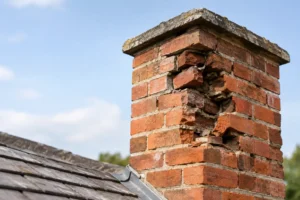
Other symptoms are less obvious. Shingles near the chimney may curl, loosen, or show premature wear because water is getting underneath them. White staining on the chimney, called efflorescence, can indicate that moisture is moving through the masonry. Loose bricks, spalling faces, or cracked crown areas may allow water into the chimney structure and make the flashing problem worse.
If you notice active dripping, a growing ceiling stain, or wet insulation, do not wait for a dry season. Water damage spreads quickly once it reaches wood and drywall.
Why chimney flashing cracks or separates
Age is a common cause. Older flashing can rust or become brittle after years of exposure. Aluminum can corrode when it contacts certain masonry materials, and galvanized steel can eventually rust when its protective coating wears away.
Poor installation is another major reason for early failure. Flashing needs proper overlap, secure fastening, and a correct connection to both the roofing and chimney. Counterflashing should be properly set into mortar joints or installed with a reliable mechanical attachment. Simply applying a heavy bead of caulk around exposed metal may stop a small leak temporarily, but it does not replace correctly installed flashing.
Chimney movement can also create gaps. Masonry, roofing materials, and metal expand at different rates. Settlement, freeze-thaw cycles, and deteriorating mortar can pull components apart. In some cases, a roof replacement was completed without rebuilding aging chimney flashing, leaving an old weak point beside new shingles.
Storm damage matters as well. High winds can lift flashing edges. Falling branches can dent or puncture metal. Ice dams may force water under roofing materials and expose weaknesses that did not show up during ordinary rain.
Repair or replacement: what does your home need?
A small, isolated issue may be repairable. A qualified contractor may be able to resecure a loose flashing edge, replace damaged sealant in the correct locations, repair nearby mortar, or replace a limited section of metal. This is often the right approach when the roof and chimney are otherwise in sound condition.
Full flashing replacement is usually the better long-term answer when the metal is heavily rusted, cracked in several places, improperly installed, or disturbed during a roof replacement. If shingles around the chimney are worn or the roof decking has water damage, the work may need to include roofing repairs as well. Replacing only the visible metal without correcting wet wood or damaged shingles can leave the leak unresolved.
Chimney masonry should be evaluated at the same time. A cracked crown, failing mortar joints, missing chimney cap, or porous brick can send water into areas that look like a flashing leak. Good diagnosis matters because waterproofing one component while ignoring another can lead to repeated repairs.
Do not rely on caulk as a permanent fix
Roof sealant has a role in professional flashing work, but it has limits. Caulk can dry out, crack, shrink, or lose adhesion under sun, ice, and movement. Covering a damaged flashing system with more sealant can trap water, conceal corrosion, and delay the repair until the damage is more expensive.
Homeowners should also avoid climbing onto a steep, wet, or aging roof to inspect chimney flashing. Aside from the fall risk, walking in the wrong place can damage shingles or loosen flashing further. A professional inspection can identify whether the issue is flashing, roofing, chimney masonry, or a combination of problems.
Protect the roof, chimney, and interior of your home
The best time to inspect chimney flashing is before a small defect becomes an interior leak. Consider an inspection after a major storm, when you notice loose shingles or masonry damage, or if your home has an older chimney and roof system. Regular chimney maintenance also gives a contractor the opportunity to spot water-entry concerns before they affect the structure.
At Adore Construction, a chimney and roof evaluation focuses on the details that keep water out: flashing condition, shingle integration, mortar joints, crown condition, caps, and signs of moisture in the surrounding materials. You should receive a clear explanation of what is failing, what needs attention now, and what can be planned for later.
Water rarely fixes itself. If you suspect cracked flashing, schedule an inspection before the next hard rain gives that small opening a chance to become a larger repair.