A chimney can look solid from the yard and still be failing where it counts. Homeowners often ask us about when to rebuild a chimney after they notice loose bricks, water stains, or pieces of masonry on the ground. By that point, the real question is not just what is damaged, but whether repairs will actually hold up through another New Jersey winter.
When to rebuild a chimney instead of repairing it
Not every damaged chimney needs a full rebuild. In many cases, targeted repairs make sense. Repointing can restore failing mortar joints, a new crown can stop water from entering, and flashing work can solve leaks around the roofline. Those fixes are cost-effective when the chimney structure is still sound.
A rebuild becomes the smarter option when the damage is widespread, structural, or repeated. If you keep repairing one section while another part continues to break down, you are paying for temporary relief instead of a lasting solution. That is usually the tipping point.
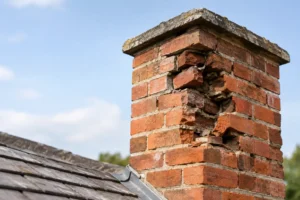
The most common reason to rebuild is that the chimney is no longer stable enough to trust. Once the brickwork starts leaning, separating, or crumbling through multiple courses, patchwork work stops being responsible. Safety comes first.
The warning signs homeowners should not ignore
One of the clearest signs is loose or spalling brick. If the face of the brick is flaking off, moisture has already gotten in and freeze-thaw cycles are doing the rest. A few damaged bricks can often be replaced. Large sections of spalling brick usually point to a deeper failure.
Mortar loss is another big one. Mortar joints wear out over time, especially on older chimneys exposed to constant weather. If the joints are recessed, soft, or falling out in several areas, the chimney may be losing the bond that keeps the structure together.
A leaning chimney is more serious than cosmetic cracking. If it is pulling away from the house or visibly out of plumb, there may be foundation movement, advanced masonry failure, or long-term water intrusion. At that stage, rebuilding is often the safer route than trying to brace and patch it.
You should also pay attention to interior signs. Smoke problems, draft issues, water stains near the fireplace, and a musty odor after rain can all point to a chimney system that is failing from the top down. Sometimes the outer masonry is the issue. Sometimes the liner, crown, flashing, and brickwork are all wearing out at the same time.
What usually causes a chimney to fail
Water is the biggest enemy. It gets into cracked crowns, open mortar joints, failed flashing, and porous masonry. Once moisture is inside, cold weather expands it, and each season opens the damage a little more. What starts as a small crack can turn into major deterioration faster than most homeowners expect.
Age matters too. Older chimneys were often built with materials and methods that simply do not perform forever without upkeep. If a chimney has gone decades with limited maintenance, it may have several weak points at once. In that situation, one repair can expose the next problem.
Poor previous repairs can also push a chimney toward rebuild. We see chimneys that were coated over instead of properly repaired, patched with mismatched mortar, or sealed while the real moisture source was left untreated. Those jobs may look fine for a short time, but they rarely solve the underlying issue.
Rebuilds are often about the full system, not one damaged spot
A chimney is not just a stack of bricks. It includes the liner, crown, cap, flashing, and often the firebox connection below. If several of those parts are failing together, rebuilding part or all of the structure can make more financial sense than repairing each piece separately over time.
For example, if the chimney above the roofline is badly deteriorated but the lower section is stable, a partial rebuild may be enough. If the damage runs deeper or the chimney is structurally compromised from base to top, a full rebuild may be the right call. This is why a real inspection matters. The answer depends on how far the damage goes.
Repair vs. rebuild: how to tell the difference
The simplest way to think about it is this: repairs fix defects, while rebuilding replaces failed structure. If the chimney still has good bones, repair work is usually worth doing. If the bones are failing, rebuilding protects the home better.
A chimney may still be repairable when the problems are limited to a cracked crown, minor mortar joint erosion, isolated brick damage, or flashing leaks. These are common issues, and if they are caught early, they can often be corrected without replacing the structure.
A rebuild is more likely when multiple sides of the chimney show advanced wear, the stack is unstable, bricks are breaking down in large areas, or previous repairs have not held. It also makes sense when the cost of repeated repair work is approaching the cost of rebuilding a section correctly.
That last part matters. Homeowners sometimes avoid a rebuild because it sounds bigger, but three rounds of repair work on a failing chimney can cost more than one proper replacement. Worse, the damage may continue during the delays.
Partial rebuilds can be the middle ground
Many chimneys do not need to come all the way down. If the portion above the roofline has taken the worst weather and the lower masonry is still in good condition, rebuilding just that upper section can restore safety and appearance without the cost of a full rebuild.
This is common in residential homes where years of exposure have worn down the visible top section first. A partial rebuild can also be combined with a new crown, cap, flashing repair, or liner work to bring the whole system back into dependable shape.
Why waiting usually makes the job bigger
Chimney damage rarely stays in one place. Water gets in through the smallest openings, then spreads into the masonry, attic area, roof decking, or interior wall finishes nearby. What looked like a chimney issue can turn into a roofing, leak, and structural repair issue if it is ignored.
There is also the fire safety side. A damaged chimney liner or unstable masonry can create serious risk if the fireplace or appliance is still in use. Even if the chimney is not actively venting a fireplace, loose brick and failing mortar can become a falling hazard around the roofline.
That is why timing matters. If you are seeing signs of deterioration now, the best time to act is before another wet season or freeze-thaw cycle makes the damage worse.
What a professional inspection should tell you
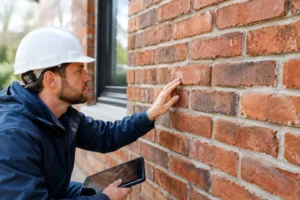
A good inspection should do more than point out surface cracks. It should tell you whether the chimney is structurally sound, whether the damage is isolated or widespread, and whether repair work would actually last.
You want clear answers to a few practical questions. Is the chimney safe to use? Is the masonry still solid? Has water intrusion affected surrounding materials? Would a repair solve the root problem, or are you just buying time?
That kind of honest assessment helps you make the right decision for your home and budget. At Adore Construction, that is the standard homeowners should expect from any chimney evaluation – clear findings, fair recommendations, and work that protects the house for the long term.
When to make the call
If your chimney is shedding brick, losing mortar in several areas, leaning, leaking repeatedly, or showing signs of major age-related breakdown, it is time to stop guessing. Those are the situations where rebuilding often becomes the safer and more cost-effective choice.
A chimney does not need to collapse to qualify as a rebuild project. It only needs to reach the point where repairs no longer offer real protection. When that happens, replacing the failed section is not overkill. It is the responsible fix.
If something about your chimney looks off, trust that instinct and get it checked before the next season adds more damage. The right repair can save a chimney, but the right rebuild can save the rest of the house from a much bigger problem.