A storm does not need to tear half your roof off to cause trouble. In many cases, the top signs of roof storm damage are easy to miss from the ground, but they can lead to leaks, mold, wood rot, and expensive structural repairs if they sit too long.
That is why the first day after a strong windstorm, hail event, or heavy rain matters. A quick look around your property can tell you whether your roof took a direct hit or just needs a closer inspection. The goal is not to guess. It is to catch damage early, before a small issue turns into interior water damage.
Top signs of roof storm damage outside the home
The most obvious warning sign is missing shingles. If you see bare spots, uneven roof lines, or pieces of shingles in the yard, your roof may have lost part of its protective surface. Even one missing section can leave the underlayment and decking exposed to water.
Curled, lifted, or creased shingles are another red flag. High winds do not always remove roofing materials completely. Sometimes they break the seal and bend shingles back just enough to weaken them. From the street, that can look minor. On the roof, it often means the shingle is no longer doing its job.
Granules in gutters or downspouts are also worth attention. Asphalt shingles shed some granules over time, especially on older roofs, but a sudden buildup after a storm can point to impact damage or accelerated wear. If your gutters are full of black, sand-like debris after hail or heavy rain, that is not something to ignore.
Flashing damage is another common problem. Metal flashing around chimneys, vents, skylights, and roof edges can loosen during strong wind or driving rain. Once flashing shifts, water can work its way into vulnerable seams. This is one reason roof leaks often show up around penetrations rather than in the middle of a ceiling.
You should also look for dented gutters, bent fascia, and damaged soffits. These parts of the roof system are often hit before homeowners notice actual roof surface damage. If the metal around the roofline shows fresh dents or impact marks, the shingles above may have taken damage too.
What hail damage looks like on a roof
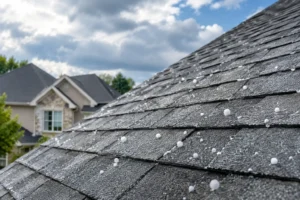
Hail damage can be tricky because it does not always leave dramatic holes. On asphalt shingles, it often shows up as dark spots where granules have been knocked away. Those exposed areas can wear faster under the sun and make the roof more vulnerable to future leaks.
On metal components, hail usually leaves dents. Check gutters, downspouts, flashing, and roof vents. If those surfaces show fresh impacts, it is a strong sign the roof itself may need a closer look.
The size of the hail matters, but so do wind direction, roof age, and material type. A newer roof may handle a storm better than an older one, while brittle shingles can crack from impacts that a newer shingle would survive. That is why two homes on the same block can come away with very different levels of damage.
Signs of roof storm damage inside the house
Sometimes the clearest evidence is indoors. A water stain on the ceiling or wall after a storm is one of the top signs of roof storm damage, especially if the stain was not there before. The leak itself may not be directly above the stain because water can travel along rafters and decking before it drips.
A damp attic is another warning sign. If you notice wet insulation, water marks on wood framing, or a musty smell after rain, the roof system may have been compromised. Even a small amount of moisture in the attic can lead to mold growth and wood deterioration over time.
Peeling paint near the upper parts of interior walls can also point to roof-related moisture. Homeowners sometimes assume this is just humidity, but when it appears after severe weather, it deserves a closer look.
If daylight is visible through the attic where it should not be, that needs immediate attention. Small openings around vents or along roof decking can let in both water and pests.
Damage around chimneys, vents, and roof penetrations
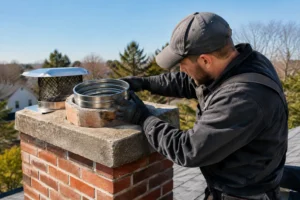
Roof storms do not only damage shingles. They often expose weak points around chimneys, plumbing vents, and exhaust pipes. Flashing can separate, sealants can crack, and masonry joints near the roofline can start letting in water.
This is especially important for homes with older chimneys. Storm-driven rain can exploit gaps where the roof meets the chimney, and homeowners may notice the problem as a leak in the attic or staining near a fireplace wall. In some cases, the roof is blamed first, but the actual entry point is failing chimney flashing or masonry deterioration made worse by the storm.
If your home has both roof and chimney issues, they should be evaluated together. Treating only one side of the problem can leave the leak active.
When storm damage is not obvious
Not every damaged roof looks damaged from the driveway. Wind can break adhesive seals without tearing shingles off. Hail can bruise shingles in ways that are hard for a homeowner to see safely from the ground. Heavy rain can exploit older weak spots that were already close to failing.
That is why the age of your roof matters. If your roof was already nearing the end of its service life, a moderate storm can do more harm than you might expect. On the other hand, a newer roof may only need a limited repair after the same weather event.
Tree debris is another factor. If branches hit the roof, scrape shingles, or pile up in valleys, the damage may be localized and easy to miss. A few broken tabs or punctures can still create leak paths.
What to do after you spot possible storm damage
Start with a visual check from the ground. Walk the perimeter of the house and look for missing materials, fallen branches, damaged gutters, and debris. If it is safe, check the attic for moisture or signs of daylight. Take photos of anything you notice.
What you should not do is climb onto the roof after a storm unless you have the right safety equipment and experience. Wet shingles, hidden soft spots, and unstable edges create real risk. A professional inspection is the safer move, especially if you suspect structural damage or active leaking.
It is also smart to act quickly. Storm damage rarely improves with time. A small opening can let in repeated moisture, and each round of rain usually makes repair more expensive. In New Jersey, where storms can bring wind, hail, and heavy seasonal rain, quick response often makes the difference between a targeted repair and a much larger project.
Repair or replacement depends on the damage
Homeowners often want a simple answer right away: can it be repaired, or does the whole roof need to be replaced? The truth is, it depends on the extent of the damage, the age of the roof, and whether matching materials are still available.
If damage is isolated to one section and the rest of the roof is in solid condition, a repair may be the most practical option. If the storm exposed multiple problem areas on an aging roof, replacement can be the better long-term value. Paying for repeated repairs on a roof that is already worn out usually costs more in the long run.
A good contractor should explain that difference clearly. You want an honest assessment, not pressure.
Why early inspections matter
Storm damage is not always loud or dramatic. Sometimes it looks like one lifted shingle, a little granule loss, or a faint water mark in the attic. Those small clues are often the first warning that your roof system has been compromised.
Catching the problem early protects more than your shingles. It protects insulation, framing, ceilings, walls, and the overall safety of your home. If you have any reason to believe a recent storm caused damage, getting it inspected sooner is the smart move. A careful set of eyes today can prevent a much bigger repair tomorrow.