A roof leak rarely announces itself with a steady drip into a bucket. More often, water enters through a small opening near a vent, chimney, valley, or damaged shingle, then travels along framing before it becomes visible indoors. Knowing the top signs of hidden roof leaks can help you act before a manageable repair turns into damaged insulation, mold growth, ceiling repairs, or structural wood rot.
For New Jersey homeowners, that matters after heavy rain, wind events, freeze-thaw cycles, and winter snow buildup. The sooner the source is identified, the better chance you have of limiting the damage and protecting the life of your roof.
Top Signs of Hidden Roof Leaks to Watch For
Ceiling stains that change after rain
A yellow, brown, or copper-colored ring on a ceiling is one of the clearest warning signs. It may appear dry for weeks, then darken or expand after a storm. That change usually means moisture is still getting in.
Do not assume the leak is directly above the stain. Water can run along rafters, pipes, or insulation and show up several feet from the actual roof opening. A proper inspection needs to trace the path back to the source instead of simply patching the interior ceiling.
Peeling paint, bubbling walls, or soft drywall
Water does not need to pour through a ceiling to cause damage. Small, repeated moisture exposure can make paint bubble, peel, or separate from drywall. Walls near an exterior roofline, upper-floor windows, chimneys, and dormers deserve special attention.
Press gently around any suspicious area. Drywall that feels soft, swollen, or unusually cool may have absorbed moisture. This can also point to a flashing problem or a leak around a roof penetration, not just a failed shingle.
A musty smell in the attic or upstairs rooms
A persistent musty odor often appears before major staining does. When moisture reaches attic insulation, roof decking, or wall cavities, it creates conditions where mildew and mold can develop. The smell may be stronger after rain or when your home has been closed up for a few days.
If it is safe to access your attic, use a flashlight to look for darkened wood, damp insulation, visible mold, or moisture on the underside of the roof deck. Avoid walking on exposed ceiling drywall between joists. It may not support your weight.
Damp, compressed, or discolored attic insulation
Insulation should look dry, even, and loose. When roof water reaches it, insulation can clump together, flatten, darken, or feel damp. Once saturated, it loses much of its ability to control indoor temperatures, which can contribute to higher heating and cooling costs.
Look especially around chimneys, plumbing vents, skylights, ridge vents, and roof valleys. These areas involve transitions and openings in the roofing system, which makes careful installation and maintenance critical.
Dark spots or rotting wood in the attic
The underside of roof decking can reveal trouble that is invisible from the ground. Dark streaks, water marks, soft wood, splitting plywood, or blackened sections around fasteners may signal an ongoing leak.
One dark spot does not automatically mean the roof needs replacement. It may be a localized repair, depending on the condition of the shingles, decking, flashing, and surrounding materials. But deteriorated decking should not be ignored. Roofing materials need a solid base to perform properly during wind and rain.
Missing, cracked, curled, or lifted shingles
Storm damage and normal aging can create openings that let water work beneath the roof surface. Missing shingles are obvious, but cracked tabs, curled edges, loose nails, and lifted shingles can be just as serious. Wind-driven rain does not need a large gap to get underneath a compromised section.
Granules collecting in gutters or at the bottom of downspouts are another clue that asphalt shingles may be wearing down. Some granule loss is normal as a roof ages. Heavy accumulation, bald-looking shingle areas, or widespread cracking calls for a closer look.
Damaged chimney flashing, crown, or masonry
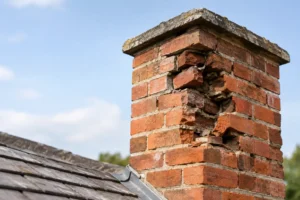
A chimney is one of the most common places for a hidden roof leak. The roof must connect tightly to brick, stone, or siding around the chimney using properly installed flashing. If flashing pulls away, corrodes, cracks, or is covered with failing sealant, water can enter where the roof and chimney meet.
The issue may also start above the flashing. A cracked chimney crown, deteriorating mortar joints, missing cap, or porous masonry can allow water into the chimney structure. That water may then show up in the attic, near the fireplace, or on a ceiling beside the chimney.
This is why chimney and roofing problems should be evaluated together. Treating only the visible stain without addressing flashing or masonry leaves the home exposed to the next storm.
Water around skylights, vents, or exhaust pipes
Any item that passes through the roof requires a watertight seal. Skylights, bathroom exhaust vents, plumbing stacks, attic vents, and satellite mounts can become leak points when their flashing ages or surrounding shingles fail.
A stain near one of these features is worth checking promptly. In some cases, the roof itself is sound and the repair is limited to flashing, a boot, sealant, or replacement of a damaged component. In others, moisture has spread beneath nearby shingles and needs a broader repair.
Gutter overflow and water backing up at the roof edge
Clogged gutters do not always cause a roof leak, but they can contribute to one. When water repeatedly backs up beneath the roof edge, it can wet fascia boards, soffits, and lower roof decking. In winter, ice dams can make the problem worse by trapping melted snow along the eaves.
Watch for overflowing gutters during rain, sagging sections, peeling paint on fascia boards, or water marks along exterior walls. Cleaning gutters helps, but it will not solve damaged drip edge, failing underlayment, or an existing roof leak. The cause needs to be identified before repairs are selected.
Why Hidden Roof Leaks Get Worse So Quickly
A small leak is rarely just a cosmetic issue. Moisture can move through insulation, soak framing, corrode fasteners, and create a concealed environment for mold. By the time water reaches a finished ceiling, it may have been affecting the roof assembly for some time.
There is also a safety concern. Wet electrical fixtures, weakened ceiling materials, and deteriorating roof decking should be handled carefully. If water is near a light fixture, electrical panel, or outlet, avoid touching it and contact a qualified professional immediately.
What to Do When You Suspect a Leak
First, protect the interior. Move furniture and valuables away from the affected area. If a ceiling is actively bulging with water, do not stand beneath it or attempt to handle electrical fixtures nearby. Place a container under an active drip only if it can be done safely.
Next, document what you see. Take photos of stains, dripping water, wet insulation, exterior damage, and the timing of the issue after rainfall. This information helps a roofing professional understand patterns and may be useful if you need to speak with your insurance provider.
Avoid climbing onto a wet or steep roof. Homeowners can safely check visible areas from the ground and inspect an attic with care, but roof leak diagnosis often requires close examination of shingles, flashing, valleys, penetrations, and chimney components. A temporary patch may slow water intrusion, yet it can also hide the real issue if it is not followed by a full inspection.
Get the Right Repair, Not Just a Quick Cover-Up
The best repair depends on where the water is entering and how long it has been present. A loose pipe boot or damaged flashing section may need a targeted repair. Worn shingles, failed underlayment, widespread granule loss, or rotted decking can point to more extensive roofing work. Chimney-related leaks may require flashing repair along with crown, cap, mortar, or waterproofing service.
Adore Construction evaluates the roof and chimney system as connected parts of your home’s protection. Clear findings and straightforward estimates give homeowners a better basis for deciding whether a focused repair or larger project makes sense.
A ceiling stain can wait for a repaint after the source is fixed. The leak itself should not wait. Addressing the first warning sign protects your home, your budget, and your peace of mind when the next hard rain arrives.