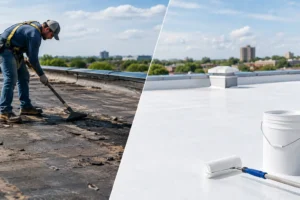
A roof can look mostly intact from the driveway and still be letting water into the home. That is why a roof storm damage repair example is useful: it shows how a seemingly small problem, such as a few missing shingles, can involve flashing, decking, gutters, insulation, and even chimney masonry once a professional inspection begins.
For New Jersey homeowners, wind-driven rain, heavy snow, ice, falling branches, and fast-moving summer storms can all create damage that deserves prompt attention. The right repair is not always a full roof replacement. It is the work needed to stop water, restore the roof system, and prevent a manageable repair from becoming interior damage or structural rot.
A Roof Storm Damage Repair Example From Start to Finish
Consider a single-family home after a strong wind and rainstorm. The homeowner notices granules in the gutter, a few shingles on the lawn, and a brown stain forming on the ceiling near the living room. From outside, the roof does not appear severely damaged. But water stains are a warning that the roof system has already been breached.
A qualified contractor begins with a safe exterior inspection. They look for lifted, cracked, creased, or missing shingles; exposed nail heads; damaged ridge caps; loose flashing; punctures from debris; and bent or detached gutter sections. They also inspect areas where water commonly enters, including roof valleys, vent pipes, skylights, sidewalls, and the base of the chimney.
In this example, the inspection finds six missing shingles on one slope, several creased shingles nearby, and flashing that has pulled away along the chimney. The wind did not remove the entire roof covering, but it broke the seal on a wider section of shingles. Rain then traveled beneath the loose materials and reached a small area of roof decking.
Inside the attic, the contractor finds damp insulation and a water trail on the underside of the decking. The plywood has not rotted through, which is good news, but it needs to dry and be checked carefully before the roof is closed back up. This is the difference between repairing the visible damage and repairing the cause of the leak.
The Emergency Work Comes First
When a roof is actively leaking or has exposed sections, temporary protection may be necessary before permanent repairs can be completed. This can include securely placing a tarp over the damaged area, removing loose debris that could cause more damage, and protecting the interior below the leak.
A tarp is not a repair. It is a short-term measure that buys time during bad weather or while materials are being scheduled. It should be secured in a way that limits additional shingle damage and does not create unnecessary holes in the roof.
Homeowners should avoid climbing onto a storm-damaged roof themselves. Wet shingles, loose granules, hidden soft spots, and nearby power lines can turn a quick look into a serious fall hazard. Take photos from the ground if it is safe to do so, move valuables away from the leak, and arrange a professional inspection as soon as possible.
What the Permanent Repair Includes
For this roof storm damage repair example, the permanent scope is focused and practical. The damaged shingles are removed beyond the obvious missing section, because creased shingles often fail later even if they remain attached. The contractor then checks the roof decking and replaces any section that is soft, delaminated, or unable to hold fasteners securely.
Next, new underlayment is installed over the exposed decking. This layer adds critical protection beneath the shingles. Ice and water barrier may be used in vulnerable areas, depending on the roof design and the location of the repair. New shingles are then installed and properly integrated with the existing roof so water sheds over the repaired area rather than beneath it.
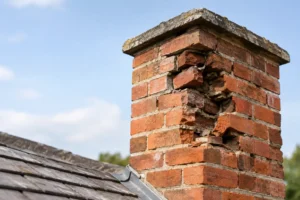
The chimney flashing also needs attention. Flashing is one of the most common leak points because it joins two different surfaces: the roof and the masonry chimney. In this case, the loose flashing is removed, the area is checked for water damage, and new flashing is installed and sealed correctly. If the chimney crown, mortar joints, or bricks show storm-related cracking, those repairs should be addressed at the same time. Water entering around a chimney can damage both the roof and the masonry structure.
The final repair also includes resetting loose gutter components and clearing storm debris from the drainage path. Gutters do not make a roof waterproof, but blocked or damaged gutters can force water back toward the roof edge and fascia. Good drainage helps the repair perform as intended.
Repair or Replacement? The Answer Depends on the Roof
A targeted repair is often the right choice when damage is limited, the roof is otherwise in good condition, and matching materials are available. It can restore protection at a lower cost than replacement and preserve years of remaining roof life.
However, repair may not be the best long-term value if the roof is near the end of its service life, has widespread wind creasing, has repeated leaks, or shows extensive granule loss and brittle shingles. A repair on an aging roof can stop the immediate leak, but it may not prevent the next weak area from failing during another storm.
Matching new shingles to older shingles can also be difficult. Sun exposure and age change the color of roofing materials, even when the manufacturer and product line are the same. A good contractor should explain this clearly. Some homeowners accept a slight color variation for a practical repair, while others prefer replacement when the roof is already aging and appearance matters.
Documentation Helps With Insurance Decisions
Storm damage may be covered by a homeowner’s insurance policy, but coverage depends on the cause of damage, the policy terms, the deductible, and the condition of the roof before the storm. Wear from age or poor maintenance is generally treated differently than sudden wind or impact damage.
Clear documentation helps homeowners make an informed decision. Photos of the exterior damage, attic moisture, damaged materials, and completed temporary protection can all be useful. A detailed estimate should separate emergency work, roofing repairs, flashing repairs, decking replacement if needed, and related chimney or gutter work.
It is wise to report potential storm damage promptly, but do not assume every repair requires a claim. If the repair cost is close to or below the deductible, paying directly may be more practical. If damage is extensive, professionally documented evidence can help support the claim process. A contractor can explain the repair findings, but the insurance company makes the final coverage decision.
How to Spot Hidden Storm Damage Early
The best time to identify storm damage is before a ceiling stain appears. After a major storm, walk around the property from the ground and look for shingles, metal flashing, branches, gutter pieces, or unusual amounts of roofing granules. Check upper walls and ceilings inside the home for discoloration, bubbling paint, damp trim, or a musty odor.
Pay special attention to the chimney area. Cracked mortar, a damaged chimney cap, loose flashing, or a broken crown can allow water into the home and cause deterioration that may not be obvious from indoors. Roof and chimney systems work together, so inspecting only one can leave the actual source of the problem unresolved.
A professional inspection provides the clearest answer when there has been a severe storm, even if the roof appears normal. Catching lifted shingles and loose flashing early is usually simpler and less expensive than repairing wet insulation, damaged ceilings, mold growth, or rotted roof framing later.
Storm damage is stressful, but the repair process does not have to be confusing. Start with safety, get a thorough assessment, and make the repair decision based on the condition of the full roof system – not just the most visible missing shingle.