A roof rarely sags all at once. More often, it starts with a ceiling line that looks a little off, shingles that don’t sit flat, or a dip you only notice when you pull into the driveway at the right angle. Those subtle changes are often roof sagging warning signs, and catching them early can make the difference between a targeted repair and a much bigger structural job.
For homeowners, the hard part is knowing what counts as normal aging and what points to a real safety issue. A roof can look worn without being unstable, and it can also look mostly intact while the framing underneath is under stress. That is why it helps to know what to look for before water damage, mold, or structural failure force the issue.
What roof sagging usually means
A sagging roof is not a cosmetic problem first. It is usually a sign that something underneath the roofing system is no longer carrying weight the way it should. That can mean weakened rafters, damaged decking, failing supports, long-term moisture intrusion, or too much weight from snow, old roofing layers, or trapped water.
Sometimes the problem is isolated to one area. Other times, the dip runs along a ridge line or spreads across a larger section of the roof plane. The cause matters because the right fix depends on whether the issue is structural, moisture-related, material-related, or a combination of all three.
7 roof sagging warning signs to watch
1. A visible dip or wave in the roofline
This is the most obvious warning sign. If the ridgeline looks uneven or a section of the roof appears to sink in the middle, that is not typical settling. Roof lines should look straight and consistent. A bow, curve, or low spot often means the framing or decking below has weakened.
A dip that looks small from the ground can still point to major damage below the shingles. In many cases, homeowners do not notice it until they compare one side of the roof to the other or see it from across the street.
2. Ceiling lines that start to bow indoors
Roof sagging does not always announce itself outside first. Sometimes the warning shows up inside the home as a ceiling that looks slightly curved, cracked drywall seams, or corners that no longer look square. If an upper-floor ceiling starts to bow, especially after a leak or a heavy storm season, it may be connected to roof stress above it.
This is one of those situations where it depends on the layout of the home. Not every ceiling crack means the roof is sagging. But if cracking, bowing, and roofline changes are happening together, that is a stronger sign that the problem is structural and not just cosmetic.
3. Shingles that look uneven or sunken
Shingles should lie relatively flat. If one section of the roof looks rippled, sunken, or irregular, the issue may not be the shingles themselves. It may be the roof deck below them starting to soften, rot, or shift.
This can happen after years of moisture intrusion around flashing, chimneys, valleys, or roof penetrations. The outer roofing material may still be in place, but the surface below it is no longer solid. That is why a sagging section often comes with other signs of water entry, even if the leak is not active every time it rains.
4. Persistent leaks or water stains in the same area
Water is one of the biggest reasons roofs begin to sag. Repeated leaks can weaken sheathing, rot framing members, and compromise connections over time. If you keep seeing stains on ceilings or walls in the same part of the house, especially near a low spot in the roof, that is a pattern worth taking seriously.
Not every leak causes sagging, and not every sag is caused by a current leak. Still, long-term moisture is often part of the story. What matters is the duration. A small leak left alone for months or years can do far more damage than a larger leak that gets repaired right away.
5. Sticking doors or windows on the upper level
When roof framing shifts, it can affect more than the roof itself. In some homes, structural movement shows up as upstairs doors that suddenly stick, windows that become harder to open, or trim lines that separate. These signs can also come from foundation settlement, so they are not exclusive to roof issues.
The key is context. If these changes appear around the same time as a visible roof dip, ceiling cracks, or leaks, the roof structure should be inspected. It is better to rule out a framing problem early than assume it is just an old house being an old house.
6. Sagging near the chimney or roof penetration points
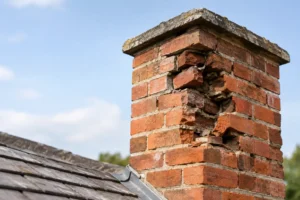
Areas around chimneys, vents, and skylights are common trouble spots because they interrupt the roofing system. Flashing failures around these openings can let water in slowly, and that moisture can damage nearby decking and framing before the problem becomes obvious.
If the roof looks lower around a chimney, that should not be ignored. Chimneys are heavy, and when surrounding materials weaken, the stress can increase quickly. In homes with both roofing and chimney wear, it is common to find that one issue has been feeding the other.
7. A roof that feels soft or spongy during inspection
Homeowners should not walk a suspect roof, but during a professional inspection, one major red flag is a soft or spongy feel underfoot. That usually points to deteriorated decking from trapped moisture or rot. Even if the sag is not dramatic yet, a soft deck means the roof system is losing integrity.
This is one reason visual checks from the ground only tell part of the story. A roof can appear acceptable from a distance while the substrate below is already compromised.
What causes a roof to sag
In many homes, sagging comes from a combination of age, moisture, and excess load. Older framing may no longer perform the way it once did. Past leaks may have weakened wood members. Multiple roofing layers may add more weight than the structure was meant to carry. Snow and ice can make matters worse, especially when drainage is poor.
Poor workmanship can also play a role. Undersized rafters, improper spacing, weak repairs, or shortcuts during earlier roofing work can leave the structure vulnerable. That does not always show up right away. Sometimes the roof holds for years before the stress becomes visible.
New Jersey homeowners also deal with freeze-thaw cycles, storms, humidity, and seasonal moisture swings that can accelerate wear. That does not mean every older roof will sag, but it does mean small weaknesses tend to get exposed faster if maintenance is delayed.
When it is an emergency
Some roof sagging warning signs call for prompt scheduling. Others call for immediate action. If the sag appears to be getting worse quickly, if you hear creaking or popping from the attic, if the ceiling is actively bowing, or if a section of the roof is holding standing water, treat that as urgent.
The same goes for sagging near a chimney, after a major storm, or after heavy snowfall. A roof carrying more load than it should can fail without much warning. In those cases, keep people out of the affected area and have the structure inspected as soon as possible.
What a professional inspection should look for
A proper inspection should go beyond the shingles. The roof covering matters, but the real question is what is happening below it. An experienced contractor should evaluate the decking, rafters or trusses, flashing, moisture intrusion, ventilation conditions, and any signs of shifting around chimneys or penetrations.
The goal is not just to confirm that there is sagging. It is to identify why it is happening and whether the fix is localized or system-wide. In some cases, replacing damaged decking and repairing framing in one section is enough. In others, the roof needs larger structural correction before new roofing materials are installed.
That is where straightforward guidance matters. Homeowners need a clear explanation of what is damaged, what is still sound, and what can wait versus what should not.
Can a sagging roof be repaired, or does it need replacement?
It depends on the cause and the extent of the damage. A small sag tied to isolated rot or a limited leak may be repairable if the surrounding structure is still solid. If the problem involves widespread decking failure, undersized framing, long-term water damage, or an aging roof at the end of its life, replacement often makes more sense.
This is not just about cost today. It is about whether a repair will actually solve the problem or just cover it up for another season. A cheaper short-term fix can become more expensive if moisture, mold, and structural movement continue behind the scenes.
At Adore Construction, the priority is simple: identify the real issue, repair what can be safely repaired, and recommend replacement only when the roof has reached that point.
If your roofline looks off, your ceiling is starting to bow, or leaks keep returning in the same spot, trust what your house is telling you. Small warning signs have a way of getting louder when they are left alone.