A roof can look perfectly sound from the street and still be sending water into the wrong places. Overflowing gutters, loose downspouts, blocked valleys, and failed flashing can turn a heavy rainstorm into stained ceilings, rotted trim, foundation moisture, or chimney damage. This residential roof drainage guide explains how water should move off your home, where problems begin, and when a professional repair is the safer choice.
How Residential Roof Drainage Should Work
Your roof drainage system has one job: move rain and melting snow away from the roof, exterior walls, foundation, and chimney as efficiently as possible. On a typical sloped roof, water runs down the shingles or other roofing material, enters the gutters, travels through downspouts, and discharges onto a properly graded area away from the house.
That process sounds simple, but every connection matters. A clogged gutter can force water behind the fascia. A short downspout can saturate soil near the foundation. A poorly flashed chimney can allow water beneath roofing materials before it ever reaches the gutter.
New Jersey homes need drainage systems that can handle hard rain, wind-driven storms, leaf buildup, snow, ice, and repeated freeze-thaw cycles. The right setup depends on the roof’s size, pitch, layout, surrounding trees, and the condition of the home’s exterior.
Gutters Collect Roof Runoff
Gutters are the channels installed along the roof edge. Their size and condition determine how well they handle runoff during a storm. When gutters are too small for the roof area, pitched incorrectly, dented, or packed with debris, water can spill over the front or back edge.
Front-edge overflow often creates obvious cascades during rain. Back-edge overflow is more concerning because it can soak the fascia board, roof decking, soffit, and siding. You may not see that damage right away, but repeated moisture can lead to wood rot and expensive repairs.
Gutters should slope gently toward the downspouts. If water sits in sections after a storm, the gutter may be sagging or improperly pitched. Standing water adds weight, attracts debris, and can worsen separation at the fasteners.
Downspouts Finish the Job
Downspouts carry collected water from the gutter to the ground. They need to be securely attached, free of clogs, and positioned to direct runoff away from the foundation. A downspout that empties beside the house can undermine even a well-maintained roof drainage system.
As a general rule, discharged water should be directed several feet away from the foundation and onto ground that slopes away from the home. Extensions, underground drainage lines, or splash blocks may help, but the best solution depends on the property’s grading and where water can safely drain.
Avoid directing roof runoff toward a driveway, walkway, neighboring property, or area that becomes icy in winter. The goal is not simply to move water away from the gutter. It is to control where that water goes next.
Roof Drainage Details That Homeowners Often Miss
A drainage problem is not always caused by the gutters themselves. Several roof components guide water around vulnerable areas, especially where the roof changes direction or meets a chimney, wall, skylight, or vent.
Valleys Need a Clear Path
A roof valley is where two roof slopes meet. Valleys handle a large volume of water because runoff from both slopes is concentrated into one channel. Leaves, branches, shingle grit, and ice can restrict that flow quickly.
If a valley backs up, water may work beneath shingles and into the roof deck. Look for debris buildup after storms, but do not walk on a roof unless you have the proper equipment and experience. Wet, steep, or aging roofs create a real fall risk.
Flashing Protects Chimneys and Roof Transitions
Flashing is a metal barrier installed where roofing meets vertical surfaces or changes direction. Around a chimney, properly installed step flashing and counterflashing are essential. Caulk alone is not a long-term substitute for correctly installed flashing.
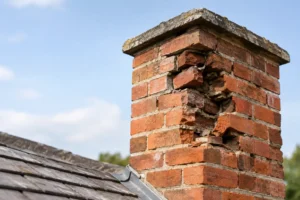
Water stains near a fireplace, damp attic insulation around the chimney, cracked masonry, or loose flashing can all point to a drainage issue at the chimney connection. Because chimney leaks may involve roofing, masonry, flashing, and crown damage at the same time, they should be inspected as a complete system rather than patched in one spot.
Low-Slope Roofs Drain Differently
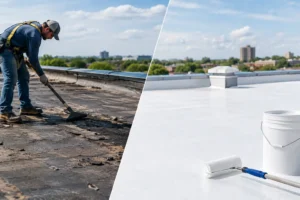
Flat and low-slope roofing systems, including EPDM, PVC, torch-down, and silicone roofs, rely on drains, scuppers, or carefully placed edges instead of standard gutter flow alone. These roofs are not meant to hold standing water for extended periods.
Some brief ponding after rain can occur depending on the system and roof design. Water that remains for days, however, deserves attention. It can accelerate membrane wear, expose weak seams, and reveal inadequate slope or blocked drainage points.
Warning Signs of Poor Roof Drainage
The earlier you spot a drainage problem, the more likely it can be corrected before it affects the structure of the home. Check the exterior during or shortly after a steady rain if it is safe to do so. You can learn a lot without climbing a ladder.
Watch for these signs:
- Water pouring over gutter edges or spilling from gutter seams
- Gutters that sag, pull away from the fascia, or hold standing water
- Peeling paint, dark wood, or soft areas around the roof edge
- Staining on siding below gutters, roof valleys, or chimney areas
- Eroded soil, persistent puddles, or damp basement walls near downspouts
- Water marks on ceilings, attic sheathing, or walls near the chimney
One isolated overflow may be a simple clog. Repeated overflow in the same area could mean undersized gutters, poor slope, an incorrectly placed downspout, or a roof drainage design issue. A proper inspection identifies the cause before repairs are chosen.
A Practical Maintenance Schedule
Most homes benefit from roof and gutter checks at least twice a year, usually in spring and late fall. Homes beneath mature trees may need more frequent gutter cleaning, especially after heavy leaf drop and windstorms.
Remove leaves, twigs, roofing debris, and nests from gutters and valleys. Then flush the system with water to confirm that every downspout flows freely. While checking, look for loose fasteners, separated joints, rust, holes, and sections that are pulling away from the house.
Winter deserves extra attention in New Jersey. Ice dams can form when snow melts on a warm roof surface and refreezes at colder roof edges. The resulting ice can prevent runoff from draining, forcing water beneath shingles. Better attic insulation and ventilation may be part of the solution, but existing gutter damage, poor roof details, and blocked drainage should also be checked.
Gutter guards can reduce the amount of debris entering a system, but they are not maintenance-free. Fine debris, shingle grit, and seeds can still collect on top or inside certain guard styles. They work best when matched to the home’s tree cover, gutter condition, and roof design.
When Repair Is Better Than Replacement
Not every drainage concern calls for new gutters or a new roof. Loose hangers, minor seam leaks, clogged downspouts, and short extensions can often be corrected with targeted repairs. This is usually the practical option when the system is otherwise sound.
Replacement may make more sense when gutters are extensively corroded, repeatedly pulling away, improperly sized, or damaged across multiple sections. Likewise, a recurring roof leak around a chimney may require flashing replacement and masonry repair rather than another application of sealant.
The right answer depends on what is causing the water problem. Replacing gutters will not fix a failed chimney crown. Replacing shingles will not solve foundation moisture if downspouts discharge beside the house. Good repair work starts with finding the actual path of the water.
Why Professional Inspection Matters
Roof drainage repairs often involve work at height, hidden wood damage, and details that are easy to miss from the ground. A qualified contractor can inspect the roof surface, gutters, flashing, chimney transitions, and drainage path together. That broader view helps prevent a repair in one area from leaving the original problem unresolved.
For homeowners dealing with repeated leaks, overflow, storm damage, or chimney-related moisture, Adore Construction provides practical exterior inspections and repairs designed to protect the home for the long term. Clear recommendations and transparent estimating matter because drainage work should solve a problem, not create another one.
After the next hard rain, take a few minutes to look at where water leaves your roof and where it ends up. That simple observation can catch a small drainage issue before it reaches the rooms, walls, and foundation you count on every day.