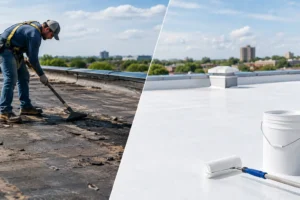
A roof leak rarely announces itself with a steady drip into a bucket. More often, the first New Jersey roof leak signs are subtle: a brown spot near a ceiling corner, a faint musty odor in the attic, or shingles that look slightly out of place after a storm. Waiting for visible water can turn a manageable repair into damaged insulation, rotted framing, mold growth, and interior repairs.
New Jersey homes take a beating from wind-driven rain, winter freeze-thaw cycles, heavy snow, humid summers, and falling branches. Knowing what to look for helps you act before moisture gets farther into the structure.
New Jersey Roof Leak Signs to Watch For
Ceiling stains, peeling paint, or soft drywall
A yellow, brown, or gray stain on a ceiling is one of the clearest warnings that water has found a path inside. The stain may grow after rain, but it may also dry out and remain unchanged between storms. Peeling paint, bubbling drywall, and a ceiling that feels soft when gently pressed can point to the same problem.
The location of the stain does not always identify the source of the leak. Water can travel along roof decking, rafters, pipes, or insulation before it reaches your ceiling. A stain in a bedroom may come from damaged shingles several feet uphill, failed flashing around a vent, or a chimney issue nearby. That is why a proper inspection matters more than sealing the spot you can see indoors.
Damp attic insulation or a musty attic smell
Your attic often shows roof trouble before the living areas do. On a dry day, use a flashlight to look for darkened wood, damp insulation, water trails on rafters, or rusty nail heads sticking through the roof deck. A musty smell can also signal moisture that has been present long enough to affect wood or insulation.
Do not walk on exposed drywall or attempt to reach steep roof areas from inside the attic. If insulation is wet, treat it as a warning, not just a cleanup task. Insulation loses effectiveness when saturated, and trapped moisture can create conditions for mold and wood deterioration.
Missing, cracked, curled, or loose shingles
Shingles are your roof’s first line of defense. After strong wind or a major storm, look from the ground for missing tabs, lifted edges, cracked shingles, or sections that appear uneven. Granules collecting in gutters or at downspout exits can also indicate aging shingles, especially if the roof is near the end of its expected service life.
A few loose shingles do not automatically mean the entire roof needs replacement. Sometimes a targeted repair is the right answer. The decision depends on the roof’s age, the condition of the surrounding shingles, prior repairs, and whether water has reached the roof deck. A reliable contractor should explain that difference clearly instead of pushing a replacement before inspecting the problem.
Water around chimneys, vents, and roof valleys
Many leaks begin where the roof changes direction or meets another structure. Chimneys, skylights, plumbing vents, dormers, and valleys need properly installed flashing to direct water away. When flashing rusts, separates, cracks, or pulls loose, water can enter even if the shingles still look sound.
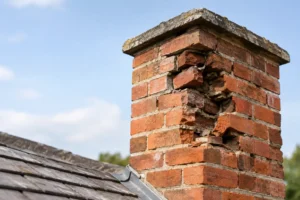
Chimney leaks deserve special attention because the source may be more than roof flashing. A cracked chimney crown, deteriorated mortar joints, missing cap, damaged brick, or failed waterproofing can let water into the chimney system and surrounding roof area. Water may then show up as a ceiling stain near the fireplace, a damp wall, or loose masonry outside.
Drips, moisture, or staining after wind-driven rain
If water appears only during hard, sideways rain, do not dismiss it. Wind-driven rain can expose weaknesses that a light shower does not, particularly around flashing, siding transitions, roof edges, and chimneys. The fact that a leak is intermittent does not mean it is harmless. It means the water needs certain conditions to find the opening.
Make a note of when and where you see the issue. Was the wind coming from one direction? Did it happen during melting snow, a heavy downpour, or after ice built up near the gutters? Those details can help pinpoint the cause during an inspection.
Why Leaks Get Worse Through New Jersey Weather
A small opening in the roof can expand quickly during winter. Water enters a crack, freezes, and expands. Repeated freeze-thaw cycles can loosen shingles, split sealants, and worsen masonry damage around chimneys. Snow that melts and refreezes at the roof edge can also contribute to ice dams, forcing water back beneath shingles.
Summer creates a different problem. Heat and humidity can make attic moisture harder to notice, while sudden thunderstorms can drive rain under lifted shingles or through compromised flashing. Older roofs are especially vulnerable because years of sun exposure can dry and weaken shingle materials.
Gutters play a role as well. When gutters are clogged, water can overflow onto fascia boards, siding, and the roof edge. That does not mean every gutter overflow is a roof leak, but it can create moisture damage that looks similar. A full exterior assessment separates a drainage issue from a roofing failure.
What to Do When You Notice a Possible Leak
First, protect the interior. Move furniture, electronics, rugs, and valuables away from the affected area. If water is actively dripping, place a container underneath it and dry nearby surfaces. If a ceiling is bulging with trapped water, keep clear of it. A saturated ceiling can collapse without much warning.
Next, document what you see. Take photos of stains, drips, damaged shingles visible from the ground, and any water around the chimney or attic. Note the date and weather conditions. This record is useful for a contractor and may help if you decide to contact your insurance provider.
Avoid common shortcuts. Do not climb onto a wet roof, spread tar over a suspected area, or rely on caulk as a permanent repair. Those quick fixes can hide the source, trap moisture, and make a proper repair more difficult. They also create unnecessary safety risks.
If water is near electrical fixtures, turn off power to that area only if you can do so safely from the electrical panel. Call for help right away if there is active water near wiring, a significant ceiling bulge, or a large area of missing roof material after a storm.
When a Roof Inspection Is the Right Next Step
Call for a professional roof inspection when you see interior staining, recurring moisture, visible shingle damage, loose flashing, chimney deterioration, or a leak that returns after every major storm. You should also schedule an inspection if your roof is aging and you have not had it checked in several years.
The goal is not simply to find a wet spot. A qualified inspection should look at shingles or roofing membrane, roof decking where accessible, valleys, penetrations, gutters, flashing, attic ventilation, and chimney components. The right repair could be a flashing correction, replacement shingles, chimney crown repair, masonry waterproofing, or a larger roofing project if the system has widespread failure.
Adore Construction helps New Jersey homeowners identify the source of water intrusion and explain the repair options in plain terms. You should know what is damaged, why it failed, what work is recommended, and what the estimate covers before work begins.
A roof protects everything below it, and early action is usually the most affordable action. If a stain has appeared, a chimney joint is crumbling, or a storm has left shingles loose, arrange an inspection before the next round of rain has a chance to make a small opening a larger repair.