A roof can look fine from the street and still be one hard storm away from causing expensive trouble. That is why homeowners often ask how to choose roofing material before leaks, missing shingles, or repeated repairs force a fast decision. The right roof is not just about appearance. It has to protect your home, fit your budget, and hold up through years of weather, moisture, and temperature swings.
For most homes, the best choice comes down to five things: climate, roof design, expected lifespan, maintenance needs, and total cost over time. If one of those gets ignored, the material that looked good on paper can turn into a problem after installation.
How to choose roofing material for your home
Start with the house you actually have, not the roof you saw on another property. A steep roof, a low-slope section, a chimney area with flashing details, or an older home with structural limits can all affect what makes sense. Some materials are more forgiving. Others need very specific installation methods and support.
It also helps to think beyond the replacement itself. A roofing system works with underlayment, flashing, ventilation, gutters, and in many homes, chimney components. If one part is weak, the whole system is more likely to fail early.
Budget matters, but so does value
Most homeowners begin with price, and that makes sense. Roofing is a major investment. But the lowest upfront number is not always the cheapest option in the long run.
Asphalt shingles are popular because they are affordable, widely available, and work well on many residential homes. They usually offer a solid balance of cost, appearance, and performance. For homeowners who want dependable protection without stretching the budget too far, shingles are often the practical starting point.
Materials like slate and tile can last much longer, but they also come with a higher installation cost and may require stronger structural support. Single-ply systems such as EPDM or PVC may be a better fit for low-slope or flat roof sections, where standard shingles are not the right choice.
A better question than “What is the cheapest roof?” is “What roof gives me the best protection for the years I expect to stay in this home?” That usually leads to a smarter decision.
Lifespan changes the math
If you plan to move in a few years, your priorities may be different from someone in a long-term home. Some roofing materials are designed for lower initial cost. Others are built for decades of service.
Asphalt shingles commonly provide good service life when installed correctly and maintained. Slate and tile can last much longer, but they are not ideal for every home. Flat roofing systems vary as well. EPDM is known for durability and value, while PVC can offer strong resistance to moisture and certain environmental stresses.
Long lifespan sounds great, but it only pays off if the roof is appropriate for the structure and installed the right way. A premium material on the wrong roof is still the wrong roof.
Match the material to your roof design
One of the biggest mistakes homeowners make when deciding how to choose roofing material is assuming every product works on every roof. It does not.
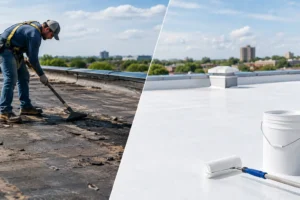
Steep-slope residential roofs are often well suited for shingles, slate, or tile, depending on the structure and budget. Low-slope and flat areas usually need systems designed to shed water differently, such as EPDM, PVC, torch down, or silicone-based solutions. These materials handle standing water and drainage conditions that would cause problems for traditional shingles.
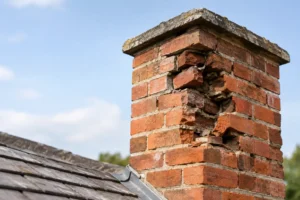
Roof shape matters too. Valleys, dormers, skylights, and chimneys create more transition points and more places where flashing has to perform. If your roof has a lot of detail work, installation quality becomes just as important as the material itself.
Weight is not a small detail
Some of the longest-lasting roofing materials are also some of the heaviest. Slate and tile can put far more load on a home than asphalt shingles. Before choosing a heavier option, the structure may need to be evaluated to make sure it can safely support the weight.
That step should never be skipped. A beautiful roof is not worth structural stress, sagging, or avoidable repair costs.
Consider New Jersey weather, not just curb appeal
Roofing material has to deal with real conditions year after year. In New Jersey, that can mean heavy rain, snow, wind, humidity, freeze-thaw cycles, and hot summer sun. A material that performs well in one region may not be the best choice in another.
Shingles remain a strong option for many local homes because they handle a wide range of conditions at a reasonable cost. Rubber and membrane systems can perform well on low-slope areas where drainage is slower. Slate can be extremely durable, but it requires proper support and skilled installation. Tile offers strong longevity too, but weight and cost can make it less practical for many properties.
Wind resistance matters in storm-prone conditions. Water resistance matters around flashing points, roof penetrations, and areas near chimneys. In cold weather, proper installation details matter just as much as the product itself because small mistakes can turn into leaks when ice and moisture get involved.
Ventilation and moisture control are part of the decision
Homeowners sometimes focus only on the outer layer of the roof. That is only part of the system. Poor attic ventilation can shorten roof life, trap heat, and contribute to moisture buildup. Flashing around chimneys, walls, and roof joints has to be installed correctly or even a good roofing material can fail.
If your home has had recurring leaks, staining, or ice issues, the problem may not be the old roofing material alone. It may be a combination of worn roofing, weak ventilation, and failing flashing. That is why a full assessment matters before choosing a replacement material.
Maintenance expectations should be realistic
Every roofing material needs some level of attention. The real question is how much maintenance you are willing to deal with and how often.
Asphalt shingles are relatively straightforward to inspect and repair, which is one reason they remain so common. Slate and tile can last a very long time, but repairs can be more specialized. Flat roofing systems need regular monitoring because punctures, seam issues, or drainage problems can lead to water intrusion if left alone.
For many homeowners, a roof that is easier to service is worth more than a roof with a longer theoretical lifespan. That is especially true if the home has multiple roof features or older exterior components that may need periodic work.
Don’t choose material without thinking about the contractor
The same material can perform very differently depending on who installs it. This is where many roofing problems begin. Poor fastening, weak flashing work, bad seam installation, or shortcuts around penetrations can reduce the life of the roof no matter how good the product is.
Ask whether the contractor has real experience with the specific roofing system you are considering. A company that handles shingles every day may not be the right fit for slate or a specialized flat roof application. The details matter, especially around chimneys, skylights, and any area where water can get behind the roofing surface.
A dependable contractor should also be clear about what the estimate includes, what condition the decking is in, whether ventilation needs improvement, and how transitions and flashing will be handled. If those answers are vague, that is a warning sign.
A practical way to narrow it down
If the options feel overwhelming, simplify the decision. First, identify your roof type and whether any sections are low-slope or flat. Next, set a realistic budget range. Then think about how long you plan to stay in the home and how much maintenance you are comfortable with.
From there, compare two or three materials that genuinely fit the structure and your goals. In many cases, the final choice is not between six products. It is between one sensible option, one longer-term premium option, and one material that is not really right for the roof at all.
That is often where a local, experienced contractor can save you time and money. A good recommendation should feel practical, not pushed.
The best roofing material is the one that fits your home, your weather, and your budget without creating new problems later. If you choose with those priorities in mind, you are far more likely to end up with a roof that does its job quietly for years, which is exactly what a good roof should do.