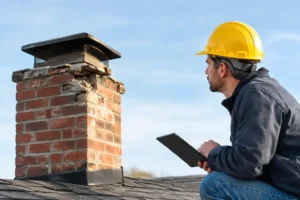
A chimney crown is a small part of your home, but it does a big job. Sitting at the very top of the chimney, it sheds rain, snow, and melting ice away from the masonry below. When it cracks or fails, water can work its way into the brick, mortar, flue, attic, and walls. This guide to chimney crown replacement explains how to recognize a failing crown, when repair is enough, and when replacement is the safer long-term choice.
What a Chimney Crown Does
The chimney crown is the solid concrete slab that covers the top of the chimney. It surrounds the flue tile or liner opening and should extend beyond the chimney walls with a slight downward slope. That overhang directs water away from the brickwork instead of allowing it to run down the sides of the chimney.
A properly built crown is different from a thin layer of mortar spread across the top of a chimney. Mortar washes often crack quickly because they are not designed to handle years of weather exposure, expansion, and freeze-thaw cycles. A durable crown should be formed from an appropriate concrete mix, reinforced when needed, sloped correctly, and separated from the flue tile so each component can expand and contract without causing damage.
For New Jersey homeowners, this matters even more. Winter freezing, spring rain, humid summers, and heavy storms can turn a small crown crack into a larger masonry problem in a short time.
Signs Your Chimney Crown May Need Replacement
You cannot always inspect a chimney crown safely from the ground, but certain warning signs often point to trouble at the top. Water stains near the fireplace, loose bricks, or crumbling mortar can all begin with failed crown protection.
Watch for these common signs:
- Visible cracks, chips, or missing pieces in the crown
- A crown that looks flat, thin, or uneven instead of sloped
- Rust on the damper, firebox, or chimney cap
- White staining on exterior brick, known as efflorescence
- Spalling brick, flaking masonry, or deteriorating mortar near the chimney top
- Water leaks in the attic, ceiling, or walls near the chimney chase
Not every crack requires full replacement. Hairline surface cracks may sometimes be sealed if the concrete is otherwise sound and the crown still has a proper slope and overhang. But wide cracks, deep fractures, crumbling concrete, exposed reinforcement, or a crown built from deteriorating mortar usually call for replacement.
A professional chimney inspection is the right way to determine the condition. The concern is not just what is visible on top. A contractor should also check the flue, flashing, cap, brickwork, and roof area for water damage that may have developed underneath.
Chimney Crown Repair vs. Full Replacement
The decision between repair and replacement comes down to the crown’s overall condition, not just the size of the most obvious crack.
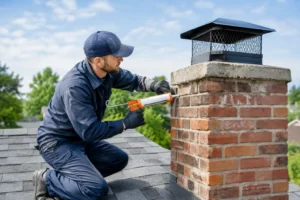
Crown repair can be a practical option when the structure remains solid. A chimney professional may clean the surface, address minor cracking with a compatible repair material, and apply a breathable waterproof coating made for crown protection. This approach can extend the life of a crown that has only early-stage wear.
Replacement is usually the better investment when the crown is extensively cracked, separating from the chimney, poorly shaped, or allowing water into the masonry. Covering a failed crown with sealant alone may slow the problem, but it will not correct weak concrete, improper slope, or missing overhang. The water intrusion can continue below the surface.
The lowest immediate price is not always the best value. Replacing a badly damaged crown before water reaches the flue liner, roof framing, or interior ceilings can prevent a much larger repair later.
How Chimney Crown Replacement Should Be Done
A quality chimney crown replacement starts with preparation. The damaged crown must be removed carefully without harming the flue tile, chimney bricks, or surrounding roof. Any loose masonry at the top of the stack should be repaired before a new crown is installed.
Building the Right Shape
The new crown needs a slope that guides water away from the flue opening. It should extend past the chimney walls to create a drip edge. This detail is easy to overlook, but it is one of the main reasons a properly constructed crown protects masonry better than a flat mortar surface.
The crown should also not be locked tightly against the flue tile. Flue liners expand when the fireplace, stove, or heating appliance is in use. Leaving an appropriate joint around the flue helps prevent the crown from cracking as temperatures change.
Using Materials That Hold Up
A durable crown is generally built with a concrete-based material designed for exterior exposure. The exact material and reinforcement needs depend on the chimney’s size, condition, and design. Larger crowns may need additional reinforcement to help control cracking, while smaller crowns may have different requirements.
Weather conditions matter during installation as well. Concrete needs proper curing conditions to develop strength. Rushing crown work during unsuitable temperatures or wet weather can compromise the result, which is why scheduling may depend on the forecast.
Sealing and Protecting the Chimney
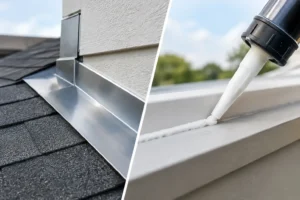
Once the crown is cured, a professional may recommend a compatible waterproofing treatment for the crown and surrounding masonry. The goal is to reduce water absorption while allowing the chimney to release moisture vapor. Trapping moisture inside brick with the wrong coating can create additional problems, particularly during freezing weather.
If the chimney cap is rusted, undersized, or missing, replacement may also be recommended. The cap keeps rain, animals, leaves, and debris out of the flue, while the crown protects the chimney structure itself. Both components work together, but they solve different problems.
What Affects Chimney Crown Replacement Cost?
The cost of chimney crown replacement depends on the scope of work. A straightforward crown on a one-story home will typically require less labor and access equipment than a tall chimney on a steep roof. The size and thickness of the crown, extent of existing masonry damage, flue configuration, and need for scaffolding or roof protection can all affect the estimate.
Additional repairs can also change the total. If water has damaged bricks, mortar joints, flashing, or the chimney cap, addressing those items at the same time may be more efficient than returning later. A clear estimate should explain what is included, what damage has been found, and whether related repairs are recommended or required.
Be cautious of estimates that propose simply applying a coating without inspecting the condition beneath it. A coating has value when used on a sound crown. It is not a substitute for rebuilding concrete that is already failing.
Can You Replace a Chimney Crown Yourself?
Small surface repairs may look like a simple weekend project, but full chimney crown replacement is usually not a good DIY job. Working at roof height creates fall risks, and an improperly built crown can send water directly into the masonry you are trying to protect.
There is also the issue of diagnosis. What appears to be crown damage may be connected to failing flashing, a cracked flue tile, damaged mortar, or a roof leak. Without a full inspection, it is easy to repair the visible symptom while the actual source of water intrusion remains active.
A qualified, insured chimney contractor has the equipment to access the chimney safely and the experience to build the crown with the right slope, overhang, expansion space, and materials. That workmanship is what gives the repair its value over time.
Protect Your Chimney Before the Next Storm
A chimney crown rarely fails all at once. More often, a small crack lets in water, freezing temperatures widen it, and the damage spreads one season at a time. Scheduling an inspection when you first notice staining, cracked masonry, or crown deterioration gives you more repair options and more control over the cost.
For homeowners who want clear answers and dependable workmanship, Adore Construction can inspect the chimney, explain the condition in plain language, and recommend the repair or replacement that protects the home for the long run. A sound crown is not just a finishing detail at the top of your chimney. It is one of the best defenses your masonry has against water damage.