A chimney crown is a small part of your roofline, but it does a big job. It is the sloped top layer of masonry that directs rain, snow, and melting ice away from the chimney structure. Choosing the best materials for chimney crowns can mean the difference between a chimney that stays dry for years and one that develops cracked brick, loose mortar, interior leaks, or costly structural damage.
For most New Jersey homes, a properly formed concrete crown is the strongest and most practical choice. The material matters, but so do the thickness, slope, reinforcement, overhang, and installation. A good crown is built as a weather barrier, not just a thin layer of mortar placed on top of the chimney.
What a Chimney Crown Is Designed to Do
Homeowners sometimes confuse a chimney crown with a chimney cap. A cap sits over the flue opening to keep out rain, animals, and debris. The crown is the solid masonry surface beneath it. It seals the top of the chimney stack and sends water away from the brickwork.
Without a sound crown, water can soak into mortar joints and masonry. During a New Jersey freeze-thaw cycle, that trapped moisture expands, pushing bricks and mortar apart. Over time, the damage can spread down the chimney and into the attic, roof framing, or living space.
A well-built crown should be thick enough to resist cracking, pitched so water does not sit on its surface, and extended past the chimney walls to create a drip edge. The material must handle direct sun, heavy rain, snow, temperature swings, and years of exposure.
The Best Materials for Chimney Crowns
Poured Concrete: The Best All-Around Choice
For most residential chimneys, poured concrete is the preferred material. A properly installed concrete crown is durable, affordable compared with repeated patching, and easy to shape with the correct slope and overhang. It can also be reinforced to reduce the risk of cracking on larger or wider chimney stacks.
The key word is properly. A concrete crown should not be a thin coating of basic mortar. It should be formed as a solid slab, generally with adequate thickness across the crown and extra strength around vulnerable areas. It also needs a clear slope away from the flue and chimney walls.
Concrete performs especially well when it is finished correctly and protected with a breathable masonry water repellent after curing. This helps limit water absorption without trapping moisture inside the masonry.
For a standard brick chimney, poured concrete offers the best balance of long-term protection, cost, and repairability. If a crown eventually needs attention, a professional can often repair small defects before they become a full replacement project.
Precast Concrete Crowns: A Strong Option for Certain Chimneys
Precast concrete crowns are made off-site and installed as a finished unit. They can be a good choice when the chimney dimensions are straightforward and a properly sized piece is available or can be fabricated. Because they are produced in controlled conditions, a quality precast crown may have a consistent finish and dependable strength.
However, fit is critical. A crown that does not properly match the chimney, flue tile, and cap setup can leave gaps where water enters. The joints and edges still need careful sealing and installation. Precast crowns are not automatically better than site-poured concrete. The better choice depends on the shape of the chimney and whether the installer can create a watertight fit.
For homeowners replacing a severely deteriorated crown, precast concrete can be worth discussing. It is often a durable solution, but it should be selected for the specific chimney rather than used as a one-size-fits-all product.
Polymer-Modified Cement: Useful for Repairs, Not Every Replacement
Polymer-modified cement repair products are commonly used to restore minor surface damage, shallow cracks, and small areas of deterioration. These materials are designed to bond well and flex slightly more than traditional mortar. When used correctly, they can extend the life of a crown that is otherwise structurally sound.
This option makes sense when the crown has light cracking or surface wear but remains solid, properly sloped, and securely attached. It is not the right answer for a crown that is crumbling, deeply cracked, flat, undersized, or separating from the chimney.
A patch cannot correct a poor design. If water is pooling on top of the crown or running down the chimney walls because there is no overhang, repair material may only delay a larger problem. In those cases, replacement with a properly formed concrete crown is usually the safer investment.
Mortar: Acceptable for Small Repairs, Not a Full Crown
Standard masonry mortar is often used for tuckpointing and localized chimney repair. It is useful for repairing joints and small defects around brickwork, but it is not the best material for building an entire chimney crown.
Mortar is more likely to shrink and crack when applied in a thick layer. It also does not offer the same long-term performance as a formed concrete crown. A thin mortar wash on top of a chimney may look clean when it is first completed, but it can deteriorate quickly under repeated exposure to rain, snow, and temperature changes.
If a contractor recommends covering a failing crown with a thin layer of mortar, ask whether the existing crown is structurally sound and whether the repair will create the slope and drip edge needed for water control. A less expensive shortcut can become expensive when it allows moisture into the chimney system.
Stone, Brick, and Tile: Attractive but Often Less Practical
Stone, brick, and tile can be used around a chimney for appearance, but they are usually not the first choice for the crown itself. Each joint creates another possible water entry point. Natural stone can also vary in porosity, and tile may crack or loosen as the chimney moves through seasonal temperature changes.
These materials may be appropriate for custom masonry designs when installed by an experienced professional and supported by a proper waterproofing strategy. For most homes, though, a simple concrete crown provides better protection with fewer vulnerable joints.
Material Alone Does Not Prevent Chimney Leaks
The strongest concrete can still fail if the crown is built incorrectly. Crown construction details are just as important as the material selected.
A dependable chimney crown should extend beyond the brick or stone chimney walls. This overhang helps water drip away from the masonry instead of running straight down the sides. The underside of that extension should include a drip edge or groove that breaks the water path.
The crown also needs a noticeable slope. A flat crown holds rainwater, snowmelt, and debris. Standing water works its way into small pores and cracks, then expands during freezing weather. The top should shed water in every direction while keeping proper clearance around the flue liner.
Expansion space matters, too. Flue liners heat up and cool down at a different rate than the surrounding crown. If the crown is locked tightly against the flue tile, movement can cause cracking. A professional installation accounts for that movement and seals the joint appropriately.
Signs Your Chimney Crown Needs Repair or Replacement
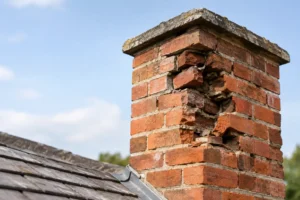
A visual check from the ground can reveal some warning signs, but many crown issues are easier to spot during a chimney inspection. Watch for visible cracks, missing pieces, flaking concrete, exposed aggregate, rust stains, or a crown that appears flat or sunken.
You may also notice loose bricks near the top of the chimney, white staining on masonry, water marks in the attic, musty odors near the fireplace, or a leak that appears after heavy rain. These problems do not always begin at the crown, but a damaged crown is a common source of water intrusion.
Small cracks may be repairable if caught early. Larger cracks, widespread deterioration, poor slope, or an undersized crown typically call for replacement. A close inspection can identify whether the problem is limited to the crown or whether the cap, flashing, brickwork, liner, or roof area also needs attention.
How to Choose the Right Crown for Your Home
The right material depends on the chimney’s size, condition, design, and exposure. A newer chimney with a small surface crack may benefit from a professional repair and waterproofing treatment. An older chimney with a thin, crumbling mortar crown is usually better served by a full concrete replacement.
It is also worth considering what sits above and around the crown. The flue liner, chimney cap, brick condition, and roof flashing all affect how water moves through the system. Addressing only the visible crack without checking these connected components can leave the source of the leak unresolved.
At Adore Construction, we look at the full chimney system before recommending a repair or replacement. Homeowners deserve a clear explanation of what is damaged, what can be repaired, and what will provide lasting protection without unnecessary work.
A chimney crown should quietly do its job through every rainstorm, freeze, and hot summer day. If yours is cracked, worn, or letting water into the chimney, handling it early with the right material and workmanship can protect far more than the top course of brick.