A cold draft across the living room, rainwater in the firebox, or an animal scratching overhead can make homeowners ask the same question: chimney cap versus damper, which one actually solves the problem? The answer is not either-or in many homes. These parts perform different jobs, and a chimney that has both in good condition is better protected from weather, pests, heat loss, and preventable damage.
A chimney cap sits at the top of the flue, where it takes the full force of rain, snow, wind, and falling debris. A damper sits lower in the chimney system and controls airflow. Understanding the difference helps you approve the right repair instead of paying for a part that cannot address the real issue.
Chimney Cap Versus Damper: The Basic Difference
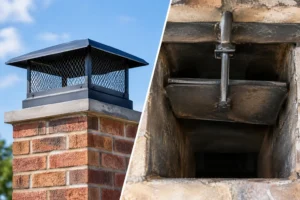
A chimney cap is an exterior cover installed over the top of a chimney flue or chimney crown. It is usually made from stainless steel, copper, aluminum, or galvanized metal. Its job is to keep water, leaves, nesting animals, and sparks from entering the flue while allowing smoke to exit safely.
A damper is a movable metal plate that opens when you use a fireplace and closes when the fireplace is off. A traditional throat damper is located just above the firebox. A top-sealing damper is installed at the top of the flue and uses a cable or handle near the fireplace to open and close.
Put simply, a cap protects the chimney from outside entry. A damper controls air movement through the chimney. A cap cannot stop indoor heat from escaping through an open flue, and a damper cannot keep rain out of an uncapped chimney.
What a Chimney Cap Protects Against
New Jersey weather can be hard on exposed masonry and metal. Rain that enters an unprotected flue can soak into the chimney system, accelerate mortar deterioration, rust metal components, and create staining or odors around the fireplace. Freeze-thaw cycles make that moisture problem worse. Water expands as it freezes, which can crack masonry, damage the crown, and loosen flashing over time.
A properly sized chimney cap also helps prevent animals from entering. Birds, squirrels, raccoons, and other small animals can build nests in an open flue. Those nests can block airflow and create a dangerous condition when the fireplace is used. A cap with secure mesh is often the practical solution, provided the mesh is appropriate for the appliance and kept clear of soot and debris.
Spark protection is another benefit. When a wood-burning fireplace is in use, the cap’s screen can help reduce the chance of embers leaving the chimney and landing on a roof or nearby dry material. The screen is not a substitute for safe fireplace operation or routine sweeping, but it adds a valuable layer of protection.
Signs You May Need a New Chimney Cap
A missing cap is the clearest sign, but damage is not always obvious from the ground. Rust streaks down the chimney, water in the firebox after a storm, visible bent metal, animal noises, and recurring debris in the fireplace all point to a cap issue. If your existing cap is loose, undersized, or attached to damaged crown masonry, simply tightening it may not be enough.
The right cap must fit the flue and chimney design. A single-flue cap does not work the same way as a multi-flue cap, and a cap that restricts draft can create smoke problems. Professional measurement matters, especially on older chimneys with irregular masonry or multiple flues.
What a Damper Does for Your Home
When the fireplace is not in use, an open chimney is like leaving a window open at the top of the house. Warm air can rise out through the flue during winter, while humid outdoor air can enter during warmer months. A functioning damper reduces that unwanted air exchange.
Before lighting a fire, the damper must be fully open. Closing it while a fire is burning or while coals are still producing smoke can send carbon monoxide and smoke back into the home. This is why a stuck, broken, or poorly adjusted damper should be repaired promptly rather than forced into position.
Traditional throat dampers are common, but they do not always create a tight seal. Over time, heat, creosote, rust, and warped metal can leave gaps around the plate. A top-sealing damper can offer a better air seal because it closes at the top of the chimney, keeping the flue column from acting as a channel for cold air and moisture.
Signs Your Damper Needs Attention
If you feel a steady draft from the fireplace when it is not being used, the damper may be open, missing, warped, or not sealing correctly. Other signs include a handle that will not move, a plate that falls shut, visible rust above the firebox, smoke entering the room when the fireplace is lit, or difficulty getting a fire to establish a good draft.
Smoke problems do not always mean the damper is at fault. A blocked flue, creosote buildup, wet firewood, poor chimney height, or pressure differences inside the house can all affect draft. An inspection can identify whether a damper repair will solve the problem or whether another chimney issue needs to be addressed first.
Do You Need a Cap, a Damper, or Both?
Most wood-burning fireplace chimneys benefit from both. The cap handles external threats, while the damper helps manage the interior air path. Choosing only one because it appears less expensive can leave the original issue unresolved.
If rain is entering the fireplace, the priority is usually the cap, crown, flashing, or masonry – whichever component is allowing water in. A damper will not stop rain from reaching the flue. If the main complaint is a cold, drafty fireplace during the off-season, the damper deserves close attention. A top-sealing damper may be worth considering if the existing throat damper is worn out and energy loss is a concern.
There are exceptions. Gas fireplaces, wood stoves, and certain direct-vent appliances have specific venting requirements. Some systems should not use standard screened caps or conventional dampers. Never install or close a damper without confirming what your appliance requires. The wrong setup can interfere with safe venting.
Why Installation Quality Matters
A chimney cap and damper may look like small components, but poor installation can cause major headaches. A cap that is not secured correctly can blow loose in high winds. A cap placed too low or fitted with the wrong screen can restrict smoke flow. A damper installed without proper alignment may stick, leak air, or fail when you need it most.
Chimney work also involves roof access, masonry condition, and fire safety. During a professional service visit, it makes sense to look beyond the immediate part. A technician may find cracked crown cement, loose brick, deteriorated mortar joints, damaged flashing, or a dirty flue that contributed to the problem. Addressing these issues early is usually more affordable than waiting for a leak or structural repair to grow.
For homeowners who use a fireplace regularly, annual chimney sweeping and inspection is a sensible time to check the cap, damper, liner, crown, and flashing together. For occasional fireplace users, the chimney still needs periodic inspection because weather damage and animal entry can happen whether or not a fire is lit.
A Practical Decision for Your Fireplace
Start with the symptom, not the part. Water, animals, and debris point toward cap and exterior chimney protection. Drafts and heat loss point toward the damper. Smoke backup, rust, or difficulty operating the fireplace calls for a complete inspection because more than one condition may be involved.
A dependable chimney professional can explain what is damaged, why it matters, and whether repair or replacement makes the most sense for your home. A properly capped chimney with a working damper keeps your fireplace ready for the days you want a fire and protected on every day you do not.