A chimney is built to vent smoke and combustion gases, which means it has an opening at the top. So, can rain enter chimney openings? Yes. A small amount of rain may fall into an uncapped flue without causing an immediate problem, but repeated water entry can lead to masonry damage, leaks, rust, odors, and expensive repairs.
For New Jersey homeowners, this is not a minor concern. Freeze-thaw weather, wind-driven rain, snow, and humid summers all put pressure on exposed chimney components. The key is knowing the difference between normal weather exposure and a chimney that is allowing water into places it should never reach.
Can Rain Enter a Chimney and Cause Damage?
Rain can enter an open flue directly, especially during a hard storm or when wind pushes water sideways. However, the more serious issue is often not the water that falls straight down the flue. It is water entering through cracks in the crown, failed flashing at the roofline, damaged mortar joints, loose bricks, or gaps around the chimney structure.
A properly working chimney is designed to manage weather, not absorb it. Its cap, crown, flashing, masonry, and liner all have a role in keeping moisture from reaching the fireplace, attic, walls, and framing. When one component fails, water can travel farther than expected before it becomes visible indoors.
That is why a chimney leak can be difficult to diagnose from the ground. A ceiling stain near the fireplace may look like a roofing issue. A damp firebox may seem like a flue problem. In some cases, both the roof and chimney need attention because the flashing and surrounding shingles work together to direct rain away from the home.
Where Rain Usually Gets Into a Chimney
An open or damaged chimney cap
The chimney cap is the first line of defense against rain, leaves, nesting animals, and debris. A cap should cover the flue opening while leaving enough space for smoke to vent safely. If it is missing, undersized, rusted through, loose, or bent out of position, rain has a direct path into the flue.
A cap is one of the most affordable chimney protections available, but it must fit the chimney correctly. A poorly installed cap can blow loose in high winds or restrict draft if it is not sized for the appliance and flue.
A cracked chimney crown
The crown is the cement surface at the top of the chimney that slopes away from the flue. Its job is to shed water before it can soak into the masonry below. Small cracks in a crown may seem harmless, but they can allow water into the brick, mortar, and chimney structure.
Once water enters, winter temperatures can make the damage worse. Water expands as it freezes, widening cracks and breaking down the crown over time. A crown that is badly cracked, flat, or crumbling often needs repair or replacement, not just a surface patch.
Failed flashing at the roofline
Flashing is the metal barrier where the chimney meets the roof. This is one of the most common sources of chimney-related leaks because it must handle movement, rain runoff, wind, and roof aging at the same time.
When flashing separates, corrodes, or loses its seal, rain can run behind it and into the roof deck or attic. Homeowners may notice damp spots on ceilings, peeling paint near the chimney, or water stains that appear only after heavy rain. Because flashing repairs involve both roofing and chimney work, the repair should address the full water path instead of applying caulk as a temporary fix.
Damaged brick and mortar
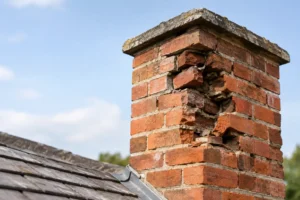
Brick is durable, but it is not waterproof. Older masonry can become porous, and cracked or missing mortar joints create easy paths for moisture. Signs of trouble include flaking brick faces, loose mortar, white powdery staining called efflorescence, or pieces of masonry collecting on the roof or ground.
Repointing damaged joints and replacing failed bricks can restore the chimney’s strength. After needed repairs are complete, professional waterproofing can help reduce moisture absorption while allowing the masonry to release trapped vapor. The wrong coating can trap moisture inside the brick, so product selection and surface preparation matter.
Problems inside the flue
A deteriorated clay liner, damaged metal liner, or failed connection can allow moisture to affect parts of the chimney that should remain protected. Rainwater mixing with soot and creosote can create strong odors, staining, and corrosive residue. If you see water in the firebox or smell a musty, smoky odor after rain, the flue and cap should be inspected.
Signs Your Chimney Is Taking On Water
A chimney does not always drip water into the fireplace when there is a problem. Watch for changes after storms, including dampness in the firebox, rust on the damper or fireplace grate, water stains near the chimney, peeling wallpaper, bubbling paint, or a persistent musty smell.
Outside, look for cracked mortar, damaged bricks, a missing cap, rust streaks, or a crown with visible cracks. A white, chalky residue on brick can also point to moisture moving through the masonry. These signs do not always mean the chimney is the only issue, but they are good reasons to schedule a professional inspection.
If water is actively coming through the ceiling or wall during a storm, do not wait for the weather to improve before taking action. Protect the area below the leak, document the damage, and arrange for a qualified chimney and roofing professional to identify the source. Water can damage insulation, framing, drywall, and electrical components long before it creates a major visible stain.
What Should You Do if Rain Is Coming Down the Flue?
If the chimney has no cap, adding the right cap is usually the first step. Do not block the flue with a cover, plywood, or makeshift material. A chimney must vent safely whenever a fireplace, furnace, boiler, or water heater uses that flue. Blocking it can create a carbon monoxide hazard or cause smoke to enter the home.
Keep the damper closed when the fireplace is not in use, but understand that a closed damper is not a weatherproof solution. It may reduce drafts and limit some rain entry into the room, yet water can still collect above it and contribute to rust or deterioration.
For an active leak, avoid relying on roof cement, spray sealers, or heavy caulk as a permanent repair. These materials may temporarily slow water, but they often fail as temperatures change. They can also hide the real issue and make a proper repair more difficult later.
The Best Long-Term Protection for Your Chimney
The right repair depends on where water is entering and how much deterioration has already occurred. A newer chimney with a missing cap may need a straightforward cap installation. An older chimney with cracked mortar, a failing crown, and rusted flashing may need several coordinated repairs to stop the leak for good.
A professional inspection should assess the cap, crown, flue, liner, masonry, flashing, roof connection, and interior signs of moisture. This full view matters because treating only the visible symptom can leave the source of the water untouched. For example, replacing a rusted damper without correcting the missing cap or cracked crown simply sets up the same damage to return.
At Adore Construction, chimney work is approached as home protection, not a quick patch. Clear findings, practical repair options, and quality materials help homeowners make informed decisions without unnecessary work. Whether the answer is a cap, crown repair, flashing replacement, masonry restoration, waterproofing, or liner service, the goal is the same: keep water out while keeping the chimney safe to use.
A dry chimney is easier to maintain, safer to operate, and far less likely to turn a rainy weekend into a costly repair. If your fireplace smells damp after storms, your ceiling is showing stains, or the chimney exterior looks worn, having it checked now can prevent a small entry point from becoming a larger structural problem.