Water stains on the ceiling near a fireplace usually do not start as a small problem. If you are asking, why is my chimney leaking, the real issue is that water has already found a path into parts of your home that were never meant to get wet. The longer it sits, the more likely you are to end up with damaged drywall, rotted wood, mold, and masonry that keeps getting weaker every season.
A leaking chimney is rarely caused by just one thing. In many homes, especially older ones, the problem comes from a combination of worn materials, poor sealing, and weather exposure over time. Chimneys take a beating from rain, snow, freeze-thaw cycles, and wind, so even a small weak spot can turn into a recurring leak.
Why Is My Chimney Leaking? The Most Common Causes
One of the most common causes is damaged flashing. Flashing is the metal material installed where the chimney meets the roof. Its job is simple – keep water from slipping into the joint between the two surfaces. When flashing rusts, lifts, cracks, or was installed poorly in the first place, water can get under the roofing and travel into the attic, ceiling, or walls.
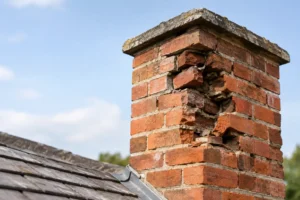
Another frequent issue is a cracked chimney crown. The crown is the top cement surface that covers the chimney around the flue opening. When that surface cracks, water can seep into the masonry below. In cold weather, that trapped moisture freezes and expands, which makes the cracks worse. What starts as a hairline split can turn into major deterioration if it is ignored.
Missing or damaged chimney caps are also a big reason chimneys leak. A cap helps keep rain out of the flue while also blocking debris and animals. Without one, water can fall directly down the chimney. Homeowners sometimes notice this as a damp firebox, musty odor, or water dripping into the fireplace after a storm.
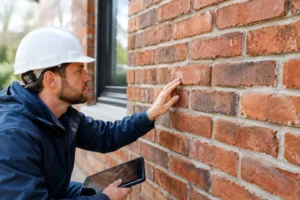
Brick and mortar damage can create another path for water. Chimneys are exposed on all sides, unlike most exterior walls, so they absorb a lot of moisture. As mortar joints wear down or bricks become porous, rainwater can soak in instead of shedding off the surface. This is especially common when the chimney has not been maintained or waterproofed properly.
Sometimes the issue is not the chimney alone. Roofing materials around the chimney can fail and make it look like the chimney is leaking when the actual source is a nearby roof problem. Broken shingles, underlayment issues, or poor roof drainage can all send water toward the chimney area.
Signs the Leak Is Coming From the Chimney
The clearest warning sign is water showing up near the fireplace, chimney breast, or upper ceiling areas after rain. You may also see peeling paint, bubbling drywall, staining, or damp spots on interior walls. In some homes, the leak shows up in the attic first before it becomes visible inside the living space.
Outside, white staining on the brick, called efflorescence, is a common clue that moisture is moving through the masonry. Spalling brick, where the face of the brick flakes or breaks apart, points to long-term water absorption. Rust on the damper or fireplace components can also suggest that water is getting in through the top.
Musty odors matter too. If your fireplace smells damp even when it has not rained recently, moisture may be trapped inside the chimney structure. That smell is often one of the earliest signs that something is wrong.
Why Chimney Leaks Get Worse Fast
Water damage does not stay put. Once moisture enters masonry or roof decking, it spreads. That means a flashing issue can eventually affect framing, insulation, ceilings, and interior finishes. A crown crack can lead to interior flue damage. Saturated brick can start breaking down from the inside out.
This is where homeowners lose money by waiting. What could have been handled with a focused repair can grow into a larger masonry rebuild, roof repair, or interior restoration job. If the chimney liner or firebox area is affected, the issue can move beyond water damage and become a safety concern as well.
In New Jersey, freeze-thaw weather makes this worse. Water gets into small cracks, temperatures drop, and the material expands under pressure. That cycle repeats all winter and can turn minor defects into major failures by spring.
It Depends on Where the Water Is Entering
If you are wondering why is my chimney leaking, the answer depends on where the leak starts. Water coming down the flue usually points to a missing cap or top-side opening. Water appearing where the chimney meets the ceiling often suggests flashing or roofing trouble. Moisture soaking through the brick face may indicate masonry saturation, failed mortar joints, or a damaged crown.
That is why guessing can waste time. Homeowners sometimes apply caulk to visible cracks or try a quick patch around the roofline, only to find the leak comes back with the next heavy rain. Surface fixes may slow water down for a short time, but they rarely solve the actual entry point.
A proper inspection looks at the cap, crown, flashing, brickwork, mortar joints, flue area, and nearby roofing materials together. Chimney leaks are often interconnected, and the only reliable repair plan is one based on what is actually failing.
Repairs That Typically Solve a Leaking Chimney
The right repair depends on the source. If the flashing is loose or corroded, it may need to be resealed or replaced. If the crown is cracked, it may need specialized sealing or a full rebuild depending on the condition. If the chimney has no cap, installing one is a straightforward fix that can prevent direct water entry.
For masonry issues, tuckpointing may be needed to restore failing mortar joints. In more advanced cases, damaged bricks may need to be replaced. Waterproofing can also help, but only when the chimney is structurally sound first. A breathable waterproofing product is meant to reduce water absorption, not hide active damage.
This is an important distinction. Waterproofing a chimney with open cracks or failing mortar is like painting over rot. It may look better for a while, but it does not stop deterioration underneath.
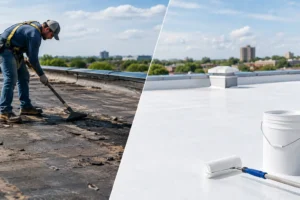
When roofing materials are part of the problem, the repair scope may include shingles, underlayment, or surrounding roof sections in addition to chimney work. That is often the most practical route because water intrusion around chimneys does not respect trade categories. It just follows the weakest point.
Can You Wait and Watch It?
Usually, no. Even if the leak seems minor, chimney water intrusion tends to be progressive. You may only notice a stain today, but hidden damage could already be affecting wood framing or the interior side of the masonry. Once moisture gets into those areas, it creates the kind of problem that keeps coming back.
There is also a timing issue. Small repairs are easier to schedule and easier on the budget than emergency work after a storm. If the chimney is used for venting, delaying repairs can also affect performance and safety.
What Homeowners Should Do Next
Start by paying attention to when and where the leak appears. Does it happen only during heavy rain, after snow melts, or every time there is wind-driven weather? Does the water show up in the firebox, on the ceiling, or along a nearby wall? Those details help narrow down the source, but they should lead to an inspection, not a guess.
A qualified chimney and exterior contractor should be able to tell you whether the issue is the cap, crown, flashing, masonry, roof, or a mix of several conditions. That matters because the best repair is the one that fixes the whole problem the first time.
At Adore Construction, the focus is simple: find the actual source, repair it correctly, and help homeowners avoid the bigger damage that comes from waiting too long.
If your chimney is leaking, treat it like the warning sign it is. Water has a way of turning small exterior defects into expensive interior repairs, and the smartest move is to stop it at the source while the fix is still manageable.