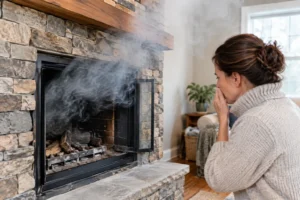
You light a fire expecting warmth and a clean wood-burning smell. Instead, smoke starts rolling into the room, your eyes sting, and the whole house smells like a campfire gone wrong. If you’re asking, why does my fireplace smoke, the short answer is that your chimney is not drafting the way it should.
A smoking fireplace is more than a nuisance. It can point to poor airflow, a blockage, a damaged flue, or a design issue that needs professional attention. Some causes are simple and temporary. Others are clear warning signs that your fireplace system is not operating safely.
Why does my fireplace smoke in the first place?
Your fireplace depends on draft. Draft is the upward pull that carries smoke and combustion gases out through the chimney. When that pull is weak, interrupted, or reversed, smoke spills back into the room instead of leaving the house.
That can happen for a few different reasons. The fire may not be hot enough yet. The flue may be closed or partially blocked. Your house may be pulling air away from the fireplace. In some homes, the chimney itself may be too short, damaged, or poorly sized for the firebox.
The key point is this: smoke in the room is usually an airflow problem, but airflow problems can come from several places. That is why guessing rarely solves it for long.
A cold flue can cause smoke right away
One of the most common reasons a fireplace smokes is a cold chimney. When the flue is cold, especially on a freezing New Jersey morning, the air inside the chimney can be heavy and push downward. That makes it harder for smoke to rise when you first light the fire.
This is why some fireplaces smoke only at startup and then improve after the fire gets stronger. Once the flue warms up, draft begins to work more normally. If smoke only happens for the first few minutes, a cold flue may be the main problem.
Still, that does not mean you should ignore it. A properly functioning chimney should establish draft without filling the room with smoke every time you use it.
Wet wood creates more smoke than heat
If your firewood is not fully seasoned, it can produce a heavy amount of smoke before it burns cleanly. Wet wood spends more energy boiling off moisture, and that slows combustion. The result is a lazy, smoky fire that struggles to send exhaust up the chimney.
This is one of the simpler causes, but it is often overlooked. Homeowners may assume the fireplace is the problem when the fuel is really part of it. Good firewood should be dry, properly stored, and ready to burn. Green or damp wood can make even a decent fireplace perform badly.
There is a trade-off here. Better wood may reduce smoking, but it will not correct a blocked flue, poor chimney draft, or structural damage. If you switch to dry wood and the problem stays the same, the issue likely goes deeper.
Blockages are a major reason fireplaces smoke
A chimney does not need to be fully clogged to create smoke problems. Even partial blockage can restrict the path smoke needs to escape. Creosote buildup, fallen debris, leaves, animal nesting material, and broken flue pieces can all narrow the opening.
This is where smoking moves from annoying to potentially dangerous. A blocked chimney can increase fire risk and allow harmful gases to back up into the home. If your fireplace suddenly starts smoking when it used to work fine, blockage is high on the list of suspects.
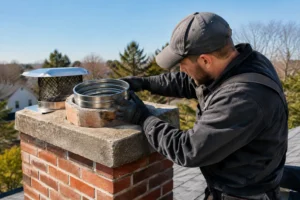
A chimney cap helps keep out rain, animals, and debris, but caps can be damaged or missing. In older systems, years of buildup may also be hiding inside the flue where homeowners cannot see it.
The damper may be closed or not opening fully
It sounds basic, but it happens all the time. If the damper is closed, or only partly open, smoke has nowhere to go. Some dampers are easy to check. Others are rusted, warped, or disconnected and may look open when they are not functioning correctly.
Even if the damper is technically open, a damaged throat area can still disrupt airflow. This is one of those situations where a quick visual check helps, but it does not always tell the full story.
If your fireplace smokes every time and the damper has become hard to operate, it is worth having the system inspected instead of forcing it and risking more damage.
Your home may be under negative pressure
Modern homes and recently updated homes are often tighter than older ones. That is good for energy efficiency, but it can work against your fireplace. Exhaust fans, kitchen hoods, bathroom fans, clothes dryers, and even HVAC systems can pull indoor air out of the house. When that happens, the fireplace may struggle to draw air upward because the house is competing with it.
This is called negative pressure. In plain terms, the home is sucking air from wherever it can get it, and the chimney may start pulling the wrong way. That can be especially noticeable when you open the fireplace doors or when multiple appliances are running at the same time.
If cracking a nearby window slightly improves the draft, negative pressure may be part of the issue. But that is a clue, not a permanent fix. You still want to know why the fireplace is so sensitive to pressure changes.
Fireplace and chimney sizing matter more than most people think
Sometimes the problem is not maintenance. It is design. If the firebox opening is too large for the flue, or the chimney is too short to create proper draft, smoke spillage can be built into the system.
This tends to show up in older homes, remodeled fireplaces, and situations where components were changed without correcting the full venting setup. A beautiful new fireplace face or insert does not guarantee that the chimney above it is correctly matched.
These cases can be frustrating because the smoking may seem random. It may happen only on windy days, only during certain temperatures, or only when the fire is large. That inconsistency often points to a draft weakness that gets exposed under certain conditions.
Wind and weather can make a fireplace smoke
Outdoor conditions play a role too. Wind can push down into the chimney instead of allowing smoke to rise freely. Rain, cold air, and shifting pressure systems can all affect draft.
If your fireplace smokes mostly on windy days, the problem may involve chimney height, cap design, nearby rooflines, or surrounding trees and structures that affect airflow. This is not something a homeowner can always solve by changing how they build the fire.
Weather-related smoking often means the chimney needs a professional evaluation, especially if the issue keeps returning season after season.
When smoking points to chimney damage
Cracked flue tiles, deteriorated masonry, damaged crowns, liner problems, and internal collapse can all interfere with draft. In some cases, damage changes the path of airflow. In others, it allows debris and moisture to enter, which leads to further blockage and poor performance.
This is one reason regular chimney inspections matter. A fireplace can seem usable while hidden damage continues to develop inside the system. By the time smoke starts entering the room, the issue may have been building for a while.
If the fireplace has a strong smoky odor even when it is not in use, or if pieces of tile or masonry are showing up in the firebox, do not keep using it until it has been checked.
What you can safely check yourself
Before calling for service, there are a few basic things worth checking. Make sure the damper is fully open. Use dry, seasoned firewood. Start with a small, hot kindling fire instead of loading large logs right away. If the issue seems connected to tight indoor airflow, see whether turning off exhaust fans changes anything.
That said, avoid trying to diagnose the inside of the chimney from the ground with guesswork. If there is a blockage, creosote buildup, liner problem, or draft defect, using the fireplace anyway can make the problem worse.
When to call a professional
If your fireplace smokes more than once, it deserves a proper inspection. Repeated smoke problems usually mean there is a mechanical, structural, or venting issue that will not fix itself. The right service may be as simple as a sweep and inspection, or it may involve repairs to the cap, crown, liner, damper, or flashing area if moisture has contributed to damage.
A qualified chimney professional can identify whether the issue is fuel-related, draft-related, blockage-related, or caused by chimney deterioration. That matters because each fix is different. Cleaning a flue will not solve a sizing problem, and opening a window will not repair a damaged liner.
At Adore Construction, we see this often with homeowners who thought the smoke was just part of using an older fireplace. It is not something you should have to live with.
If your fireplace is sending smoke into the room, trust what it is telling you. A healthy chimney system should carry smoke up and out, not back into your home. Getting it checked now is a smart way to protect your comfort, your air quality, and your safety before a small issue turns into a bigger repair.