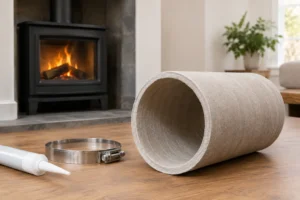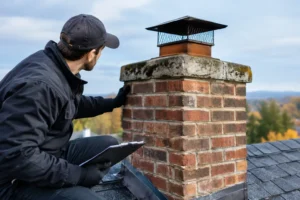
A chimney can look solid from the roofline and still have a failing flue hidden inside. That is why a Thermocrete flue liner review should start with the condition of your existing chimney, not a sales pitch. Thermocrete is a ceramic flue resurfacing system designed to repair certain damaged masonry chimney liners without tearing down the chimney or installing a full replacement liner.
For the right chimney, it can be a practical way to improve safety, stop gases from leaking through damaged joints, and extend the life of the structure. For the wrong chimney, it can be money spent on a repair that does not address the real problem. A professional inspection makes that distinction clear.
What Thermocrete Flue Lining Is Designed to Do
Many older New Jersey homes have clay-tile flue liners. Over time, those tiles can crack, separate at the joints, lose mortar, or deteriorate from heat, moisture, soot, and acidic combustion byproducts. When that happens, smoke, carbon monoxide, heat, and creosote can move into areas where they do not belong – including the chimney walls and nearby parts of the home.
Thermocrete lining uses a ceramic coating material to resurface the interior of an existing masonry flue. After the chimney is inspected and cleaned, the material is applied to seal small gaps, damaged mortar joints, and certain surface defects. Once cured, it creates a continuous interior coating intended to restore the flue’s protective surface.
This approach is especially appealing when the chimney has minor to moderate liner damage but remains structurally sound. It avoids some of the demolition that may be required to replace broken clay tiles. It can also preserve more usable space inside the flue than a metal liner in some situations.
That said, ceramic resurfacing is not a universal answer for every chimney problem. The flue still needs to be suitable for the appliance it serves, the damage needs to fall within the system’s repair limits, and the chimney must be properly cleaned and prepared before any material is applied.
Thermocrete Flue Liner Review: The Real Benefits
The biggest benefit is targeted repair. If an inspection finds cracked joints or deteriorated clay liner surfaces, Thermocrete may repair the issue without major masonry removal. That can reduce disruption inside and outside the home while addressing an important fire and fume safety concern.
It can also help create a smoother interior flue surface. A smoother passage may improve draft conditions in some chimneys by reducing areas where soot and creosote can collect. Better draft is never guaranteed by lining alone, since chimney height, appliance performance, outside air pressure, blockages, and flue sizing all matter. Still, restoring a damaged interior can remove one meaningful obstacle to proper chimney operation.
Another advantage is long-term preservation. A deteriorating liner often gets worse when rain enters through a damaged crown, missing cap, loose flashing, or porous masonry. Repairing the flue and correcting the source of water intrusion can help protect the chimney from more expensive deterioration down the road.
For homeowners, the practical value is often peace of mind. If a chimney inspector identifies liner defects that create a safety concern, taking action before the next heating season is generally easier and less stressful than waiting for a smoke problem, failed inspection, or emergency repair.
Where a Ceramic Flue Repair Has Limits
A reliable review should be clear about the trade-offs. Thermocrete is a repair method, not a substitute for a sound chimney system. It may not be the right choice if the chimney has severe structural failure, major missing liner sections, significant offsets that cannot be properly treated, or a flue that is incorrectly sized for the heating appliance.
For example, a flue serving a new high-efficiency furnace, boiler, wood stove, or fireplace insert may need a specifically sized stainless steel liner instead. Appliance manufacturers and local code requirements can affect the proper liner material and diameter. Installing any liner or coating without checking appliance compatibility can lead to draft issues, poor performance, or unsafe venting.
A ceramic resurfacing system also cannot solve water problems outside the flue. If the chimney crown is cracked, the cap is missing, flashing is leaking, or bricks are allowing water into the structure, those conditions need their own repairs. Otherwise, moisture may continue damaging the chimney around the newly repaired liner.
The quality of preparation matters just as much as the product. The chimney must be swept, inspected, and evaluated for hidden damage before work begins. Applying a coating over heavy creosote, loose material, or an unaddressed obstruction is not a proper repair.
What a Professional Inspection Should Confirm
Before approving Thermocrete work, ask for a clear explanation of what the chimney camera inspection found. You should understand where the defects are, how extensive they appear to be, and why resurfacing is recommended over a stainless steel liner or another repair approach.
A responsible contractor should also confirm which appliance uses the flue. A fireplace, gas water heater, gas furnace, oil appliance, and wood-burning stove all place different demands on a chimney system. Sharing a flue between appliances can add another layer of complexity. The repair needs to fit the equipment, not just the visible damage.
Ask whether the proposed work includes cleaning, smoke testing or other appropriate verification, and correction of related chimney issues. If water is entering through the crown or flashing, or if the chimney has loose masonry, those repairs should be part of the discussion. A good chimney repair plan looks at the entire system.
It is also reasonable to ask what the finished flue condition will be and what warranty applies to the work. The answer should be straightforward. Homeowners should not be pressured to approve a liner repair without knowing what is being repaired, why it is needed, and what maintenance will still be required afterward.
Thermocrete vs. Stainless Steel Liners
Neither option is automatically better. Thermocrete can make sense when an existing clay flue is generally intact but needs its interior surface restored. It may be less invasive than breaking out old clay tiles, and it can preserve the original chimney design.
Stainless steel liners are often the stronger choice when the flue needs to be resized for a particular appliance, when damage is too extensive for resurfacing, or when the venting application calls for a listed metal liner system. A properly installed stainless liner can be an excellent long-term solution, but it must be correctly sized, insulated when necessary, and connected to the appliance properly.
Cost depends on the chimney’s height, accessibility, number of flues, degree of cleaning and repair needed, appliance type, and whether exterior masonry work is also required. The lowest estimate is not always the best value if it skips inspection details or leaves water entry and structural problems unresolved.
Is Thermocrete Worth It for Your Chimney?
Thermocrete is worth considering when a qualified inspection shows repairable clay liner damage and the existing flue is appropriate for the appliance it serves. It can be an efficient, less disruptive solution for restoring the interior of a masonry chimney while improving safety and helping prevent further deterioration.
It is not worth treating as a one-size-fits-all fix. If the chimney has major structural damage, improper sizing, ongoing leaks, or a venting setup that calls for stainless steel, another solution may protect your home better. The right answer comes from the condition of your chimney, not from choosing a product by name.
For homeowners who want a direct answer, Adore Construction can inspect the chimney, explain the condition in plain language, and recommend a repair plan built around safety and lasting performance. A repaired flue should give you more than a cleaner inspection report – it should give you confidence every time you use the system.