Key Highlights
- New Jersey building codes generally permit a roof-over, but only if there is just one existing layer of shingles.
- A complete roof tear-off is mandatory if two or more roof layers are already present.
- Roofing contractors must adhere to specific state and local building codes for any roof replacement project.
- A full tear-off allows for inspection and repair of the underlying roof deck, ensuring long-term structural integrity.
- Homeowners must obtain a roofing permit for most roof replacement projects, whether it’s a tear-off or an overlay.
- Choosing a roof-over can offer initial cost savings, but a new roof from a tear-off provides greater longevity and home value.
Introduction
Deciding on a new roof in New Jersey involves a critical choice: should you tear off the old roof or install a new one over it? This decision impacts your budget, your home’s safety, and the project’s timeline. Understanding the legalities and practical differences between a roof tear-off and a roof-over is essential for every homeowner. Working with professional roofing contractors who know New Jersey’s specific regulations will help you make the best choice for your property and ensure your project complies with all local laws.
Roof Tear-Off vs. Roof-Over: Key Differences in New Jersey
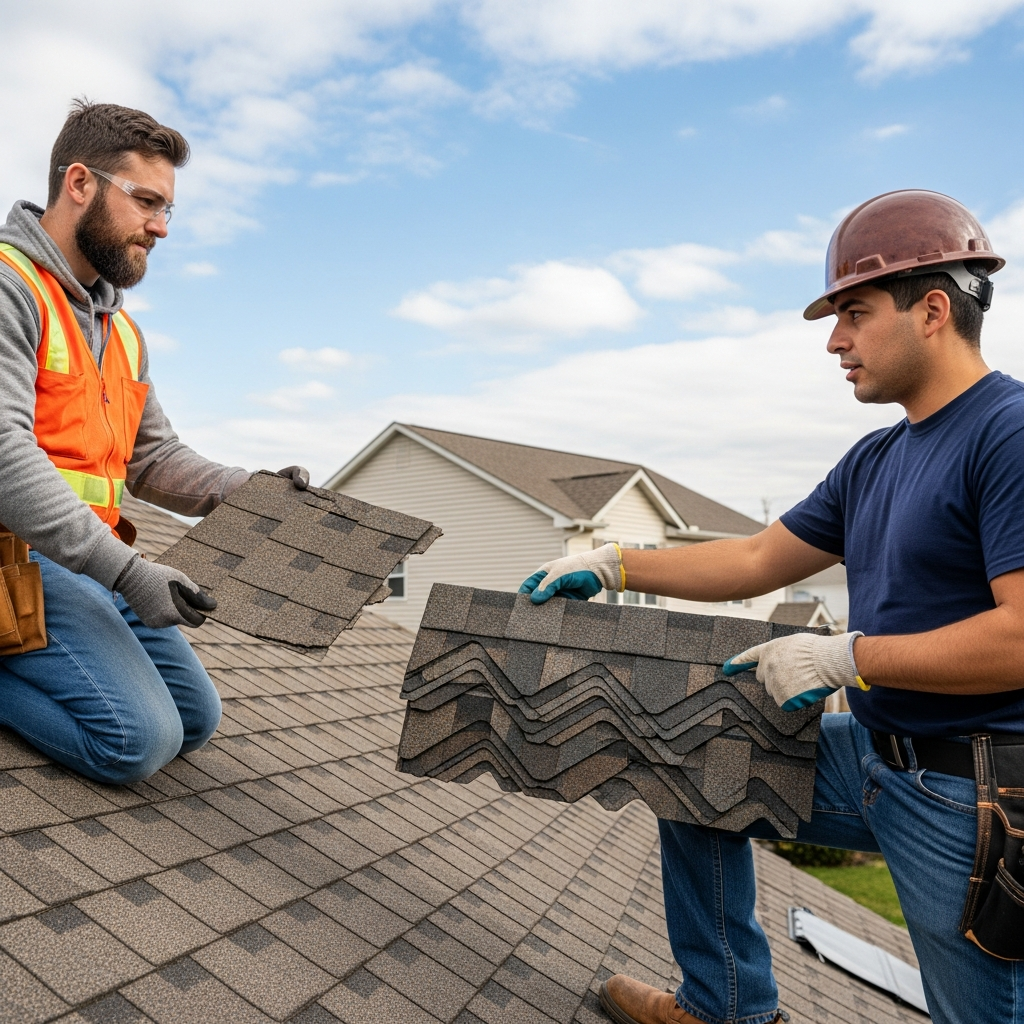
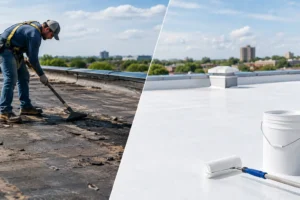
When planning a roof replacement in New Jersey, homeowners must choose between two primary methods: a complete tear-off or a roof-over. A tear-off involves removing all old roofing material down to the roof deck, while a roof-over, or overlay, means installing new shingles directly on top of the existing ones.
Each method has distinct implications for cost, durability, and compliance with New Jersey building codes. The condition of your current roof and your long-term goals for the home will guide which option is best. Reputable roofing contractors can explain these differences in detail.
What Is a Roof Tear-Off?
A roof tear-off is a comprehensive method of roof replacement. This process involves stripping away all the old shingles and other roofing components completely. Everything is removed until the bare wood of the roof deck is exposed.
This approach allows roofing professionals to conduct a thorough inspection of the roof deck. Any underlying problems, such as rot, water damage, or structural weaknesses, can be identified and repaired before the new roof is installed. This ensures a solid and reliable foundation for your new roofing system.
Ultimately, a roof tear-off means your roofing project results in a completely new roof, from the moisture barrier to the outer layer of shingles. It’s a fresh start for your home’s most important protective layer, addressing not just the visible surface but also the critical structure underneath.
What Is a Roof-Over (Overlay)?
A roof overlay, also known as a roof-over, is a roofing method where new shingles are installed directly on top of the existing roof. Instead of removing the old materials, roofing contractors simply add a new layer of shingles over the current ones. This creates a second layer of protection against the elements.
This approach is only viable if the existing roof is in good structural condition and has only one layer of shingles. Building codes typically limit homes to a maximum of two layers. If your home already has more than one layer, an overlay is not an option.
It is important to understand that a roof overlay does not address any hidden issues. Problems with the sheathing or underlayment beneath the existing roof will remain untouched. Therefore, this roofing method is only suitable when the underlying structure is sound.
Why Homeowners Choose One Method Over the Other
Homeowners often weigh several factors when deciding between a tear-off and an overlay. The primary driver for choosing a roof-over is often the immediate cost savings. An overlay avoids the labor and disposal fees associated with removing the old roof, making it a more budget-friendly option upfront. Additionally, overlay projects are typically completed faster, minimizing disruption.
On the other hand, many homeowners opt for a complete tear-off for long-term peace of mind. This method allows roofing contractors to inspect and repair the roof deck, ensuring the entire system is sound. A tear-off is the better choice for:
- Maximizing long-term durability and roof lifespan
- Improving home resale value
- Ensuring better energy efficiency
- Addressing potential underlying structural issues
Ultimately, the decision balances short-term benefits against long-term value. While an overlay is quicker and cheaper initially, a tear-off provides a more durable and reliable solution for your roofing work, giving you confidence in your home’s protection.
Legality of Roof Tear-Off and Roof-Over in New Jersey
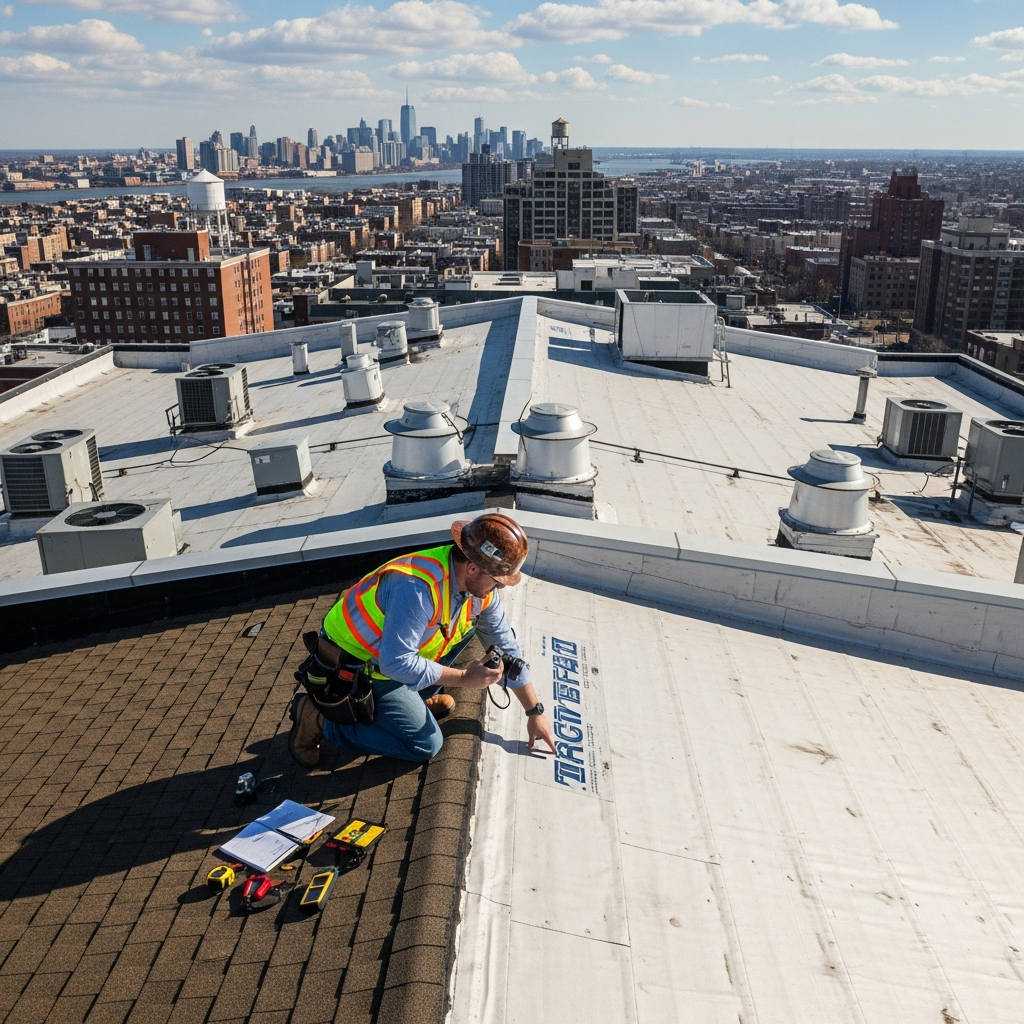
In New Jersey, both roof tear-offs and roof-overs are legal, but their application is governed by state law and local building codes. You cannot simply choose the method you prefer without considering these regulations. The key rule revolves around the number of existing roof layers.
A roof-over is generally permitted, but only if there is just one layer of shingles on the roof. If a second layer already exists, state law mandates a full tear-off for any new roofing project. Understanding these rules is crucial to ensure your project is compliant. Now, let’s explore the permitted methods and any recent regulatory updates.
Which Methods Are Permitted by New Jersey State Law?
New Jersey state law outlines which roof replacement methods are permitted for residential homes. Both a roof tear-off and a roof overlay are allowed, but with specific conditions attached. The primary regulation concerns the number of existing roofing layers.
A roof overlay is a permitted method only when there is a single layer of shingles on the roof. If you choose this option, you are adding a second layer, which is the maximum allowed. This makes the overlay a viable, legal choice for many initial roof replacement projects.
However, if your roof already has two layers of shingles, a roof tear-off is mandatory. State law prohibits adding a third layer. In this scenario, you are required to remove all existing layers down to the roof deck before installing new materials. This ensures the roof structure is not overloaded.
Recent Updates to New Jersey Roofing Regulations
Staying current with New Jersey roofing regulations is vital for any homeowner planning a roof replacement. While the core building codes remain consistent, local interpretations and enforcement can evolve. The fundamental rule limiting overlay installations to a single existing layer remains a cornerstone of state law.
Recent discussions among building officials have emphasized the importance of deck inspection, even in situations where an overlay might be legally permissible. This focus on structural integrity means contractors are increasingly recommending tear-offs to avoid future liability and ensure homeowner safety, aligning with the intent of the building codes.
Homeowners should always verify the latest rules with their local building department before starting a project. A licensed contractor, like a Professional Chimney & Roofing Service in New Jersey, will be up-to-date on any recent changes to state law or local ordinances that could affect your roofing plans.
County and Municipal Variations in Roofing Laws
While New Jersey has a statewide Uniform Construction Code, individual counties and municipalities can have their own specific requirements. These local building codes can add another layer of rules to your roofing project. It’s a mistake to assume the state law is the only one you need to follow.
Your local building department is the ultimate authority on roofing regulations in your area. They may have stricter rules regarding:
- The types of materials allowed
- Specific installation methods, particularly in high-wind or coastal zones
Before starting any work, you or your contractor must check with the local building department to understand all applicable ordinances. This ensures your project is fully compliant and avoids potential fines or work-stoppage orders. Failing to check for these local variations can lead to costly delays and rework.
Building Codes and Permit Requirements for Roof Replacement

Navigating building codes and securing a roofing permit are non-negotiable steps for a roof replacement in New Jersey. These regulations are in place to ensure safety and structural integrity. Whether you choose a tear-off or an overlay, you will likely need a permit.
The scope of work determines the specific requirements. A complete tear-off is a larger project and may require more detailed plans. Working with licensed roofing contractors is key, as they are familiar with the permit process and can ensure your project meets all building codes. Let’s look closer at the codes and when a permit is necessary.
New Jersey Residential Roofing Code Explained
The New Jersey residential roofing code, part of the Uniform Construction Code, sets the standards for all roof replacement projects. Its primary goal is to ensure the safety and longevity of your home. A key aspect of these building codes is the rule regarding multiple layers of roofing.
As stated, the code allows for a maximum of two layers of shingles on a roof. This means a roof-over is only permitted on a roof that currently has just one layer. If two layers already exist, the code mandates a complete tear-off before any new materials can be installed.
These building codes also cover other critical aspects of residential roofing, such as proper flashing, ventilation, and underlayment requirements. Adherence to these standards is not optional; it is required by law to protect your property and ensure the new roof performs as it should.
When Is a Roofing Permit Required?
In almost all cases, a roofing permit is required for a roof replacement project in New Jersey. This applies whether you are doing a full tear-off or a simple overlay. A permit is the formal permission from your local building department to proceed with the work.
The permit requirements ensure that the project is documented and will be inspected for compliance with building codes. You will generally need a roofing permit for:
- Any project that involves a complete roof tear-off.
- Installing a second layer of shingles (a roof-over).
- Projects that involve structural changes to the roof.
Minor repairs, such as replacing a few damaged shingles, may not require a permit. However, because the line between “repair” and “replacement” can be blurry, it is always best to check with your local building department to be certain. Failing to obtain a required permit can result in fines and other penalties.
The Roofing Permit Application Process in New Jersey
The roofing permit application process in New Jersey is a straightforward but essential procedure. It begins with you or your roofing contractor obtaining the necessary forms from your local building department. These forms will ask for details about the scope of the project.
You will need to provide information about your property, the contractor performing the work, and the materials to be used. Once the application is submitted with the required fee, it will be reviewed by the building department. Upon approval, the permit is issued, and work can legally begin.
The process typically involves several key stages, from initial application to the final inspection. Here is a general overview:
|
Step |
Description |
|---|---|
|
Application Submission |
Complete and submit permit forms with project details and fees. |
|
Plan Review |
The building department reviews the application for code compliance. |
|
Permit Issuance |
Once approved, the permit is issued, and work can commence. |
|
Inspections |
An inspector may visit during and/or after the project is complete. |
|
Final Inspection |
The finished work is inspected to ensure it meets all codes. |
Limitations on Roof Layers and Full Tear-Off Requirements
The New Jersey code is very clear about limitations on roof layers. The primary reason for these rules is safety; multiple layers add significant weight to your home’s structure, which can pose a risk, especially with heavy snowfall. This is why the state sets a strict cap.
Understanding when a full tear-off is not just a choice but a requirement is crucial for any homeowner planning roofing work. Local building codes can sometimes add further restrictions, making it essential to consult with your municipality. Next, we’ll clarify the specific layer limits and the scenarios that mandate a complete roof removal.
How Many Roof Layers Are Allowed by New Jersey Code?
According to the New Jersey code, a residential roof is allowed to have a maximum of two layers of shingles. This state law is in place to prevent the roof structure from becoming dangerously overloaded. Each layer of asphalt shingles adds a significant amount of weight to your home.
This rule directly impacts your options for a roof replacement. If your current roof consists of only a single layer of shingles, you have the choice to install a second layer over the top—a roof-over. This is a legal and often cost-effective option for a first-time replacement.
However, if your roof already has two layers of shingles, or if you are planning to add a second layer, you have reached the legal limit. Any future roof replacement will require a complete tear-off of all existing materials down to the roof deck. Reputable roofing contractors will always adhere to this critical safety regulation.
Scenarios That Require a Complete Roof Tear-Off
Besides the two-layer rule, certain conditions make a complete roof tear-off mandatory for safety and structural integrity. These scenarios go beyond simple compliance and address the health of your entire roofing system. A roof-over is not an option when significant underlying issues are present.
You are required to perform a full replacement if there is evidence of widespread problems. Simply covering them up will lead to more extensive and costly damage later. Situations that mandate a full roof tear-off include:
- The existence of two or more layers of roofing material.
- Significant water damage, rot, or mold on the existing roof deck.
- The shingles are badly curled, cracked, or crumbling, indicating the underlying structure may be compromised.
In these cases, a tear-off is necessary to properly inspect and repair the roof’s foundation. It is the only way to ensure the structural integrity of your home and the longevity of your new roof.
Safety and Inspection Standards for Roof-Over Projects
Even though a roof overlay is a less intensive project, it is still subject to important safety and inspection standards. Before proceeding with an overlay, a thorough inspection of the existing roof is essential. A contractor must check for any soft spots, which could indicate rotted decking underneath.
The existing surface must also be suitable for a new layer. Any curled, loose, or missing shingles must be addressed to create a flat, stable base for the new materials. These preparatory steps are crucial for the performance and lifespan of the new layer of shingles.
Adhering to these inspection standards ensures that a roof overlay is a safe and viable option. Following the building codes for an overlay project gives you peace of mind, knowing that even the more budget-friendly option was completed correctly and safely, without compromising your home’s protection.
Costs, Pros, and Cons of Each Roofing Method in New Jersey
The financial aspect of a roof replacement is a major consideration for most New Jersey homeowners. The cost comparison between a tear-off and a roof-over is significant, but it’s not the only factor. Each roofing project method comes with a unique set of pros and cons that can affect your home’s long-term value and durability.
To make a truly informed decision, you need to look beyond the initial price tag. Let’s break down the costs, advantages, and potential drawbacks of each option for your New Jersey home.
Cost Comparison: Tear-Off vs. Roof-Over
The most significant difference between a tear-off and a roof-over is the upfront cost. A roof-over is generally less expensive because it requires less work. You can achieve substantial cost savings by avoiding the extensive labor costs and disposal fees associated with removing and hauling away the old roofing material.
Conversely, a tear-off is more expensive due to the intensive labor involved in removing old shingles and inspecting the deck. While the cost of new roofing material is similar for both, the additional work of a tear-off adds to the final bill.
Here is a simple breakdown of how the costs differ:
|
Cost Factor |
Roof Tear-Off |
Roof-Over (Overlay) |
|---|---|---|
|
Labor Costs |
Higher (includes removal of old roof) |
Lower (installation only) |
|
Disposal Fees |
Yes (for old materials and waste) |
No |
|
Project Duration |
Longer |
Shorter |
|
Initial Cost |
Higher |
Lower (approx. 25% less) |
Pros and Cons of Tear-Off for New Jersey Homes
Choosing a roof tear-off for your New Jersey home offers several major advantages, making it the preferred roofing method for many experts. A full replacement provides the highest level of quality and security for your property.
This method allows for a complete inspection of the roof deck, ensuring a solid foundation for the new roof. It’s the best way to handle the harsh winters and varied weather of the region. The primary pros include:
- Allows for full inspection and repair of the roof deck.
- Provides a longer roof lifespan (20-30 years).
- Increases your home’s value significantly.
- Often required for full warranty coverage.
The main drawback of a roof tear-off is the higher upfront cost due to more intensive labor and disposal needs. The project also takes longer and creates more disruption around your home. However, the long-term benefits often outweigh these initial inconveniences.
Pros and Cons of Roof-Over for New Jersey Homeowners
For New Jersey homeowners on a tight budget or timeline, a roof overlay can be an attractive option for their roofing project. The most compelling benefit is the lower initial cost, as it eliminates the labor and disposal expenses of a tear-off.
The speed of installation is another plus, as an overlay can be completed much faster, reducing the disruption to your household. The pros of this method are clear:
- Lower upfront cost.
- Faster project completion.
- Less mess and disruption.
However, a roof overlay comes with significant potential drawbacks. It has a shorter lifespan than a new roof and can mask underlying issues like leaks or rot. The added weight can also stress your home’s structure, a concern during heavy snow. Furthermore, you can only perform an overlay once, making it a temporary fix rather than a long-term solution.
Conclusion
In conclusion, understanding the differences between tear-off and roof-over methods is crucial for homeowners in New Jersey. Each approach has its own legal implications, costs, and benefits that can significantly impact your roofing project. By staying informed about state regulations and building codes, you ensure compliance and make a well-informed decision that best suits your home’s needs. Remember to weigh the pros and cons of each method carefully, considering not just immediate costs but also long-term durability and maintenance. If you need further guidance, don’t hesitate to reach out for professional advice. Your roof is an essential part of your home, and making the right choice can safeguard your investment for years to come.
Frequently Asked Questions
Can you get fined for an illegal roofing method in New Jersey?
Yes, you can face significant penalties for an illegal roof replacement. If you or your contractor violate state law or local building codes, such as by adding a third roof layer or failing to obtain a roofing permit, your municipality can issue fines and force you to remove the illegal work.
Where do I find my local county’s official roofing requirements?
You can find your county or municipality’s official roofing requirements by contacting your local building department. Their office will provide all the necessary information on permit requirements, inspection procedures, and any specific building codes that apply to your area of New Jersey.
What situations make roof tear-off mandatory in New Jersey?
A roof tear-off is mandatory in New Jersey if two layers of shingles already exist. Additionally, a full roof replacement is required if there is significant water damage, rot, or other issues affecting the roof’s structural integrity, as determined by building codes and a professional inspection.