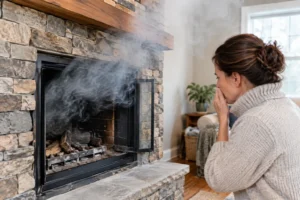
Nothing ruins a fire faster than smoke rolling into your living room. If you have smoke coming back into fireplace openings instead of going up and out, that is not just unpleasant – it is a warning sign that something in the system is not working the way it should.
Sometimes the fix is simple. Sometimes it points to a bigger chimney problem that needs professional attention. The key is knowing the difference before smoke damage, poor indoor air quality, or fire risk get worse.
What causes smoke coming back into fireplace openings?
A fireplace works on draft. Hot air and smoke should rise through the chimney and exit above the roofline. When that airflow is weak, interrupted, or reversed, smoke spills back into the home.
The most common reason is poor draft. Draft can be affected by outside temperature, chimney height, flue size, home air pressure, and the condition of the chimney itself. In many homes, the issue is not one single defect. It is a combination of small problems that add up.
A blocked flue is another major cause. Creosote buildup, animal nests, fallen debris, or damaged liner material can narrow the passage and interfere with airflow. Even partial blockage can create enough resistance to send smoke back into the room.
In other cases, the fireplace is competing with the house. Kitchen exhaust fans, bathroom fans, clothes dryers, and tightly sealed windows and doors can create negative air pressure indoors. When the house pulls in more air than it releases, the chimney may stop drafting correctly and begin drawing smoke backward.
The most common fireplace smoke problems homeowners see
Cold flue problems
If smoke enters the room mostly when you first start a fire, a cold flue may be the problem. Cold air inside the chimney is heavy. Until the flue warms up, that cold column can push smoke back down.
This often shows up on very cold mornings or when the fireplace has not been used in a while. A small starter fire may not create enough heat fast enough to reverse the air movement.
Damper issues
A closed or partially closed damper is an obvious cause, but not the only one. Dampers can warp, stick, or fail to open fully because of rust or damage. Homeowners sometimes think the damper is open when it is only partially open.
That restriction can choke off the pathway for smoke and create immediate backdrafting.
Oversized or undersized flues
The flue has to match the fireplace opening. If the flue is too small, it may not handle the volume of smoke produced. If it is too large, it may not maintain the right temperature and velocity for strong draft.
This is more common in older homes, homes with fireplace modifications, or systems that were repaired with mismatched components over time.
Chimney height and roofline interference
Your chimney has to extend high enough above the roof to draft properly. If it is too short, nearby roof sections, trees, or wind patterns can create downdrafts that push smoke back into the fireplace.
This is one of those issues where the fireplace itself may seem fine, but the problem is happening at the top of the chimney.
Wet or unseasoned firewood
Wood that is not properly seasoned creates more smoke and less heat. That means more byproducts going into the flue and less upward force to carry them out.
Even a healthy chimney can struggle if the fire is fed with damp wood. You may also notice more odor, more soot, and faster creosote buildup.
Signs the problem is more than a minor inconvenience
A little smoke at startup does not always mean major damage. But repeated smoke problems should not be brushed off.
If you notice black staining around the fireplace opening, strong smoky odors even when no fire is burning, difficulty keeping a fire lit, or smoke entering the home every time you use the fireplace, there is likely an underlying issue that needs to be addressed.
You should also take it seriously if you hear animal sounds in the chimney, see debris falling into the firebox, or have not had the chimney inspected in years. Those are strong signs that the flue may be obstructed or deteriorating.
What you can safely check first
Before assuming the worst, there are a few practical things a homeowner can look at.
Make sure the damper is fully open. Check that the firewood is dry and properly seasoned. Try opening a nearby window an inch or two before lighting the fire. If the smoke problem improves, the house may be dealing with negative air pressure.
You can also pay attention to when the issue happens. If it only occurs at startup, cold flue conditions may be the main factor. If it happens throughout the burn, the problem is more likely tied to blockage, drafting, or chimney design.
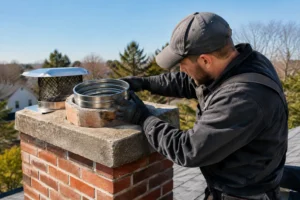
Still, there is a limit to safe troubleshooting. Anything involving the flue interior, liner condition, cap, crown, or structural chimney components should be handled by a professional.
When smoke coming back into fireplace means you need chimney service
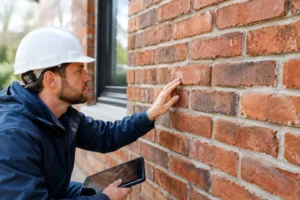
If the problem keeps happening, a chimney inspection is the right next step. A professional can identify whether the issue is caused by creosote buildup, a blocked flue, a damaged liner, poor drafting, or chimney deterioration.
This matters because smoke problems are not only about comfort. They can point to fire hazards and carbon monoxide concerns. A fireplace that does not vent correctly is not operating safely.
A proper inspection may reveal the need for chimney sweeping, liner repair, cap installation, crown repair, flashing work, or draft correction. It depends on the age of the system and what is causing the airflow failure.
For example, a missing chimney cap may allow debris, rain, and animals into the flue. A cracked liner can disrupt venting and expose nearby materials to heat. Water damage around the chimney can also contribute to internal deterioration that affects performance.
Why smoke issues often get worse over time
Chimney problems rarely fix themselves. Creosote keeps building. Moisture keeps working into cracks. Small obstructions become larger ones. Draft problems that seem occasional can become consistent as the system ages.
That is why waiting usually costs more. What starts as a smoky fireplace can turn into stained walls, indoor odor problems, masonry damage, or a chimney that needs more extensive repair than it would have earlier.
In New Jersey, weather adds another layer. Freeze-thaw cycles, rain exposure, and seasonal use patterns can all put added stress on chimney components. If the fireplace has not been maintained regularly, smoke problems may be one of the first signs that the system needs attention.
The right fix depends on the actual cause
There is no one-size-fits-all answer for smoke backing into a fireplace. One home may need a thorough chimney sweeping. Another may need a cap, a liner solution, or masonry repairs. In some cases, the issue is mostly pressure-related and can be improved with better combustion air and firing technique. In others, the chimney structure itself needs correction.
That is why guessing can waste time and money. Homeowners sometimes replace accessories or try quick fixes, only to find the smoke problem comes right back because the real cause was never addressed.
A qualified chimney professional should look at the full venting system, not just the firebox. That includes the flue pathway, liner condition, chimney height, cap, crown, masonry condition, and how the fireplace interacts with the rest of the home.
Protect the home before the next fire
If your fireplace has started sending smoke indoors, trust what it is telling you. Fireplaces are supposed to vent cleanly and consistently. When they do not, there is a reason.
Getting the chimney checked now can protect your air quality, reduce fire risk, and help you avoid bigger repairs later. If you need a local team that handles chimney inspections, sweeping, repairs, and venting-related problems with clear communication and fair pricing, Adore Construction is here to help. A safer fireplace starts with finding the real cause and fixing it the right way.