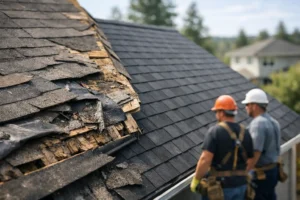
Water was showing up on the living room ceiling every time the rain turned sideways. The homeowner had already tried the quick fixes – a little caulk here, a patch there, and one roofer who said the chimney was probably fine. It was not fine. This chimney leak repair case study shows what was actually causing the problem, why the first guesses missed it, and what it took to stop the leak for good.
The problem looked simple, but it wasn’t
From inside the home, the signs pointed to one issue: brown ceiling stains near the fireplace wall, damp drywall after storms, and a musty smell that got worse in wet weather. From outside, the chimney showed age but nothing dramatic at a glance. That is exactly why chimney leaks get misdiagnosed so often.
Water around a chimney can come from more than one place at the same time. A cracked crown can let water enter from the top. Damaged mortar joints can absorb and pass moisture through the masonry. Missing or loose flashing can let rain slip in where the chimney meets the roof. If the cap is damaged or missing, water can go straight down the flue. In older homes, several of these issues may be active together.
In this case, the homeowner’s main concern was the ceiling stain. The real risk was larger. Once water gets into roofing materials, chimney brick, framing, or insulation, the repair cost can climb fast. What looks like a stain can become rot, mold, interior damage, and masonry deterioration.
How the inspection narrowed it down
A proper chimney leak inspection starts with the roofline and works outward from the most vulnerable transitions. The chimney itself matters, but so do the surrounding shingles, underlayment, flashing details, and the way water is moving across the roof.
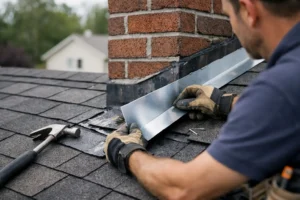
On this home, the first clear issue was deteriorated step flashing along one side of the chimney. Some sections had lifted, and the seal between flashing and masonry had failed. That alone can allow wind-driven rain to enter. But it was not the only problem.
The crown had visible cracks, including hairline fractures that had opened enough to hold water. During freeze-thaw cycles, that kind of damage gets worse. The brick faces also showed signs of saturation, and several mortar joints were worn enough to let water in rather than shed it. The chimney cap was undersized and no longer doing a good job of keeping rain out.
This is where experience matters. If you only seal the flashing, the leak may improve but not stop. If you only patch the crown, you can still have water entering at the roof intersection. The repair plan had to match the full condition of the system, not just the most obvious symptom.
Chimney leak repair case study: the repair plan
The solution was built in layers because the leak had more than one entry point. First, the damaged flashing was removed and replaced correctly. That included new step flashing integrated with the roofing material and proper counter flashing set into the chimney. When flashing is done right, water is directed away from the joint instead of being asked to rely on surface sealant.
Next, the cracked chimney crown was repaired. In some cases a crown can be resurfaced. In other cases, it needs full replacement. Here, the damage was significant enough that a lasting repair meant rebuilding the crown to create the right slope and overhang. That matters because a flat or poorly shaped crown tends to hold water instead of pushing it away.
The masonry joints were then repointed where mortar had deteriorated. Repointing does more than improve appearance. It closes the pathways that let water enter the chimney structure and helps preserve the strength of the brickwork over time.
The final step was waterproofing the exterior masonry with a breathable treatment and installing a properly fitted chimney cap. Breathable waterproofing is important. You want masonry to resist outside water while still allowing trapped vapor to escape. If the wrong coating is used, moisture can get stuck inside the brick and create more damage later.
Why patchwork failed before
The homeowner had already paid for smaller attempts to stop the leak. That is common. A lot of chimney leaks are treated as one-spot problems when they are really system problems.
Surface caulk around flashing may buy a little time, but it usually does not correct the underlying installation issue. Smearing sealant over crown cracks without addressing deeper deterioration is often temporary at best. Even roof cement can make later repairs harder if it traps water or hides the true condition beneath it.
There is also the issue of timing. Some leaks only show up during heavy rain, wind-driven storms, or snow melt. If an inspection happens in dry weather and only at ground level, the source can be missed. A leak that appears around the fireplace does not always mean the water entered directly above that spot. Water travels. It can move along framing, under shingles, or behind masonry before it shows indoors.
The result after the repair
After the flashing, crown, masonry, cap, and waterproofing work were completed, the home was monitored through multiple storms. The ceiling remained dry. The musty odor faded as the affected materials dried out, and no new staining appeared.
Just as important, the repair reduced the chance of larger structural damage. The chimney now had a complete water-management system again instead of a few isolated patches. That is what homeowners are really paying for when the job is done properly – not just stopping today’s leak, but reducing the chance of repeat damage next season.
What homeowners can learn from this case
The biggest lesson from this chimney leak repair case study is that the source of a leak is not always where the symptom appears. Water stains near a chimney can come from flashing, masonry, caps, crowns, or nearby roofing materials. Sometimes it is one issue. Often it is two or three working together.
Another lesson is that materials age differently. Flashing may fail before the chimney structure does. Mortar can wear out while bricks still look decent from the yard. A crown can crack long before it fully breaks apart. If you wait until damage is obvious from the ground, the repair is usually larger and more expensive.
It also helps to understand the trade-off between quick fixes and durable repairs. A small sealant repair may make sense if the issue is minor and caught early. But if the chimney is older, leaking repeatedly, or showing several signs of wear, patching one spot can turn into paying twice.
Signs your chimney leak needs a closer look
If you notice water stains on ceilings or walls near the fireplace, peeling paint, damp odors after rain, white staining on brick, rust on the firebox or damper, or visible cracks in the crown or mortar joints, it is time for a real inspection. The same goes for loose flashing or a missing cap.
In New Jersey, freeze-thaw weather can make small chimney defects grow quickly. Water gets into cracks, temperatures drop, and the expansion puts more pressure on masonry and crown surfaces. That is why a leak that seemed minor in fall can become a much bigger repair by late winter or spring.
When repair is enough and when it isn’t
Not every leaking chimney needs major reconstruction. If the bricks are still sound, the flue is in good shape, and the damage is limited to flashing, mortar joints, crown surfaces, or waterproofing failure, repair is often the right move. It is practical, cost-conscious, and effective when the diagnosis is accurate.
But there are cases where repairs are only a short-term answer. If the chimney is severely leaning, the brick is spalling throughout, the crown has failed extensively, or the structure has years of moisture damage, replacement may be the smarter investment. Homeowners deserve a straight answer on that point. A dependable contractor should tell you when repair will last and when it probably will not.
That is the difference between chasing symptoms and protecting the home. If your chimney is leaking, the goal is not just to make the stain disappear. The goal is to find every place water is getting in, repair it with the right materials, and leave you with a chimney that can handle the next storm without question. A careful inspection now is almost always cheaper than waiting for water to prove the point again.