Key Highlights
- New Jersey homeowners have many roof replacement financing options, from contractor payment plans to government assistance.
- The total cost depends on factors like roof size, materials, and labor costs.
- You can use home equity through a loan (HEL) or line of credit (HELOC) for funding.
- Your credit score will significantly influence the interest rates and terms you receive for personal loans.
- Even with a lower credit score, there are pathways to secure financing for your new roof.
- Government programs at the state and federal level offer assistance for eligible low-income homeowners.
Introduction
A roof replacement is a major home improvement project that protects your most valuable asset. For many homeowners in New Jersey, the upfront cost can be a significant hurdle. Fortunately, you don’t have to drain your savings to get the job done. A variety of financing options are available to make a new roof affordable and manageable. This guide will walk you through the different ways to pay for your project, helping you find a solution that fits your budget and gives you peace of mind.
Understanding Roof Replacement Costs in New Jersey
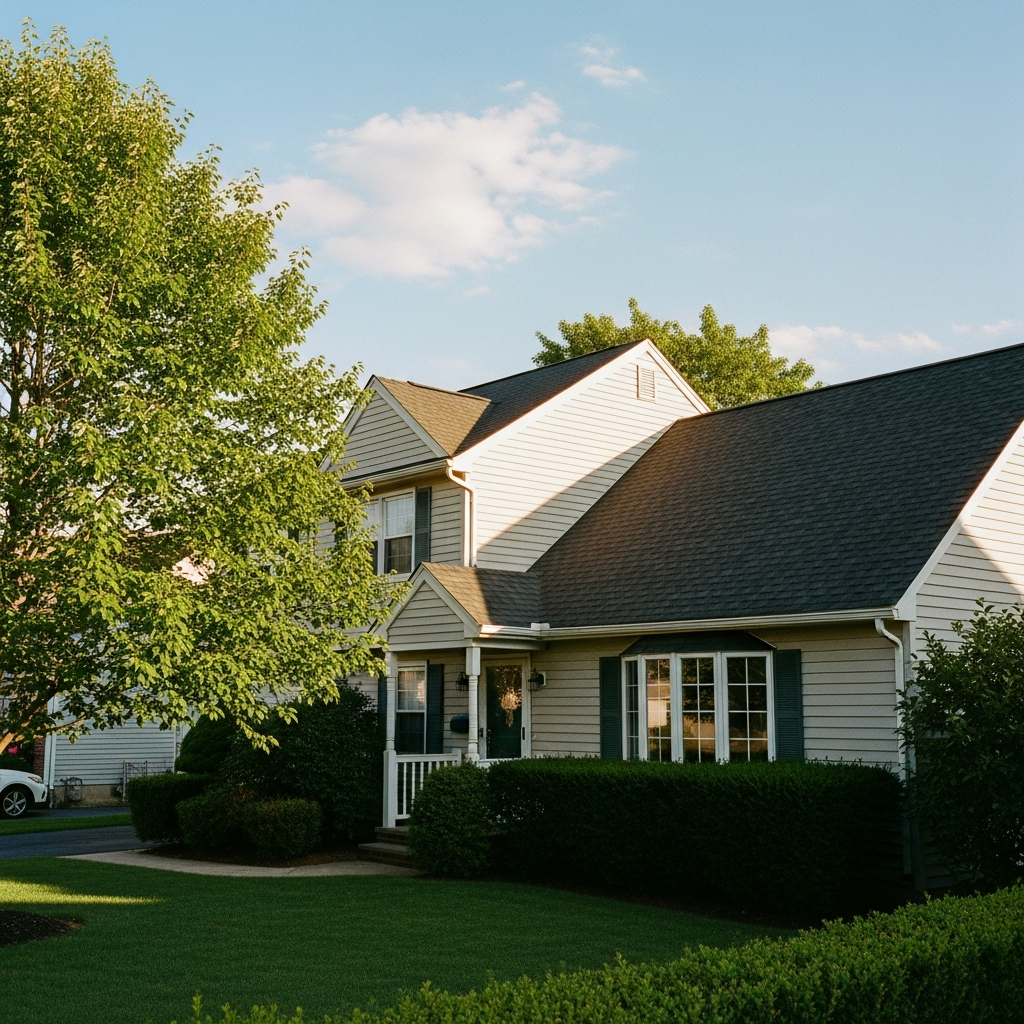
Before exploring financing, it’s helpful to have a general idea of what a roof replacement in New Jersey might cost. Prices can vary significantly based on several key factors, making it essential to get a detailed estimate from a professional. This estimate will provide the most accurate starting point for your budget.
Your final cost will be influenced by the size of your roof, the materials you choose, and the complexity of the job. Unexpected issues, such as rotted decking discovered after removing old shingles, can also add to the expense. Understanding these variables will help you prepare for the overall investment.
Factors That Influence Roof Replacement Pricing
The single biggest factor in the cost of a new roof is its size. A larger home naturally requires more materials and more time, which increases the total price. The pitch, or steepness, of your roof also plays a role. Steeper roofs require additional safety equipment and more intensive labor, driving up labor costs. Before applying for roof replacement financing, NJ homeowners should know their approximate project cost by getting a few quotes.
Your choice of materials is another major price driver. Standard asphalt shingles are a cost-effective option for many, while premium materials like metal roofing or designer shingles come with a higher price tag. The condition of your roof’s underlying structure can also impact the final bill. If a contractor finds damaged decking or underlayment, those repairs will add to the project cost.
Finally, the number of existing shingle layers can affect the price. If your home has multiple layers that need to be removed before a new roof can be installed, this extra labor will be reflected in your detailed estimate. Getting a thorough inspection is the best way to get a clear picture of all potential expenses.
Typical Cost Range for Roof Replacement in NJ
While every project is unique, understanding the typical cost range for a roof replacement in New Jersey can help you plan your finances. The final price tag is a combination of materials, labor costs, roof complexity, and your home’s size. For example, a small ranch-style home will cost significantly less than a large colonial with multiple peaks and dormers.
To compare different financing options for your roof replacement, you should create a table that outlines the key features of each choice. Look at the interest rate (APR), the length of the loan term, any associated fees, and the total amount you will pay over the life of the loan. This side-by-side comparison makes it easier to see which option is the most affordable for your situation.
A detailed estimate from a reputable contractor is the only way to know your exact cost. However, this table provides a general idea of how different financing paths compare.
|
Financing Option |
Best For |
Key Feature |
Potential Downside |
|---|---|---|---|
|
Contractor Financing |
Speed and convenience |
Fast application process |
Interest rates can vary |
|
Home Equity Loan/HELOC |
Lowest interest rates |
Uses your home’s equity |
Your home is used as collateral |
|
Personal Loan |
No collateral required |
Quick funding |
Potentially higher interest rates |
|
Government Programs |
Low-income homeowners |
Favorable terms, grants |
Strict eligibility requirements |
Common Financing Options for New Jersey Homeowners

New Jersey homeowners have more choices than ever when it comes to roof financing. You are not limited to paying for the entire project out of pocket. Many accessible options can help you manage the cost effectively, from payment plans offered by contractors to traditional bank loans.
Each financing route has its own set of benefits and considerations. The best choice for you will depend on your credit history, financial situation, and how quickly you need the work completed. Next, we’ll explore some of the most common paths homeowners take.
Roofing Contractor Payment Plans and Promotions
Many roofing contractors now offer contractor financing, making it one of the quickest ways to fund your project. These companies often partner with third-party lenders to provide you with a straightforward payment plan. The application is typically handled directly with your contractor, streamlining the process from getting an estimate to starting the installation. This allows you to get your roof fixed now and pay for it over time with manageable monthly payments.
When exploring this option, it’s important to ask the right questions. Some lenders offer promotional periods, such as “same-as-cash” deals where you pay no interest if the balance is paid within a specific timeframe. Always clarify the terms, as they can vary based on the lender and your credit profile. Many contractors also provide free inspections to give you an accurate quote before you commit.
Roofing contractors in New Jersey typically offer a few types of payment plans, including:
- Simple installment loans with a fixed interest rate and term.
- Promotional offers with deferred interest.
- Flexible “pay over time” options with varying term lengths.
- Plans coordinated through lending platforms like Wisetack or GreenSky.
Bank Loans and Personal Loan Alternatives
A personal loan from a bank, credit union, or online lender is another popular route for financing a roof replacement. The main benefit of a personal loan is that it is typically unsecured, meaning you do not have to use your home as collateral. The application process is often fast, with funds sometimes available within a few days. The roof financing application process with NJ roofing companies usually involves filling out a short form that is then submitted to their lending partner for a quick decision.
The interest rates on these loans are heavily influenced by your credit profile. A strong credit score will help you secure a lower rate, while a weaker score may result in a higher APR. Still, for homeowners who need funding quickly and prefer not to tap into their home’s equity, a personal loan can be an effective solution.
When considering a personal loan, be sure to look at:
- The fixed interest rate and APR.
- The length of the repayment term.
- Any origination fees or prepayment penalties.
- The total cost of the loan over its lifetime.
Home Equity Solutions for Roof Replacement
If you have built up equity in your home, you can use it to finance your roof replacement. This is often one of the most cost-effective ways to pay for a large home improvement project. The two primary ways to do this are through a home equity loan or a home equity line of credit (HELOC).
Because these financial products are secured by your home, they typically come with lower interest rates than unsecured personal loans. This can save you a significant amount of money in interest payments over time. Let’s look at how each of these home equity solutions works.
Home Equity Loans (HEL)
A home equity loan (HEL) provides you with a one-time lump sum of cash that you repay over a set period. This type of loan is ideal for a project like a roof replacement, where you know the total cost upfront. You receive the full loan amount at once, allowing you to pay your contractor without delay. The best roof replacement financing options for NJ homeowners often include HELs due to their predictable nature.
One of the main advantages of a home equity loan is its fixed interest rate. This means your monthly payment will remain the same for the entire life of the loan, making it easy to budget for. You won’t have to worry about your payments increasing if market interest rates go up.
Eligibility requirements for a home equity loan are based on the amount of equity you have in your home, your credit score, and your income. Lenders will want to see that you have a stable financial history and the ability to repay the loan. It’s important to remember that since the loan is secured by your house, you risk foreclosure if you fail to make payments.
Home Equity Lines of Credit (HELOC)
A home equity line of credit, or HELOC, functions more like a credit card than a traditional loan. Instead of receiving a lump sum, you are approved for a specific credit limit that you can draw from as needed during a set “draw period.” For a home improvement project, this flexibility can be useful if unexpected costs arise. You only pay interest on the amount you actually use.
Unlike a home equity loan, HELOCs typically have variable interest rates. This means your monthly payment could change over the life of the loan as market rates fluctuate. Some lenders may offer an introductory fixed rate for a short period, but it’s crucial to understand the long-term loan terms.
To compare a HELOC with other financing options, create a detailed breakdown. Look at the potential for interest rate changes, the length of the draw and repayment periods, and any associated fees. While a HELOC offers great flexibility for home improvement financing, it shares the same risk as a home equity loan: your home is the collateral.
State and Federal Programs for Roof Replacement Assistance
Beyond traditional financing, several government programs at the state and federal levels can help New Jersey homeowners pay for a roof replacement. These grant programs and low-interest loans are often designed to assist low-to-moderate-income families, seniors, and residents in rural areas.
Eligibility requirements for these programs can be strict and often depend on your household income and where you live. However, if you qualify, they can provide the most affordable path to a safe and secure roof. The following sections will detail some of the specific programs available.
New Jersey State Grant and Low-Income Programs
Yes, New Jersey offers special loan and grant programs that homeowners may not know about. Many of these low-income programs are administered at the county level and funded by sources like Community Development Block Grant funds. For example, some counties have housing or county rehabilitation programs that offer deferred-payment loans for essential repairs, including roofing. “Deferred” often means you don’t have to make payments until you sell the home.
Some townships also run their own home improvement program. For instance, Ocean Township offers loans with 0% interest and no monthly payments that are forgivable over time. These programs are an incredible resource for those who qualify, as approval is based on income, not credit history. It’s always worth checking with your local program administrator to see what’s available in your area.
Some key programs to look for include:
- County Housing Rehabilitation Programs
- Township-level Home Improvement Programs
- Assistance funded by Community Development Block Grants (CDBG)
- Specific programs for seniors or persons with disabilities
Federal Loans and Special Assistance Programs
The federal government also provides support for new roofs through various home repair programs. The U.S. Department of Housing and Urban Development (HUD) insures the Title I Property Improvement Loan. This program is designed for home repairs that improve livability, and roof replacement certainly qualifies. These loans are made through participating lenders and can be easier to obtain because they are government-insured.
For homeowners in eligible rural areas, the USDA Rural Development Section 504 Home Repair program offers loans and grants. Loans have very low interest rates and long repayment terms. Grants are available for seniors aged 62 or older who cannot afford to repay a loan. Another option is the Weatherization Assistance Program, which helps improve energy efficiency and can sometimes include roof repairs or replacement as part of its scope.
Federal programs to explore include:
- HUD Title I Property Improvement Loan
- USDA Section 504 Home Repair Loans and Grants
- Weatherization Assistance Program (WAP)
- Special assistance available after federally declared disasters
Roof Replacement Financing with Bad Credit
Having bad credit can feel like a major obstacle when you need roof financing, but it doesn’t close the door on all your options. While a low credit score might make it harder to qualify for traditional bank loans with the best rates, there are still strategic pathways you can pursue.
Your credit history is just one part of the puzzle. Some lenders and programs place more emphasis on your income and ability to repay. It’s about knowing where to look and what financing options are designed for homeowners in your situation.
No Credit or Low Credit Score Financing Options
Yes, you can get roof replacement financing in NJ even if you have a low credit score. The key is to focus on programs that don’t rely solely on your credit history. Government-backed programs for low-to-moderate income homeowners are an excellent place to start. Many county and township rehabilitation programs prioritize income eligibility over a FICO score.
Some contractor financing options may also have more flexible approval criteria than traditional banks. They work with a variety of lenders, some of whom specialize in helping homeowners with less-than-perfect credit. You might be offered a higher interest rate, but it can still provide a viable payment plan to get your roof fixed now.
If your credit score is a concern, consider these options:
- Local government home improvement programs that are income-based.
- The USDA Section 504 program if you live in an eligible rural area.
- Finding a co-signer with a strong credit history to apply with you.
- Asking contractors about financing partners who work with various credit profiles.
Tips for Improving Approval Odds in NJ
Before applying for financing, NJ homeowners should prepare their application to increase their chances of approval. Start by checking your credit score and report for any errors that could be dragging your score down. Disputing inaccuracies can provide a quick boost. If possible, pay down high-balance credit cards to lower your credit utilization ratio, which is a major factor in your score.
When you begin the application process, have all your financial documents ready. This includes proof of income, recent tax returns, and bank statements. Being organized shows lenders you are a responsible borrower. If you are applying for a secured loan like a HELOC, knowing your home’s approximate value and your outstanding mortgage balance is also important.
To improve your approval odds, you can also:
- Apply with a co-signer who has a strong credit profile.
- Consider applying at credit unions, which sometimes have more flexible eligibility requirements.
- Save for a small down payment to show the lender you have skin in the game.
- Clearly explain any past credit issues if given the opportunity.
Conclusion
In conclusion, navigating the world of roof replacement financing in New Jersey can seem daunting, but various options are available to suit your needs. From contractor payment plans and bank loans to home equity solutions and state programs, there’s a financing avenue that can help you manage the costs effectively. It’s essential to explore these options thoroughly and understand how they fit into your financial situation, especially if you’re facing credit challenges. By doing so, you can take proactive steps towards securing the necessary funds for your roof replacement. If you need assistance or further guidance on financing options, feel free to reach out for a free consultation and let us help you make informed decisions for your home.
Frequently Asked Questions
Are zero down-payment roof replacement financing options available in NJ?
Yes, zero down-payment roof replacement financing options can be available for NJ homeowners. Some contractor financing plans and personal loans may not require money down upon approval. Additionally, home equity loans and certain government programs can cover the full project cost, eliminating the need for an upfront payment.
What should I know before applying for roof replacement financing in New Jersey?
Before applying, understand the eligibility requirements for each loan type. Check your credit profile, gather proof of income, and get multiple quotes for your project. Be prepared to compare interest rates, loan terms, and fees to find the most affordable option for your financial situation in New Jersey.
Does the NJ government offer incentives or support for new roofs?
Yes, the New Jersey government offers support through various home improvement program options, often at the county and township levels. These government programs provide low-interest loans or grants to income-qualified residents for essential repairs like a roof replacement, making the project much more affordable.