Key Highlights
- Understand the main causes of commercial roofing leaks in NJ, including weather, material failure, and poor drainage.
- Learn to identify key warning signs of a leak, such as water stains and mold, to prevent extensive water damage.
- Discover how professionals use advanced leak detection methods like infrared scanning and electronic testing without damaging your roof.
- Find out why regular roof inspection and preventative maintenance plans are crucial for extending your roof’s lifespan.
- Explore emergency repair options and proactive strategies to protect your commercial property from future leaks.
Introduction
A leak in your commercial roofing system is often a silent problem. Water can travel under membranes and insulation long before you see any signs inside your New Jersey building. This hidden moisture can lead to serious structural issues and costly damage. That is why professional commercial roof leak detection is so important. At Adore Construction, we specialize in finding leaks in all types of roofing systems accurately and quickly, protecting your investment and preventing major disruptions to your business.
Major Causes of Commercial Roof Leaks in New Jersey
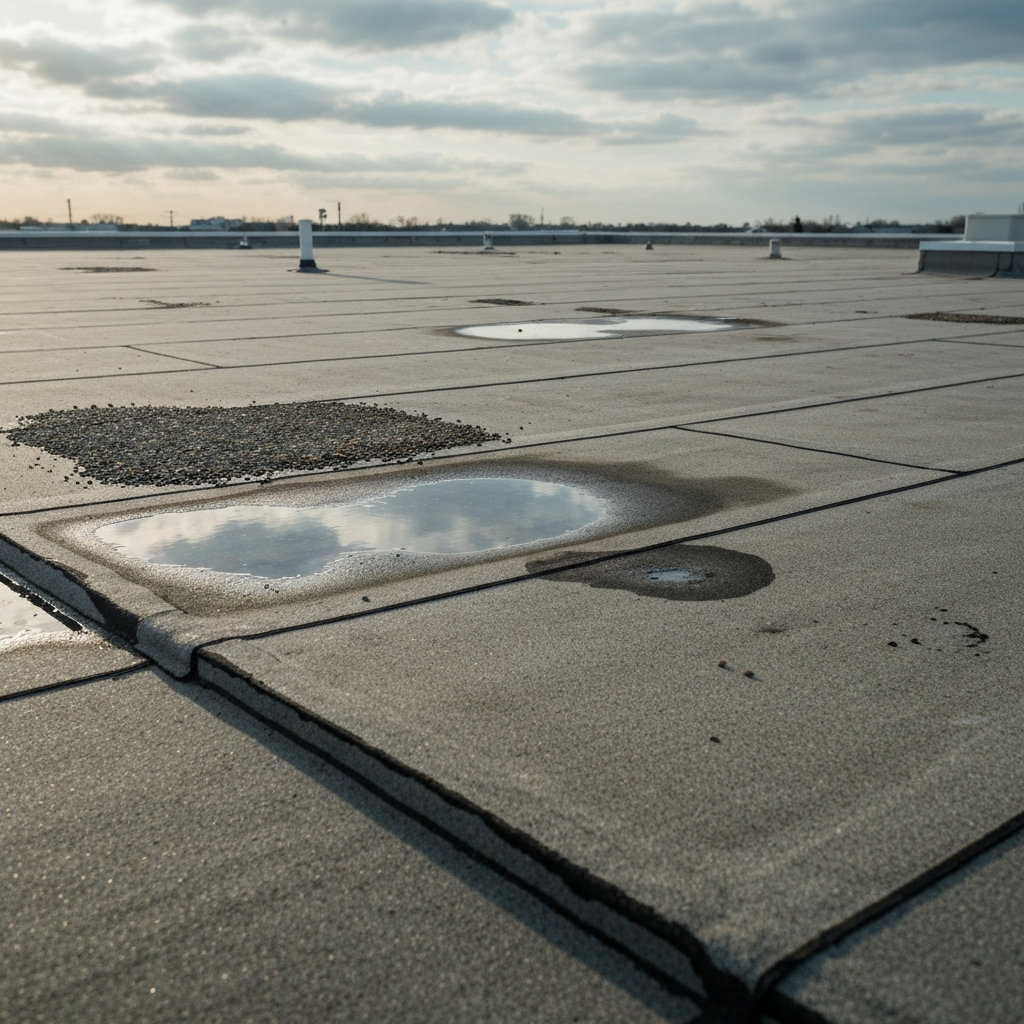
The causes of commercial roof leaks in a New Jersey commercial building are often complex. On a flat roof, issues can range from a damaged roof membrane and failed flashing to problems with rooftop penetrations. Constant exposure to the elements and the age of the roof are also significant factors.
Understanding these vulnerabilities is the first step toward prevention. Below, we’ll explore how specific conditions like weather and common material failures contribute to leaks, helping you know what to watch for on your property.
Weather Conditions and Their Impact on Roofing Systems
New Jersey’s climate presents unique challenges for commercial roofing systems. The cycle of freezing and thawing during winter months can cause metal flashing to expand and contract. Over time, this movement can create gaps and break seals, allowing moisture to seep underneath the roof membrane.
Heavy rain, especially when wind-driven, can force water into the smallest openings. Once water gets in, it can saturate the insulation, reducing its effectiveness and leading to higher energy bills. This trapped moisture creates a hidden threat, slowly degrading the roof’s structural components from within.
Finally, melting snow can lead to ponding water if drainage is inadequate. This standing water puts constant pressure on the roofing system and accelerates the breakdown of materials, making leaks much more likely. Regular inspections are key to catching weather-related damage early.
Common Roofing Material Failures and Penetrations
Beyond weather, the physical components of your roof are a common source of leaks. Any opening in the roof membrane, known as a roof penetration, is a potential weak point. These are necessary for things like HVAC units, vents, and pipes but must be perfectly sealed.
Over time, seals around these penetrations can degrade, or the area can be damaged by foot traffic from service work. A professional commercial roofing contractor knows to inspect these areas carefully, as they are frequent culprits for water entry.
Other common material failures include:
- Punctures or tears in the roof membrane from falling debris or tools.
- Open seams or laps where sections of the roofing material have separated.
- Cracked or bubbling areas on the membrane surface.
- Deterioration of the roofing materials due to age and sun exposure.
Typical Warning Signs Your Commercial Roof Has a Leak
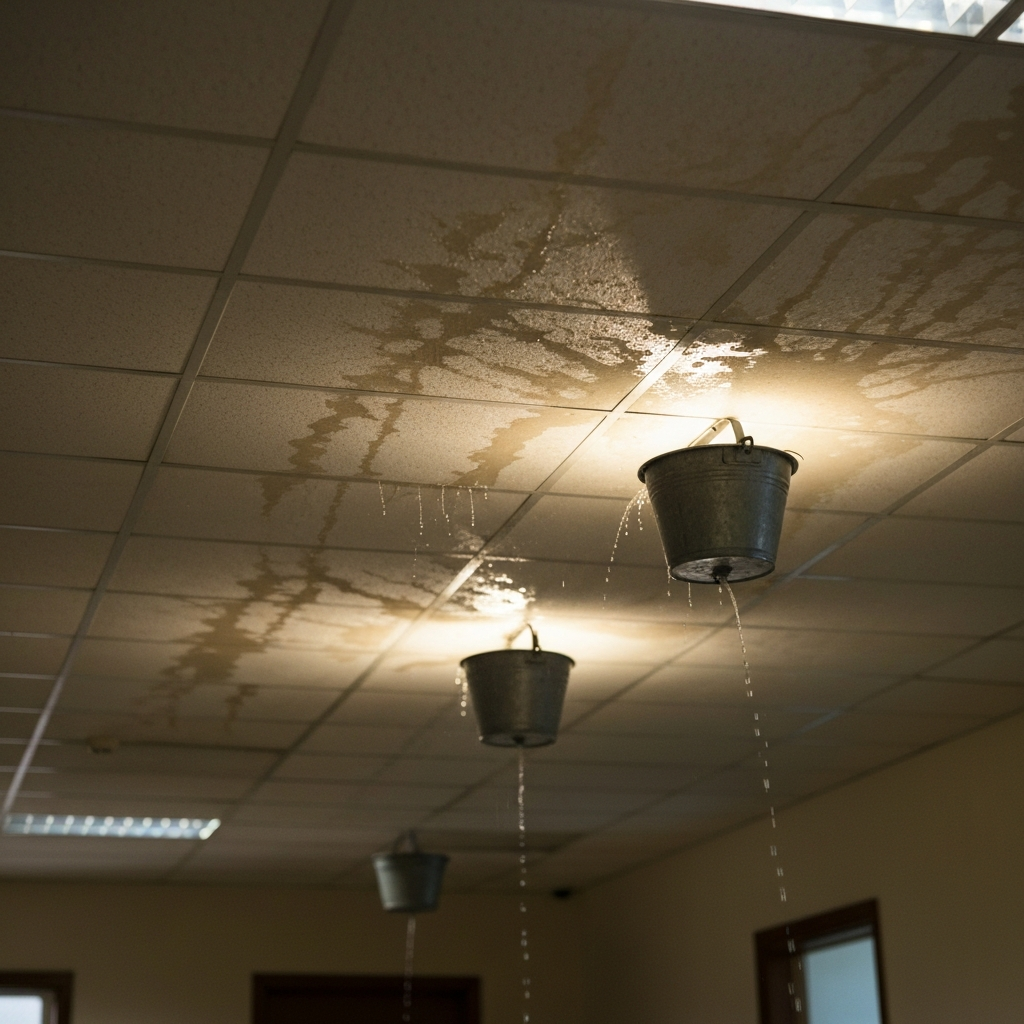
Spotting a roof leak early can save you from widespread water damage and costly repairs. The signs are not always as obvious as a puddle on the floor. Pay close attention to subtle changes inside and outside your building, as they often point to a problem with your commercial roofing system.
If you notice any of these indicators, it’s time to schedule a professional roof inspection. Ignoring them allows moisture to spread, potentially leading to mold growth and structural issues. We will now look at specific red flags to monitor.
Interior and Exterior Red Flags to Monitor
Inside your building, the signs of a leak can be quite clear. Look up at your ceiling tiles for any discoloration or water stains. A musty odor that won’t go away often indicates hidden moisture and the potential for mold growth within the walls or ceiling, which can pose health risks.
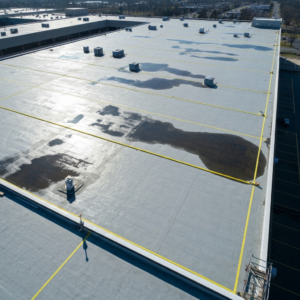
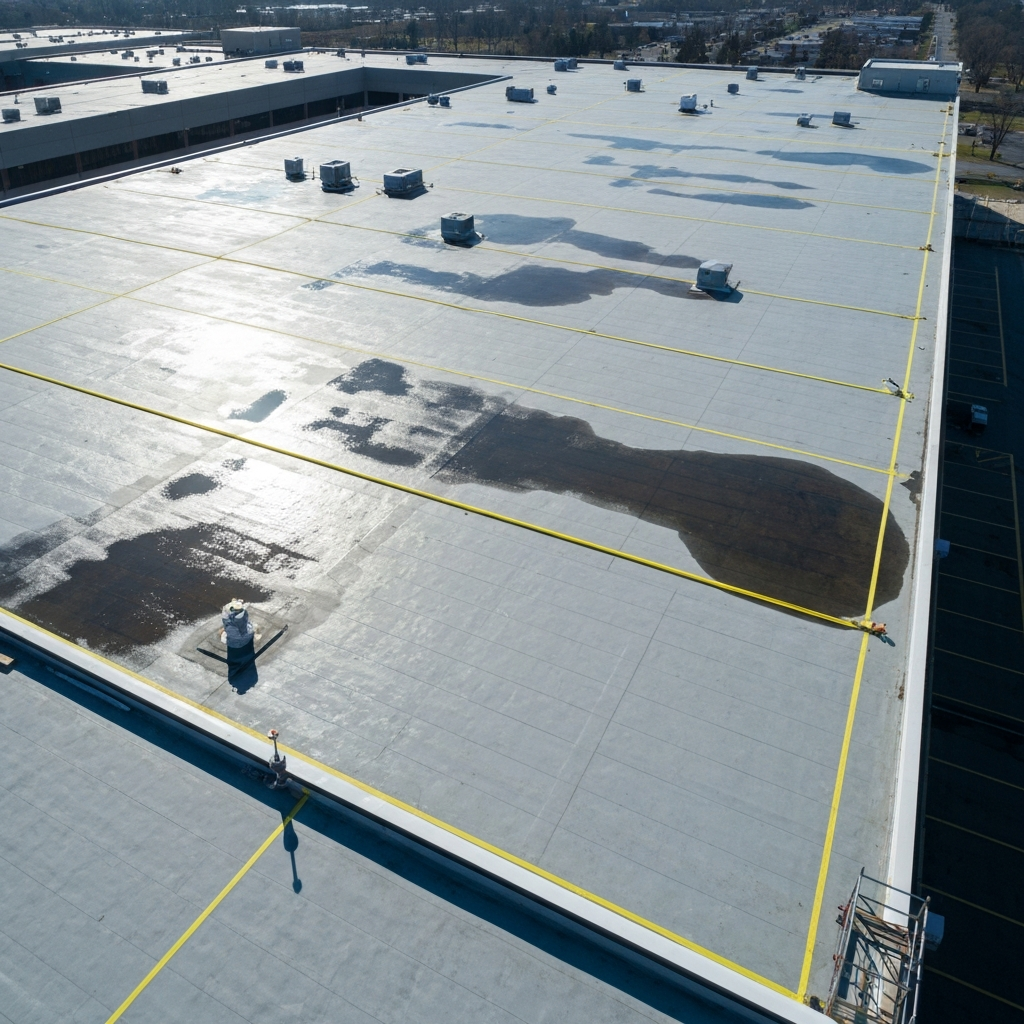
On the exterior of your building, there are other clues. Ponding water that remains on your roof more than 48 hours after it rains is a major warning sign of drainage problems. Also, inspect the roof surface for any visible damage.
Keep an eye out for these specific red flags:
- Bubbling, cracking, or splitting in the roof membrane.
- Damaged or separating flashing around roof edges and penetrations.
- Clogged drains or scuppers.
- Visible stains on interior walls or ceilings.
- A sudden increase in energy bills, which could mean wet insulation.
Early Leak Detection to Prevent Costly Damage
Responding quickly to a potential leak is critical. The moment you suspect a problem with your commercial roofing, you should act. Early detection is the key to preventing a small issue from becoming a major expense involving costly repairs and business downtime. Water can travel far from its entry point, causing widespread damage before it’s ever seen.
A fast response minimizes the extent of the damage. When moisture enters a roofing system, it can saturate insulation, rust steel components, and rot wooden decking. This kind of structural deterioration is far more expensive to fix than a simple roof leak repair.
By addressing the leak immediately, you protect your building’s structure and the assets inside. Prompt action stops further damage and reduces the chance of needing a complete restoration. Don’t wait for the problem to get worse; call a professional at the first sign of trouble.
How Professionals Detect Commercial Roof Leaks Without Roof Damage
Guessing where a leak comes from often fails and can cause more harm. That’s why certified technicians use non-destructive leak detection methods. These techniques allow professionals to find the exact entry point of water without tearing your roof apart. Methods like moisture mapping and electronic leak detection pinpoint hidden moisture.
These advanced commercial roofing services provide accurate data, so repairs are effective the first time. The following sections will explain how a professional roof inspection uses tools like infrared cameras and water testing to diagnose problems precisely.
Visual Inspections, Infrared, and Electronic Leak Detection
A professional roof inspection begins with a thorough visual check. Certified technicians look for obvious issues like open seams, cracked sealants, and damage around rooftop equipment. This initial step helps narrow down potential problem areas based on the most common points of failure.
For hidden problems, professionals turn to advanced technology. Infrared scanning is a powerful tool for moisture mapping. It detects temperature differences in the roof, revealing areas of wet insulation that are invisible to the naked eye. This helps track how far moisture has spread.
Electronic leak detection (ELD) is another highly effective method. This technology uses an electric current to find breaches in the roof membrane with pinpoint accuracy. It is especially useful for finding very small punctures or hidden leaks that other methods might miss, ensuring a complete and accurate diagnosis.
Water Testing and Advanced Diagnostic Methods
In some cases, controlled water testing is used to confirm a leak’s source. Professionals will strategically apply water to a specific section of the roof, like a seam or flashing detail, and monitor for water entry inside the commercial building. This diagnostic method provides concrete evidence of a leak path.
This targeted approach avoids flooding the entire roof and focuses the investigation. It is a reliable way to verify if a suspected area is the true culprit before any repairs begin. Advanced moisture scanning tools are often used alongside water tests to track the movement of water within the roofing membranes.
Different methods serve different purposes in a comprehensive inspection.
|
Diagnostic Method |
Best Used For |
|---|---|
|
Visual Inspection |
Identifying obvious damage like cracks, splits, and failed sealants. |
|
Infrared Scanning |
Detecting trapped moisture and wet insulation across large roof areas. |
|
Electronic Leak Detection |
Pinpointing small, hidden breaches and punctures in the membrane. |
|
Controlled Water Testing |
Confirming a suspected leak source in a specific, isolated area. |
Recommended Leak Detection Techniques for New Jersey’s Climate
The varied New Jersey climate, with its heavy rain, snow, and fluctuating temperatures, demands specific leak detection methods. Water from melting snow or wind-driven storms can enter roofing systems in unusual ways, making leaks difficult to trace. For this reason, standard visual inspections are often not enough.
Advanced techniques are better suited to find these elusive leaks. The following sections explain why methods like electronic and infrared scanning are particularly effective for commercial roofing in this region and how addressing drainage is a key part of the solution.
Electronic and Infrared Scanning for Hard-to-Find Leaks
When a leak’s source is not obvious, electronic leak detection and infrared scanning are invaluable. Water can travel a long way under a roof membrane before it becomes visible inside, especially on large, flat roofs. These technologies are designed to trace those hidden water paths.
Infrared cameras detect the different temperatures between wet and dry insulation. This creates a clear map of where moisture is trapped under the roof, allowing technicians to see the full extent of the problem. This is crucial after heavy snow melts or prolonged rain, as it reveals all affected areas.
Electronic leak detection is ideal for finding the exact entry point. It can identify tiny holes or faulty seams that are impossible to see. By precisely locating the breach in the roof membrane, repairs can be targeted directly at the source, preventing unnecessary work and ensuring a lasting fix.
Addressing Drainage Problems and Ponding Water
One of the biggest threats to flat roofing systems is ponding water. If water sits on your roof for more than 48 hours after rain, it indicates a roof drainage problem. This standing water adds significant weight and accelerates the deterioration of roofing materials, forcing water into any weak points.
Proper drainage is essential for the longevity of your roof. During an inspection, professionals will analyze the slope of your roof and check for any blockages in drains, scuppers, and gutters. Sometimes, tapered insulation must be installed to help direct water toward the drains.
An effective commercial roof repair plan must address drainage issues. Key signs of poor drainage include:
- Water stains or vegetation growth in low spots on the roof.
- Large puddles remaining long after a storm has passed.
- Debris collecting around drains and blocking water flow.
- Overflowing gutters or scuppers during heavy rain.
What to Expect During a Commercial Roof Leak Inspection
When you schedule a professional leak detection for your commercial roofing, you can expect a systematic and thorough process. Certified technicians don’t just look for a puddle; they investigate the entire roofing system to find the root cause of the problem. The inspection starts with gathering information about the leak’s history.
The cost can vary depending on the size of your roof and the technology used. The goal is to provide you with clear, data-driven findings. The next sections will detail the step-by-step process and the tools professionals use.
Step-by-Step Overview of the Inspection Process
The inspection process conducted by certified technicians is methodical to ensure nothing is missed. It begins before anyone even steps onto the roofing. The team will ask you questions about the leak, such as where it appears and when it happens, to gather important clues.
Once on-site, the technicians will perform a comprehensive visual check of the entire roof surface, paying close attention to common failure points. After the visual review, they may use non-destructive testing methods to locate hidden moisture and confirm the exact entry point of the water.
The general inspection process includes:
- Documenting leak history and reviewing past repairs.
- Conducting a detailed visual inspection of the roof membrane, flashing, and penetrations.
- Using moisture scanning or electronic detection to find hidden water.
- Pinpointing the root cause of the leak.
- Providing a detailed report with repair recommendations.
Tools and Technologies Used by New Jersey Professionals
Professionals in New Jersey rely on advanced tools and technologies to accurately diagnose roof leaks. These instruments allow certified technicians to see problems that are invisible to the naked eye, ensuring that the repair plan is based on solid data, not guesswork.
One of the key technologies is infrared thermography. An infrared camera scans the roof to detect temperature variations caused by trapped moisture under roofing membranes. This form of moisture scanning is highly effective for identifying the scope of water intrusion across large industrial facilities.
Another critical tool is electronic leak detection (ELD) equipment. This technology is used to find breaches in TPO, PVC, and other membrane types with exceptional precision. By using these advanced tools, technicians can confidently locate the real source of a leak and recommend the most effective solution.
Emergency Roof Leak Solutions for New Jersey Businesses
When you have an active roof leak, you need help fast. Emergency roof leak solutions are available from a qualified commercial roofing contractor to protect your business from significant disruption and damage. These rapid repair services are designed to address urgent issues quickly, securing your property and preventing further water intrusion.
Waiting to fix a leak can lead to more expensive problems, including structural damage and the need for a full restoration. The next sections will cover the response times you can expect and how to protect your assets during a roofing emergency.
Response Times and Availability of Rapid Repair Services
In a roofing emergency, time is of the essence. Many professional commercial roofing services in New Jersey offer rapid repair services with quick response times to address urgent needs. The goal is to get a team to your property as soon as possible to assess the situation and implement a temporary or permanent commercial roof repair.
These emergency teams are equipped to handle active leaks and secure the damaged area to prevent more water from entering your building. This immediate action is crucial for minimizing business interruption and protecting your inventory, equipment, and interior spaces.
When you call for an emergency service, be ready to provide details about the leak’s location and severity. This information helps the repair crew prepare for the job so they can work efficiently upon arrival. A reliable contractor understands the urgency and prioritizes getting your roof sealed and your business back to normal.
Protecting Interiors and Assets During an Active Leak
While you wait for an emergency repair team to arrive, there are immediate steps you can take to protect your interiors and assets from water damage. Your quick actions can significantly reduce the potential for costly losses and the need for extensive restoration work later on.
The first priority is to move any valuable equipment, inventory, or furniture away from the leak. If items can’t be moved, cover them with waterproof tarps to shield them from dripping water. Containing the water is also important, so place buckets or containers directly under the drips.
To minimize further damage, follow these steps:
- Clear the area under the leak.
- Cover sensitive assets with plastic sheeting.
- Use buckets to catch dripping water.
- Cordon off the wet area to prevent slip-and-fall accidents.
- Avoid trying to make repairs yourself, which could worsen the problem.
Preventative Strategies to Minimize Future Roof Leaks
The best way to deal with a roof leak is to prevent it from ever happening. Proactive strategies like regular roof inspections and preventative maintenance plans are the most effective ways to protect your investment. This approach helps extend your commercial roof’s lifespan and avoids unexpected repair costs.
By catching small problems before they escalate, you can keep your roofing system in optimal condition year-round. Let’s look at the key components of a successful preventative maintenance strategy, including drainage care and seasonal inspections.
Regular Maintenance and Roof Drainage Care
A consistent regular maintenance program is fundamental to a healthy roof. A key part of this is focusing on roof drainage. Clogged drains, scuppers, and gutters are a primary cause of ponding water, which puts immense stress on your roof and can lead to leaks.
During a maintenance visit, a commercial roofing contractor will clear away leaves, dirt, and other debris that can obstruct water flow. They will also inspect the drainage system to ensure it is functioning correctly. This simple action is one of the most effective ways to prevent moisture buildup.
By keeping your roof clean and its drainage paths clear, you significantly reduce the risk of water intrusion. This proactive care helps preserve the roofing membrane and the underlying structure, saving you from costly water damage repairs down the road.
Seasonal Inspections and Proactive Repairs
Scheduling seasonal inspections is a smart way to maintain your commercial roofing system, especially in a climate like New Jersey’s. An inspection after the winter thaw or a heavy storm season can uncover damage that might otherwise go unnoticed until it becomes a serious leak.
These inspections allow for proactive repairs—addressing minor issues before they compromise your roof. This could involve resealing flashing, patching small punctures, or reinforcing seams. Taking care of these small fixes is much more cost-effective than dealing with a major failure. It is a key strategy for maximizing your commercial roof’s lifespan.
Proactive repairs recommended after an inspection may include:
- Resealing deteriorating sealant around vents and pipes.
- Repairing small blisters or cracks in the membrane.
- Reinforcing seams that show signs of separating.
- Checking and tightening loose edge metal.
- Removing debris that could cause damage or clogs.
Conclusion
In summary, understanding and addressing commercial roof leaks in New Jersey is crucial for protecting your business assets. By recognizing the major causes and typical warning signs, you can take proactive measures to detect leaks early and minimize costly damage. Utilizing advanced detection techniques, such as infrared scanning and thorough visual inspections, allows professionals to identify and address issues efficiently. Implementing preventative strategies, including regular maintenance and seasonal inspections, will further safeguard your roof. Don’t wait for a minor leak to escalate into a major problem; act now to secure the longevity of your roofing system. For personalized guidance and emergency solutions tailored to your specific needs, reach out to our team today for a free consultation.
Frequently Asked Questions
Can electronic leak detection find hidden leaks in commercial roofs?
Yes, electronic leak detection is highly effective at finding hidden leaks. Certified technicians use this technology to identify tiny breaches in the roof membrane that are invisible to the naked eye. It offers a precise and non-destructive way to locate the exact source of water entry in commercial roofing systems.
How much does commercial roof leak detection typically cost in New Jersey?
The cost of commercial roof leak detection in NJ varies based on factors like your roof’s size, complexity, and the specific methods used. A simple roof inspection will cost less than one requiring advanced technologies. Contact a professional commercial roofing contractor for an accurate quote on their commercial roofing services.
What should I do immediately if I spot a leak in my commercial roof?
If you spot a leak for the first time, immediately move or cover any assets underneath to prevent water damage. Then, place a bucket to catch the water. Your next step should be to call a commercial roofing professional to schedule a roof leak repair and prevent the need for major restoration.
How much does a roof inspection cost in NJ?
The cost of a commercial roof inspection in NJ depends on the building’s size and the roofing system’s complexity. A basic visual inspection is more affordable than one requiring in-depth analysis. It’s best to contact a local commercial roofing contractor to get a specific estimate for your property.
Who to call to check for roof leaks?
To check for roof leaks, you should call a reputable commercial roofing contractor who specializes in roof leak detection. Look for a company with certified technicians experienced in various commercial roofing systems. A Professional Chimney & Roofing Service in New Jersey will have the right tools and expertise for the job.
What is a quick fix for a water leak on the roof?
A quick fix for a roof leak repair, like applying a temporary patch, is not a permanent solution for commercial roofing. The proper fix depends on the membrane type (TPO, PVC, EPDM) and finding the true leak source, which could be in the seams or a puncture elsewhere. Always consult a professional.