The first cold night of the season has a way of exposing problems fast. You light the fireplace, and suddenly there is a smoky smell in the room, a weak draft, or water stains around the chimney that were easy to ignore in summer. That is exactly why a chimney inspection before winter is one of the smartest home maintenance steps you can take.
For most homeowners, the chimney only gets attention when something feels off. The trouble is that chimney issues rarely stay small. A minor crack in the crown can let in water. Damaged liner sections can raise fire risk. Loose flashing can turn into an interior leak after one hard storm. An inspection gives you a chance to catch those problems while they are still manageable, before your fireplace and heating system are working at full demand.
Why a chimney inspection before winter makes sense
Winter puts your chimney under stress from both inside and outside. Inside, heat, smoke, and combustion byproducts move through the flue every time you use the fireplace or appliance. Outside, freezing temperatures, snow, rain, and wind wear down masonry, metal components, and sealants.
If your chimney already has wear from age or weather, winter usually makes it worse. Moisture is often the biggest reason. Water gets into small openings, temperatures drop, and that trapped moisture expands as it freezes. Over time, bricks crack, mortar joints loosen, and chimney crowns break down. What looked like a cosmetic issue in October can become a repair emergency by January.
There is also the safety side. Creosote buildup, flue blockages, liner damage, and drafting problems can all affect how safely your system operates. If you burn wood, the concern is often chimney fire risk. If you have a gas appliance venting through the chimney, the concern may be improper venting or hidden liner issues. Either way, a working fireplace is not the same as a safe one.
What a professional chimney inspection looks for
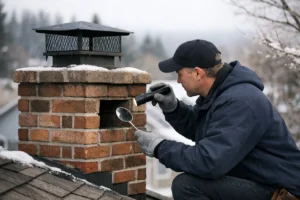
A proper inspection is about more than shining a flashlight upward. A trained chimney professional checks the full system, from visible masonry to the parts homeowners cannot easily assess on their own.
Interior and flue condition
The flue is one of the most important parts of the inspection. This is where creosote, soot, obstructions, and liner damage show up. Birds and small animals sometimes build nests in uncovered chimneys, especially in off-seasons. Even partial blockages can affect draft and increase smoke problems.
The inspector will also look at the liner condition. Cracks, gaps, or deterioration in the liner can allow heat and gases to reach combustible areas or move where they should not. That is not always obvious during regular fireplace use, which is why inspections matter.
Exterior masonry and chimney structure
The exterior tells its own story. Cracked bricks, missing mortar, spalling masonry, and a damaged crown all point to water entry and structural wear. In some cases, the chimney may still look solid from the ground while the upper courses or crown are already failing.
This is especially important in places that see regular freeze-thaw cycles. In New Jersey, winter weather can be hard on chimneys, and small water-related problems tend to grow quickly once temperatures start dropping.
Flashing, caps, and moisture protection
Flashing is where the chimney meets the roof, and it is a common leak point. If flashing is loose, rusted, or improperly sealed, water can get into the roofline and create damage well beyond the chimney itself.
The cap and crown matter too. A chimney cap helps keep out rain, animals, and debris. The crown helps direct water away from the chimney opening. If either one is compromised, moisture usually finds a way in.
Signs you should not wait to schedule
Some homeowners plan ahead. Others only call when there is an obvious problem. While annual maintenance is the better approach, certain warning signs mean you should move quickly.
If you notice smoke entering the room, a strong odor from the fireplace, crumbling mortar, white staining on the brick, rust on fireplace components, or visible water marks near the chimney, it is time to have the system checked. Pieces of tile in the firebox can also point to liner deterioration. If the chimney leans, bricks are loose, or sections appear to be separating, that becomes a structural concern, not just a maintenance issue.
Another common scenario is buying a home or moving into one where the fireplace history is unclear. Even if the system was used by the previous owner, that does not tell you much about its current condition. A fresh inspection gives you a reliable picture before winter use begins.
Why timing matters more than homeowners think
The best time for a chimney inspection before winter is early fall or even late summer. By the time cold weather arrives, appointment calendars often get tighter, especially after the first stretch of low temperatures. If repairs are needed, waiting too long can leave you with fewer scheduling options and a fireplace you cannot use when you want it most.
Timing also affects repair quality and cost. It is generally easier to address masonry work, crown repairs, waterproofing, or flashing issues before repeated freezing weather sets in. Delaying can turn preventive work into a larger restoration project later.
That does not mean an inspection is useless once winter starts. It still makes sense if you have not had one yet. It just means earlier is better when you have the choice.
Inspection, sweeping, and repair are not the same thing
Homeowners often use these terms interchangeably, but they are different services. An inspection checks condition and safety. A sweeping removes soot, creosote, and debris. A repair addresses damage or failure in the system.
Sometimes you need one of these. Sometimes you need all three. For example, a chimney may need sweeping because of buildup, but the inspection may also uncover a cracked crown or damaged liner. On the other hand, a relatively clean flue can still have moisture problems outside. That is why guessing is not a good strategy.
A trustworthy contractor will explain what is necessary, what is recommended, and what can wait. Not every issue requires a major repair right away, but some do require prompt attention. The difference comes down to safety, active water entry, and the rate of deterioration.
What homeowners can do between inspections
You should not climb onto the roof or attempt a detailed chimney assessment yourself, but there are a few practical things you can watch for. Look at the chimney from the ground for leaning, missing mortar, or visible cracking. Pay attention to musty odors, poor draft, or water stains indoors. If you have a chimney cap, make sure it appears intact and centered.
Just as important, do not treat surface signs as the whole story. A chimney can look acceptable from outside and still have flue or liner issues that only show up during an inspection. That is where professional evaluation matters.
Choosing the right contractor for chimney work
Not every contractor who works on exteriors is equipped to evaluate chimney safety correctly. You want a company that handles chimney systems regularly, understands both masonry and venting components, and gives clear answers about what it found.
Look for a contractor that is insured, communicates clearly, and does not pressure you with vague warnings. Good chimney service should feel straightforward. You should know what is wrong, why it matters, and what the next step is. If repairs are needed, the estimate should be clear enough that you can make an informed decision.
For homeowners who want one local company that can handle chimney repairs, flashing concerns, and related exterior issues, Adore Construction offers that kind of practical service approach through https://adore-construction.com.
The real value of getting ahead of the problem
A chimney inspection is not just about checking a box before cold weather. It is about reducing avoidable risk. You are protecting the fire safety of the home, reducing the chance of smoke or venting problems, and limiting the kind of water damage that becomes expensive fast.
Some inspections end with a clean bill of health and simple peace of mind. Others uncover issues that need attention before regular winter use. Both outcomes are useful. Knowing where your chimney stands is always better than finding out after the season starts.
If your fireplace is part of how your home gets through winter, now is the time to make sure the chimney is ready for the job.